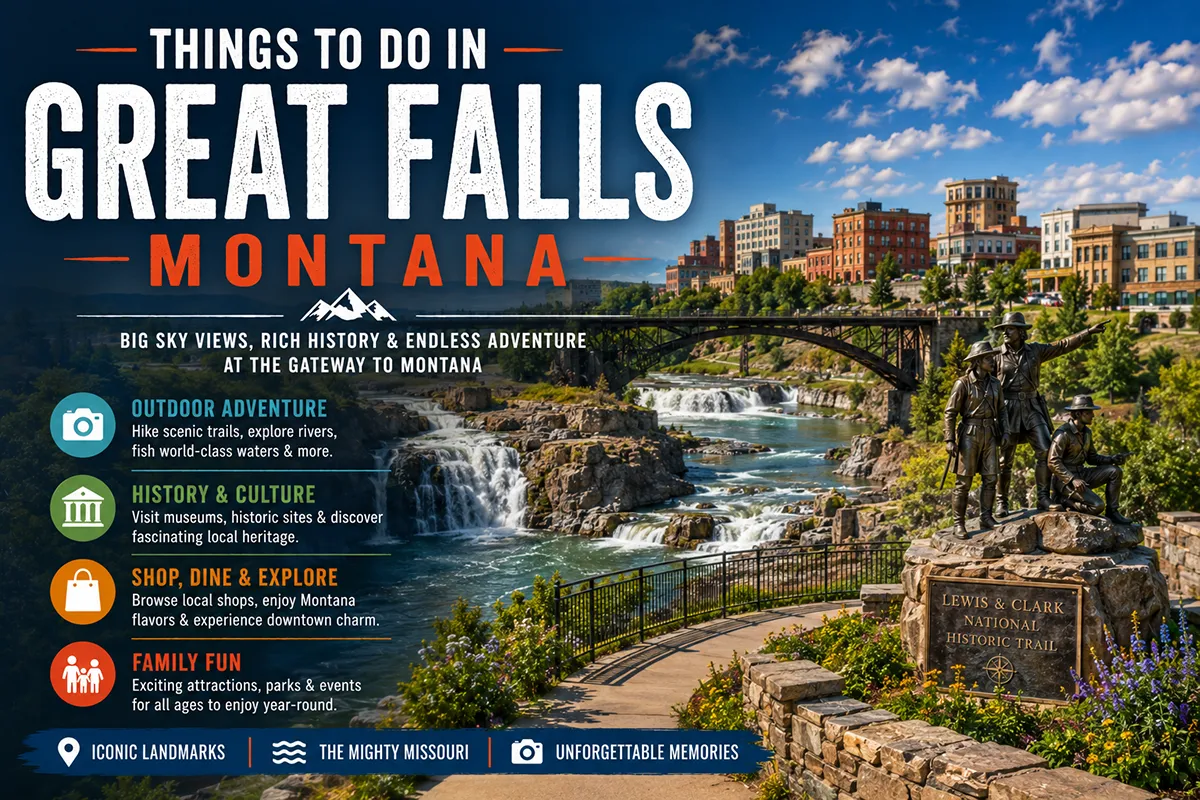
When Meriwether Lewis first laid eyes on the Great Falls of the Missouri River on June 13, 1805, he stopped walking and wrote in his journal that what he saw was “the grandest sight I ever beheld.” His expedition then spent nearly a month portaging around these five falls — 18 miles of exhausting overland carrying — before they could continue west.
Two centuries later, those same falls still define the city that grew up around them. Great Falls calls itself “Genuine Montana” — and the claim holds. Where other Montana cities have been shaped by tourism, Great Falls has been shaped by the river, by art, by military history, and by a genuinely peculiar encounter with something unidentified in the sky over the city’s baseball field in 1950. It’s an unusual combination, and it’s exactly why this city is worth more time than most travelers give it.
Quick Answer — Things to Do in Great Falls Montana
Great Falls’ essential experiences: the Lewis and Clark National Historic Trail Interpretive Center (the finest Lewis & Clark museum in the country), the C.M. Russell Museum (the largest collection of Western art in the world), the Five Falls of the Missouri River on Rivers Edge Trail, Giant Springs State Park (one of the largest freshwater springs in the US, plus the Roe River), Sip ‘n’ Dip Lounge (professional mermaids + Piano Pat — one of America’s most unusual bars), the Great Falls Voyagers UFO-themed baseball game, and Electric City Water Park in summer. Budget 2–3 days.
- Great Falls is Montana’s 3rd largest city (~60,000 people), nicknamed “The Electric City” for its hydroelectric dams
- The city takes its name from the 5 falls of the Missouri River that Lewis & Clark spent a month portaging around in 1805
- C.M. Russell Museum: the world’s largest collection of Russell’s Western art — and Russell’s actual house and log cabin studio
- Lewis & Clark Interpretive Center: genuinely the best L&C museum in the country
- Sip ‘n’ Dip Lounge: professional mermaids + Piano Pat = Newsweek’s list of best bars in the world. No travel blog properly covers this.
- Voyagers baseball: UFO-themed team at the field where the Mariana UFO Incident happened in 1950
- Great Falls is 2.5 hours from Glacier National Park’s east entrance — an excellent overnight stop between parks
Liked this article?
Add Roaming Montana as a preferred source so you see more of our articles and guides on Google.
Why Great Falls Earns More Than a Night
I’ll be honest: Great Falls wasn’t on my Montana bucket list. I’d heard of the C.M. Russell Museum but treated it as a potential half-day stop on the way to Glacier. What I didn’t expect was to still be there on the third day, watching a mermaid swim past the window of a hotel bar while Piano Pat played ragtime and the Missouri River ran through the canyon below the city.
Great Falls has been called “Montana’s museum capital” — a distinction earned by having more museums per capita than any other Montana city. But the museums are only part of it. The river and its falls give the city a geological and historical anchor that most American cities would trade anything for.
Charles Marion Russell, the most celebrated painter of the American West, chose to live here — his house and studio still stand, preserved exactly as they were in his lifetime. And somewhere in the sky over the Morony Road baseball field in 1950, Nick Mariana filmed something that has never been fully explained.
Great Falls doesn’t perform for visitors. It simply is what it is — and what it is, it turns out, is genuinely remarkable.
For lodging details, see my Great Falls, Montana city guide. For RV travelers, see my Great Falls RV parks guide.
All 28 Things to Do in Great Falls Montana
Lewis & Clark and History:
- Lewis & Clark National Historic Trail Interpretive Center
- First Peoples Buffalo Jump State Park (Ulm Pishkun)
- The Five Falls of the Missouri — visitor itinerary
- Historic hydroelectric dams (Ryan, Morony, Cochrane)
Art & Museums: 5. C.M. Russell Museum (world’s largest Russell collection) 6. Paris Gibson Square Museum of Art (1896 building) 7. Children’s Museum of Montana 8. Cascade County Historical Society Museum 9. Malmstrom Air Force Base Museum (free, Mon–Fri)
Natural Attractions: 10. Giant Springs State Park + the Roe River ⭐ 11. Rivers Edge Trail (53–60 miles) 12. Gibson Park (“Jewel of the City Park System”) 13. Benton Lake National Wildlife Refuge (12 miles north) ⭐ 14. Freezeout Lake — massive bird migration
Unique / One-of-a-Kind: 15. Sip ‘n’ Dip Lounge — mermaids and Piano Pat ⭐ 16. Great Falls Voyagers baseball — UFO-themed ⭐ 17. Montana Downs horse racing 18. Murals of Great Falls — public art tour
Water & Outdoor: 19. Electric City Water Park (summer) 20. Missouri River fly fishing 21. Hi-Line Climbing Center
Food & Drink: 22. Sip ‘n’ Dip Lounge (covered fully below) 23. The Montana Club — prime rib + huckleberry cocktails 24. Celtic Cowboy Pub — Welsh immigrant history 25. Roadhouse Diner — Montana ranch-sourced beef 26. Great Falls Original Farmers’ Market (150 vendors, Saturdays)
Shopping: 27. Montana Mosaic — Montana-made gifts 28. Holiday Village Mall
Winter: 29. Showdown Montana — Montana’s first ski hill ⭐ 30. Silver Crest Trails — cross-country skiing + snowshoeing
Lewis & Clark and History
1. Lewis & Clark National Historic Trail Interpretive Center ⭐
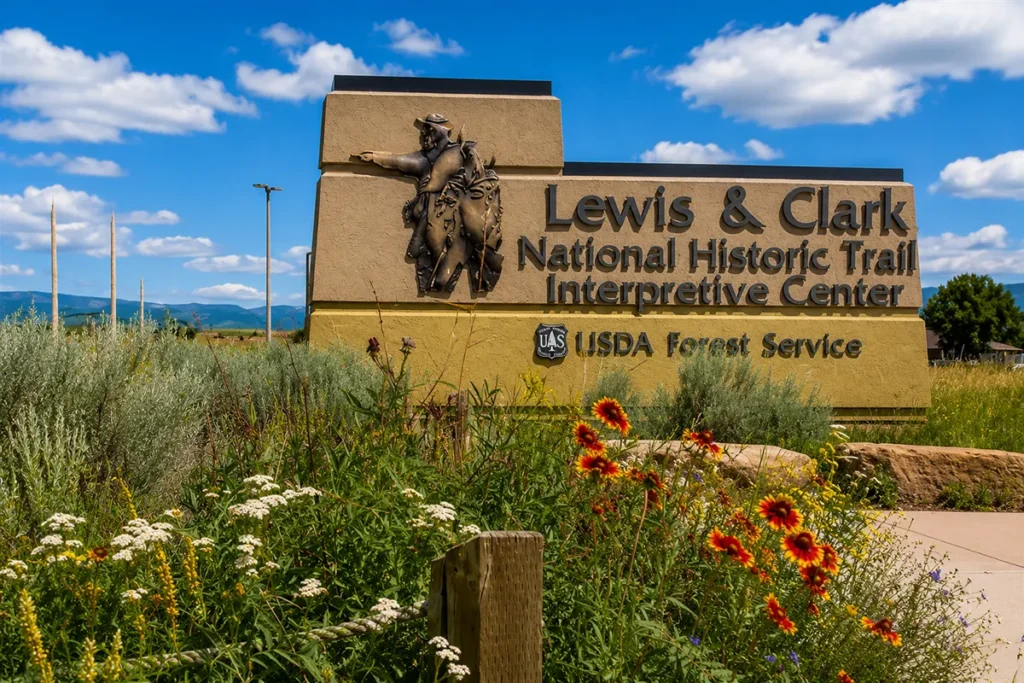
The Lewis & Clark National Historic Trail Interpretive Center sits on a bluff above the Missouri River — and it is not what most visitors expect from a federal interpretive center. Multiple TripAdvisor reviewers independently describe it as “the most beautiful and interesting museum on my Montana trip.”
A Ken Burns documentary film plays throughout the day in a dedicated theater. The exhibits follow the expedition’s progress through this exact stretch of river — the Great Falls portage that consumed nearly a month — with a depth and contextual richness that I haven’t encountered at any other Lewis & Clark site.
The falls the expedition portaged around are visible from the interpretive trail outside the center. The center is right across the river from the falls themselves.
Standing there, looking at the same waterway Lewis described, with the expedition’s journal entries echoed in the signage around you, is the genuinely immersive historical experience that most museum visits only approximate.
Cost: Modest admission; children 15 and under free.
Hours: [Verify current at nps.gov/lecl.]
Time needed: 2–3 hours minimum.
2. First Peoples Buffalo Jump State Park (Ulm Pishkun)
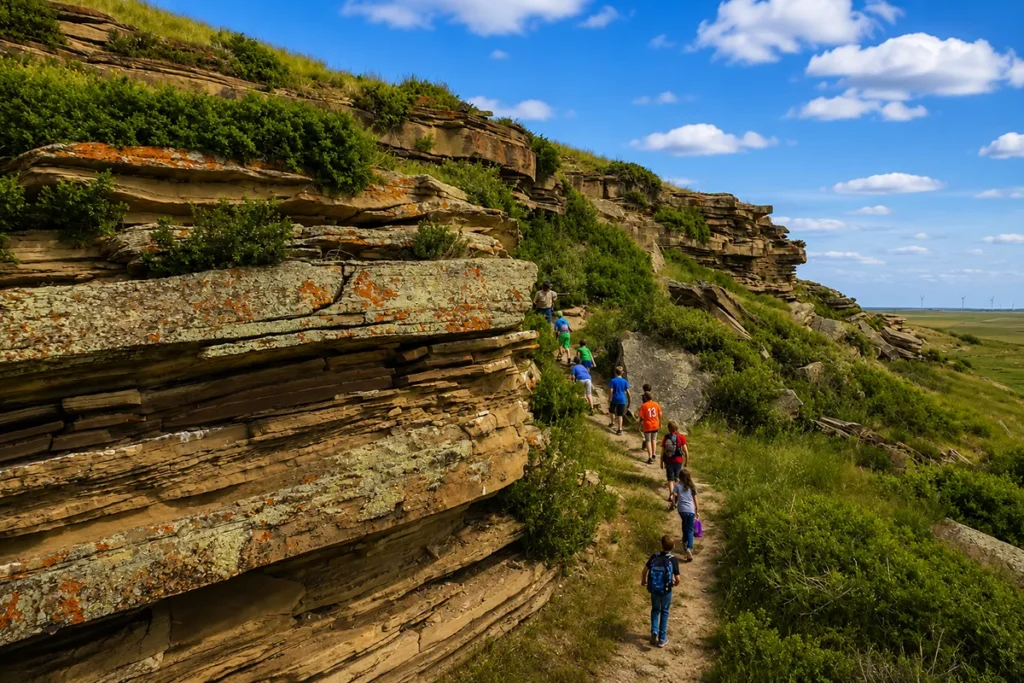
About 10 miles southwest of Great Falls, Ulm Pishkun is one of the largest buffalo jump sites in North America — a sandstone cliff where Indigenous hunters drove bison herds over the edge for thousands of years. The scale of the cliff face makes the activity imaginable in a way that smaller jumps don’t; looking up at the height, you understand both the ingenuity and the physics of the technique.
The site has interpretive panels on Indigenous plains cultures, the ecology of bison, and the history of the land. A “buffalo jump sculpture” near the Great Falls downtown also references this heritage.
Cost: Montana State Parks day use fee.
Distance: ~10 miles from downtown.
3. The Five Falls of the Missouri — A Visitor’s Guide ⭐
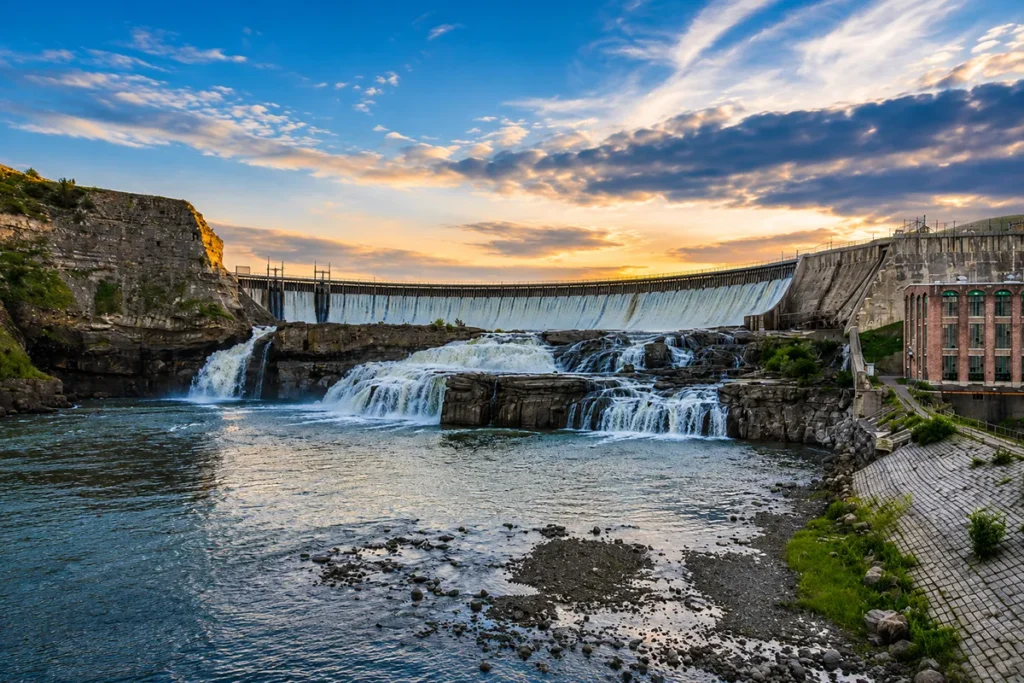
The city is named for these falls. Lewis called them “the grandest sight I ever beheld.” Every travel guide to Great Falls mentions them — but none provides a practical guide to actually visiting each one. Here’s the gap filled:
Rainbow Falls — The most photogenic of the surviving falls, partially obscured by Rainbow Dam but still dramatic. I have a complete guide at Rainbow Falls, Great Falls Montana including viewing access, the Lewis & Clark context, and how to reach it via Rivers Edge Trail.
Crooked Falls — With its irregular rocky shelf, Crooked Falls looks essentially as Lewis and Clark’s journals described it in 1805. Located upstream of Rainbow Dam on the Rivers Edge Trail.
Black Eagle Falls — Viewable from Black Eagle Memorial Island via a bridge on the trail’s east end. The standpoint offers a close-up view. The Sun River’s confluence with the Missouri is visible from here — two rivers merging at one of the most historically significant stretches of water in the American West.
Great Falls itself — The largest and most famous fall is now barely visible from the road; Ryan Dam construction in the early 1900s altered the appearance significantly. The overlook near the dam provides the best accessible view.
Colter Falls — Submerged entirely by Rainbow Dam’s construction in 1910. Colter Falls exists only in Lewis and Clark’s journal entries and historical records; the dam covers it completely.
The Rivers Edge Trail connects most of these viewing points in a continuous non-motorized route. Cycling the sections between fall viewpoints is the most efficient way to see multiple falls in a half-day. Rent bikes from Knicker Biker in town — they’ll advise which trail segments match your ability and time.
4. The Historic Dams — Engineering and Controversy
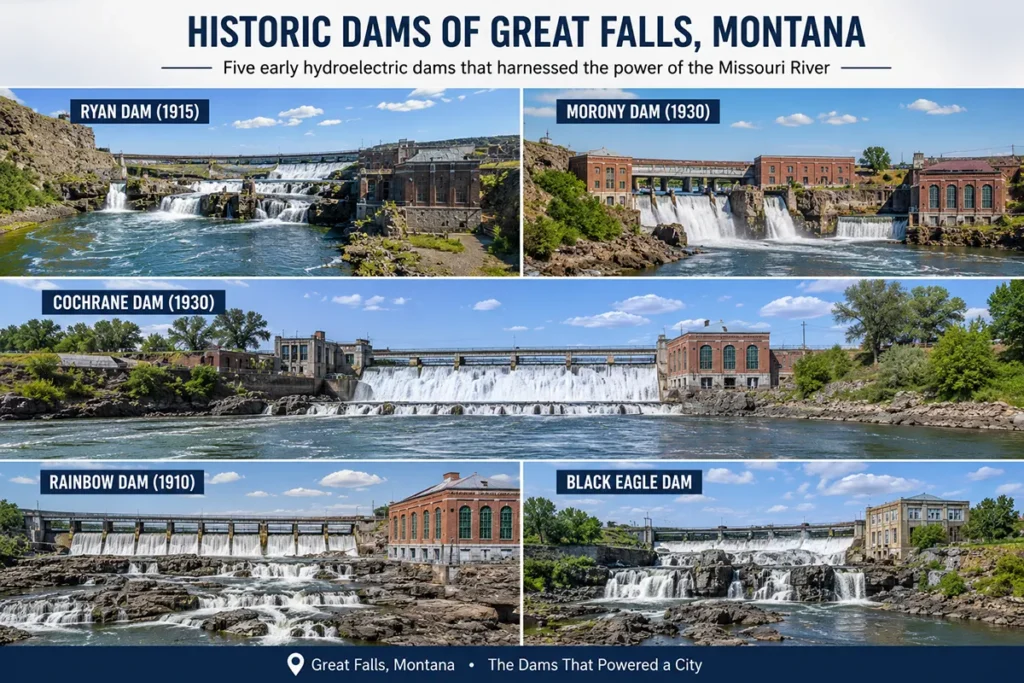
Five hydroelectric dams now regulate the Missouri River above Great Falls: Ryan Dam (1915), Morony Dam (1930), Cochrane Dam (1930), Rainbow Dam (1910), and Black Eagle Dam.
Together, they generate power for the region — and together, they submerged Colter Falls, altered the appearance of the Great Falls themselves, and transformed the river the expedition portaged in 1805.
The dams are themselves a significant part of the city’s story: they earned Great Falls its nickname “The Electric City” and made possible the industrial growth that defined the early 20th century here.
Driving the river roads past Ryan and Morony Dams provides views of the engineering scale. jaredsdetours.com provides the best historical dam context in the competitor landscape.
Art and Museums
5. C.M. Russell Museum ⭐
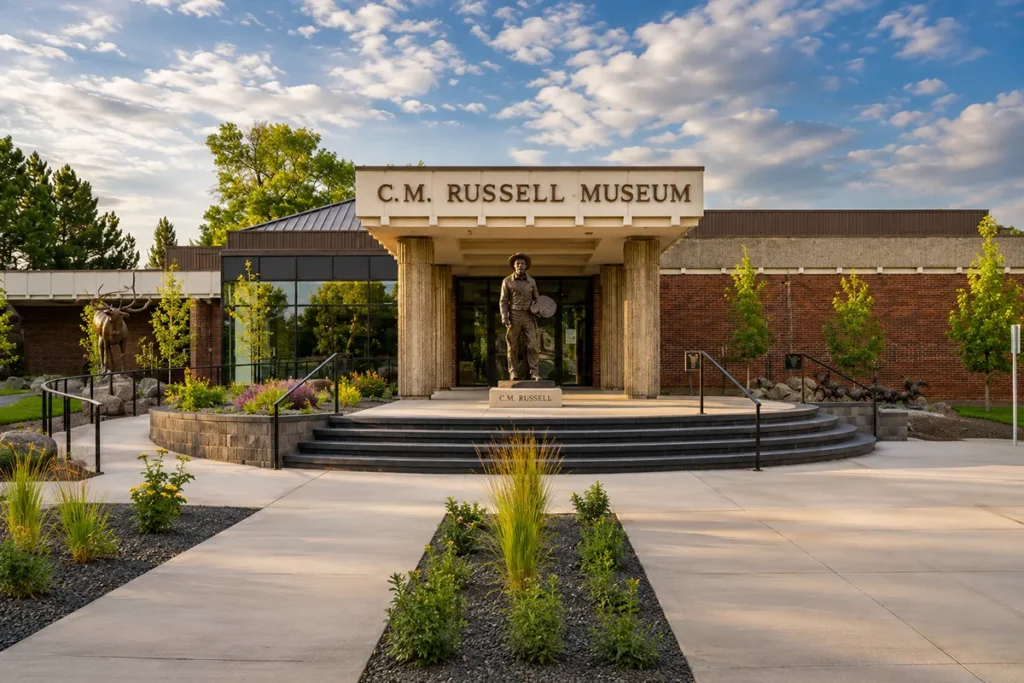
Charles Marion Russell (1864–1926) was the most celebrated painter of the American West — and he lived in Great Falls, Montana. Not visited. Not passed through. Lived here, in this city, from 1897 until his death in 1926.
The C.M. Russell Museum is built around his legacy and holds the world’s largest collection of Russell’s Western art — paintings, watercolors, bronzes, illustrated letters, and illustrated menus (Russell was famous for painting on anything).
But the centerpiece isn’t the main museum building. It’s what’s adjacent to it: Russell’s actual 1900 house and his 1903 log cabin studio, both preserved essentially intact with original furnishings and artwork.
Walking through the cabin studio — the space where Russell painted the images that defined how America visualized the West — is one of those museum experiences where the object itself is the encounter. A TripAdvisor reviewer captured it: “Cheryl had no desire to see this museum, but I insisted, and she was so glad I did.”
The main museum building holds rotating exhibitions, Western art, and the permanent Russell collection. Plan 2–3 hours.
Address: 400 13th Street North.
Hours: [Verify current at cmrussell.org.]
Cost: ~$10–15 adult.
6. Paris Gibson Square Museum of Art
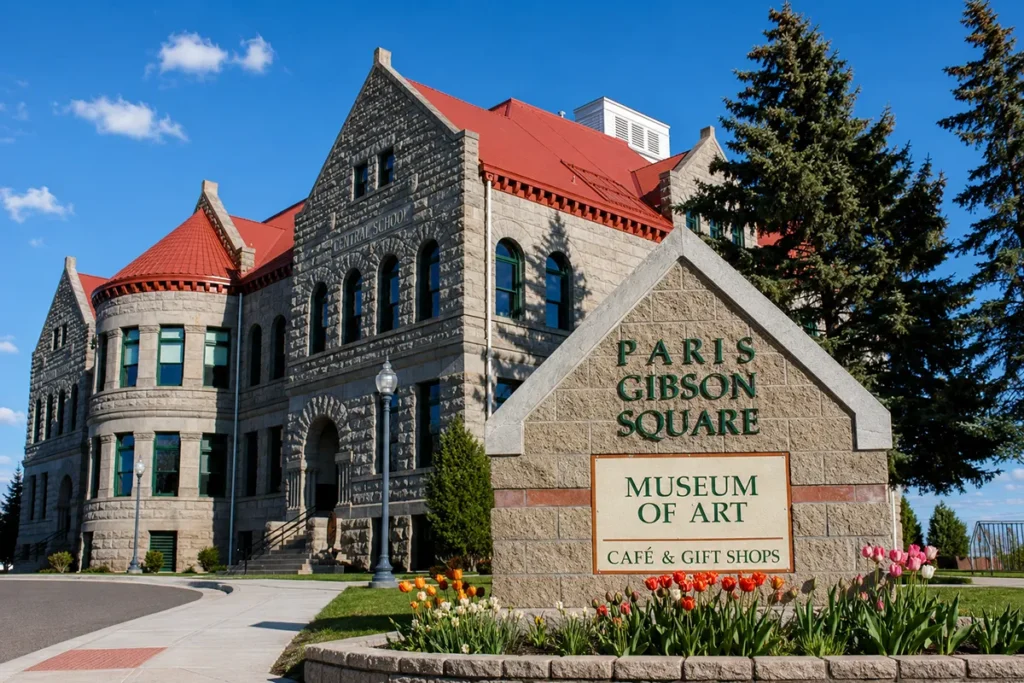
The Paris Gibson Square Museum of Art occupies Great Falls’ original 1896 high school — a sandstone Romanesque building named after Paris Gibson, the city’s founder. It’s a beautiful building housing rotating contemporary art exhibitions with a particular emphasis on regional Montana artists.
epic7travel.com calls out the annual Art of Christmas Open House and Artist Market in December — a seasonal event worth planning around if your visit coincides. Year-round, the Square Gift Shop stocks locally made ceramics, jewelry, and artwork.
Cost: Free or small suggested donation.
Hours: [Verify current hours.]
7. Children’s Museum of Montana
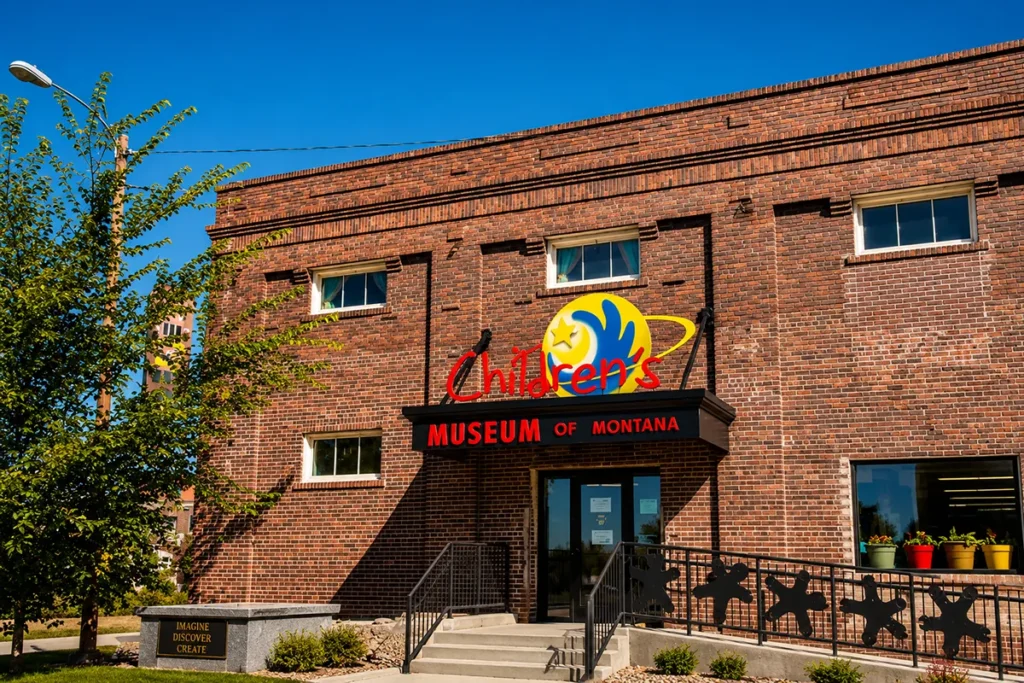
Located near Gibson Park, the Children’s Museum serves families with hands-on exhibits designed for younger visitors. Conveniently positioned directly across from Gibson Park — the natural sequence is playground → museum → ice cream → duck pond.
8. Malmstrom Air Force Base Museum ⭐
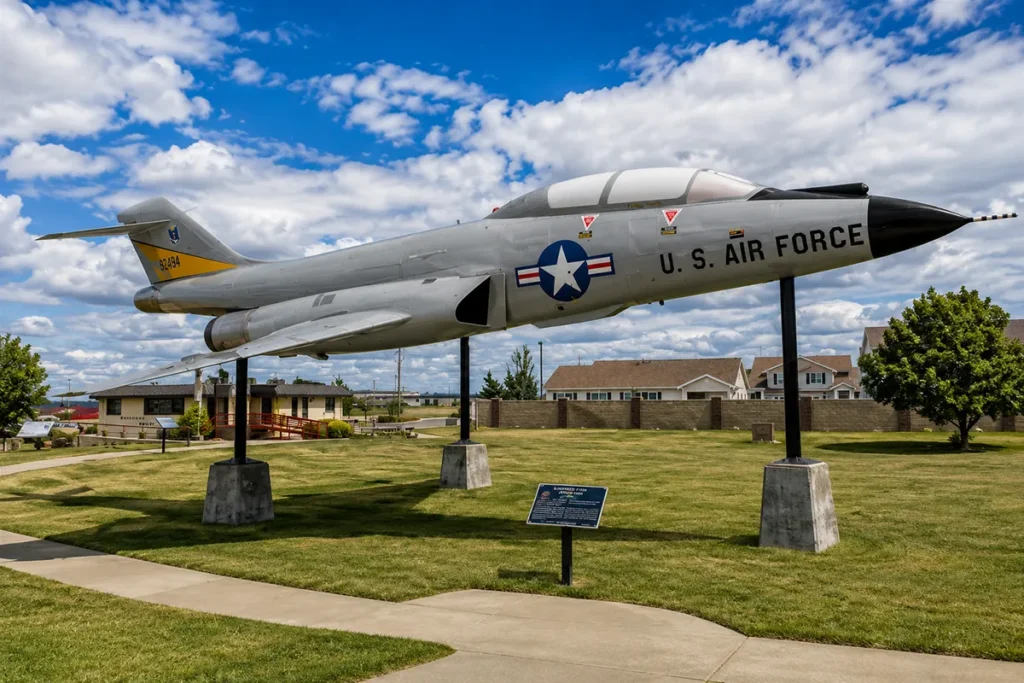
Here’s the Great Falls attraction that no travel blog covers: Malmstrom Air Force Base, home of the 341st Missile Wing, operates a museum on the east side of Great Falls accessible to civilians.
Free admission, Monday–Friday 10am–4pm. Bring photo ID; it’s on the base, so ID is required to get in. The museum covers Malmstrom’s history, the 341st Missile Wing and its nuclear mission, the Air Force’s presence in Montana, and broader Cold War context.
Malmstrom is no minor installation — it controls nuclear ICBMs scattered across Montana’s missile fields. For visitors with any interest in military history or Cold War geopolitics, this free museum provides context available nowhere else in the Mountain West.
Note: The museum is located on the east side of Great Falls just inside the Malmstrom AFB main gate at the east end of 2nd Avenue North. Check before visiting — holiday schedules and base security can affect access.
Natural Attractions
9. Giant Springs State Park and the Roe River ⭐
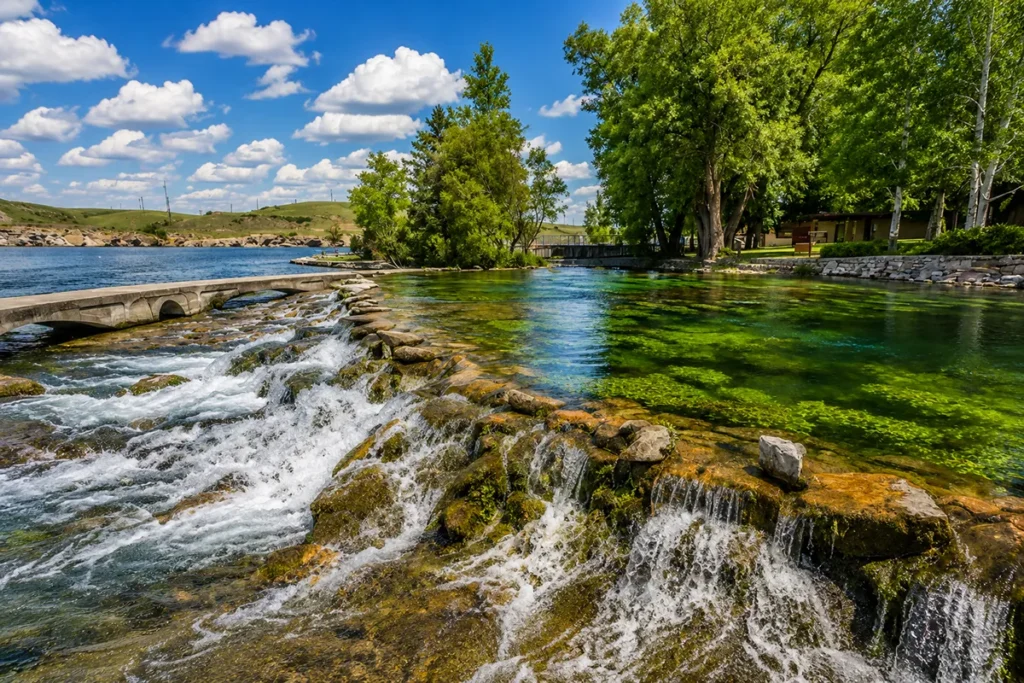
Giant Springs State Park sits along the Missouri River on the east edge of Great Falls — and it holds two remarkable things.
First, Giant Springs itself: one of the largest freshwater springs in the United States. The springs emerge from the Madison Limestone formation at a rate of roughly 388 million gallons per day at a consistent temperature of around 54°F.
The crystal-clear water flowing from the spring directly into a small channel is striking — particularly in summer when the surrounding landscape is hot and the spring water’s clarity looks unnatural.
Second, the Roe River — a 201-foot channel connecting Roe Island (where the spring emerges) to the Missouri River. At that length, the Roe River was once listed in the Guinness World Records as the shortest river in the world. (Oregon’s D River disputed this; Guinness eventually discontinued the “shortest river” category, leaving the matter unresolved, but Great Falls still claims the record.)
The park also contains a fish hatchery operated by Montana Fish, Wildlife & Parks — adjacent to Giant Springs and free to visit. The hatchery is interesting even if you’re not a dedicated angler; watching large trout mass in raceways gives a visceral sense of the Missouri River fishery.
The Rivers Edge Trail passes through Giant Springs State Park, making it accessible by bike from downtown.
Cost: Free entry to the state park and fish hatchery.
Hours: Open year-round.
10. Rivers Edge Trail — The Spine of Great Falls
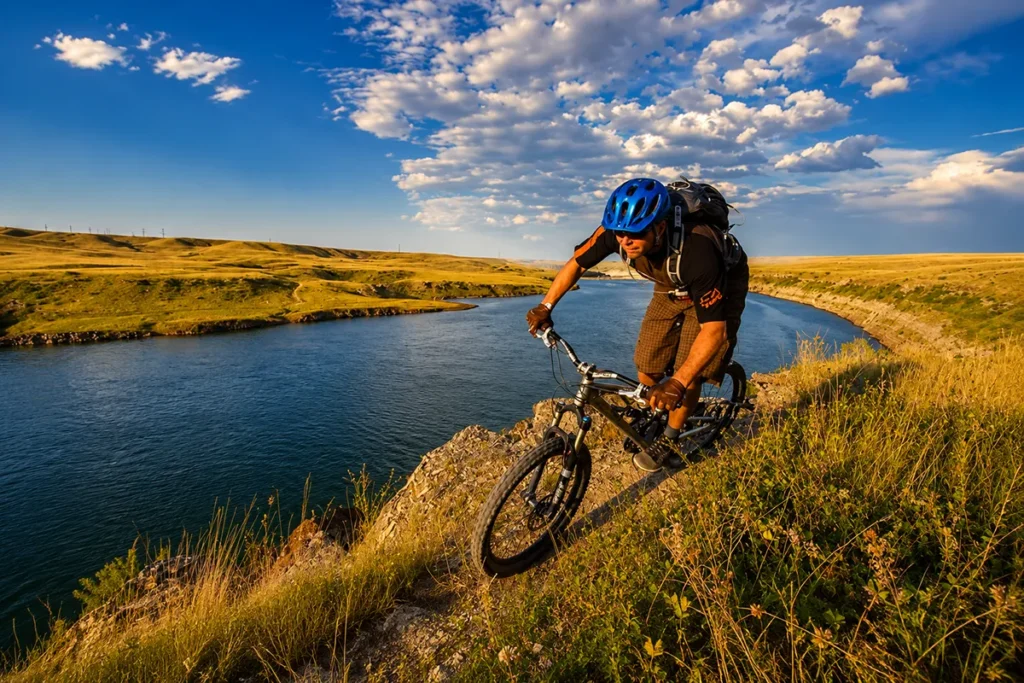
At 53–60 miles (depending on which sections you count), the Rivers Edge Trail is one of the longest urban multi-use trail networks in Montana, connecting virtually all of Great Falls’ significant attractions along the Missouri River corridor.
The trail links: downtown, Gibson Park, the Lewis & Clark Interpretive Center, Giant Springs State Park, the falls viewpoints, Black Eagle Falls, the fish hatchery, Sacagawea Island (birding), and multiple parks and viewpoints.
The most efficient Great Falls experience is cycling the Rivers Edge Trail with a city map, hitting each attraction in sequence. Knicker Biker in downtown Great Falls rents bikes — they’ll advise which segments to prioritize based on your interests.
travelawaits.com correctly notes: “Walk, bike, or ride your horse — whatever your non-motorized mode.” The trail genuinely accommodates equestrians in appropriate sections.
Cost: Free.
Best time: May–October for full access.
11. Gibson Park — “Jewel of the City Park System”
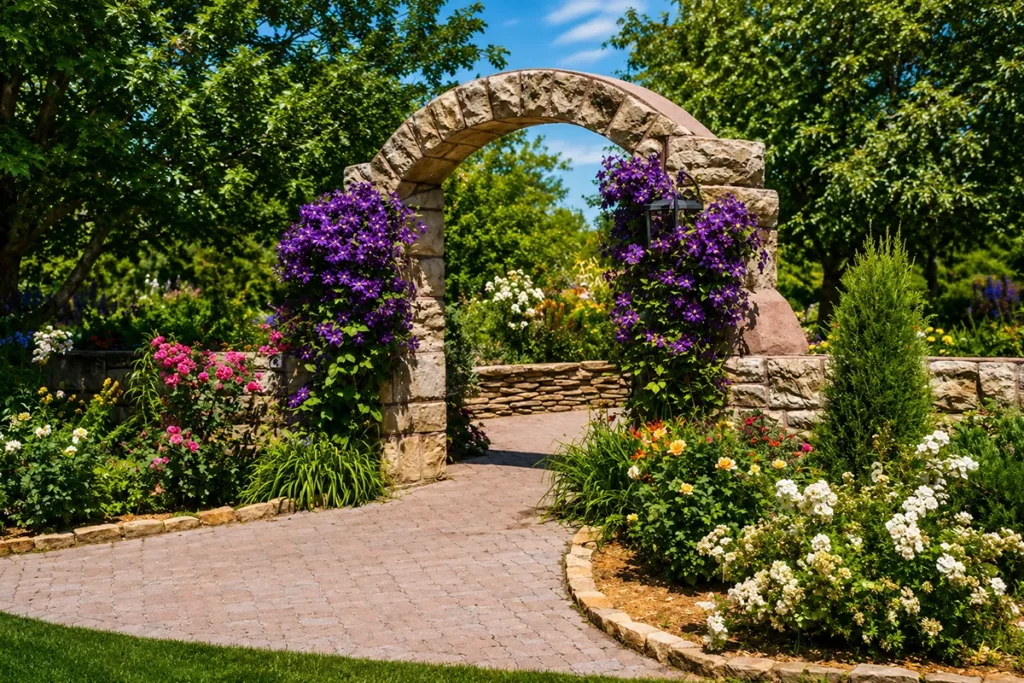
Expedia’s description is accurate: Gibson Park is Great Falls’ finest urban green space. The formal flower gardens, the duck pond, the summer band concerts at the historic bandshell, and the connection to Rivers Edge Trail create a park worth an afternoon’s attention.
The park sits adjacent to the Children’s Museum, making the sequence — park, duck pond, museum — a natural family half-day structure. In summer, scheduled band concerts at the bandshell provide free outdoor entertainment on the park’s historic performance space.
12. Benton Lake National Wildlife Refuge ⭐
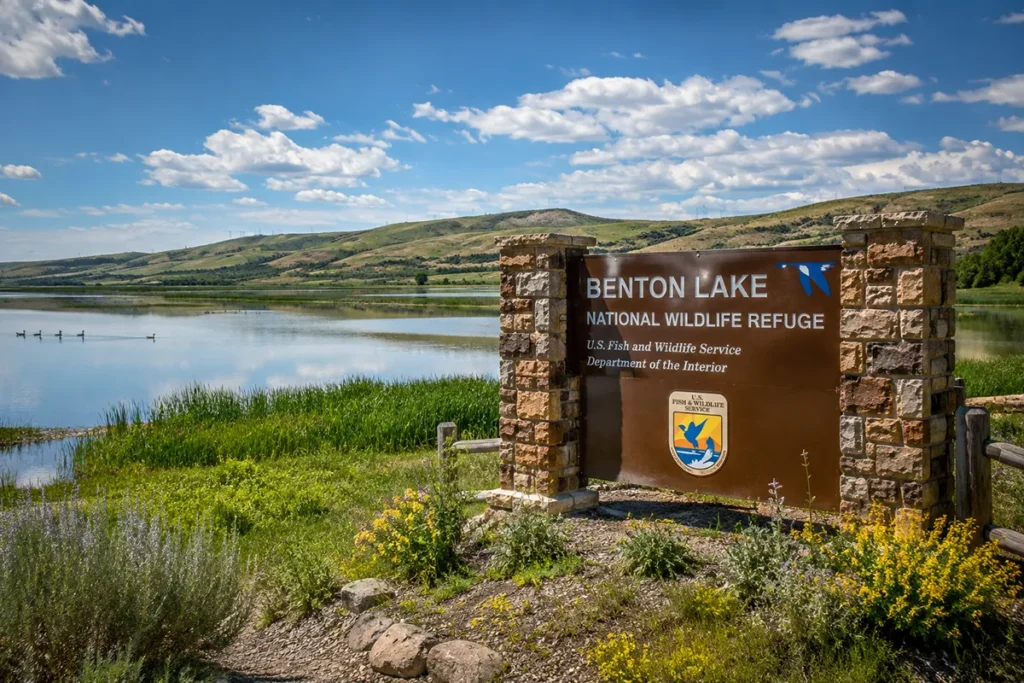
Twelve miles north of Great Falls, Benton Lake National Wildlife Refuge is a 5,000-acre wetland complex in a prairie basin — and one of the finest birding destinations in north-central Montana.
28 mammalian species live in or regularly visit the refuge. During spring and fall migration, shorebirds, waterfowl, and raptors move through in significant numbers. The refuge’s Prairie Marsh Wildlife Drive offers 10 numbered interpretive stops on a self-guided auto route — the format that makes Benton Lake accessible regardless of birding experience level.
travelawaits.com recommends: “Best times are early mornings and late afternoons in spring and fall.” The drive takes 60–90 minutes at a relaxed pace.
For more Montana wildlife refuge context, see my Benton Lake National Wildlife Refuge guide.
Cost: Free.
Season: Year-round; spring and fall for peak wildlife.
13. Freezeout Lake and Bird Migration
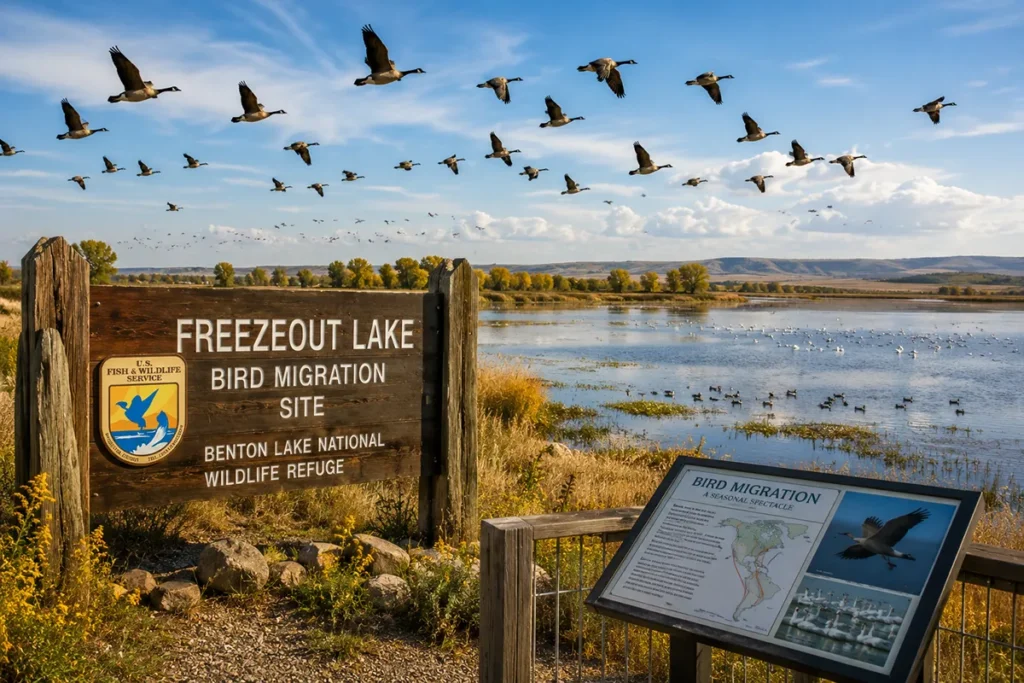
About 30 miles northwest of Great Falls, Freezeout Lake hosts one of the most dramatic wildlife spectacles in Montana: massive concentrations of migratory tundra swans and snow geese in spring and fall. At peak migration, over 10,000 birds at once create a genuinely extraordinary sight — the sound alone carries for a mile.
The official Great Falls tourism site specifically recommends Freezeout Lake as a winter/shoulder-season activity when outdoor options are otherwise limited. The drive out to the lake through the Rocky Mountain Front is scenic in its own right.
Best time: March–April (northbound spring migration) and October–November (southbound fall).
Cost: Free.
Unique Great Falls Experiences No One Covers Properly
14. Sip ‘n’ Dip Lounge — Mermaids and Piano Pat ⭐
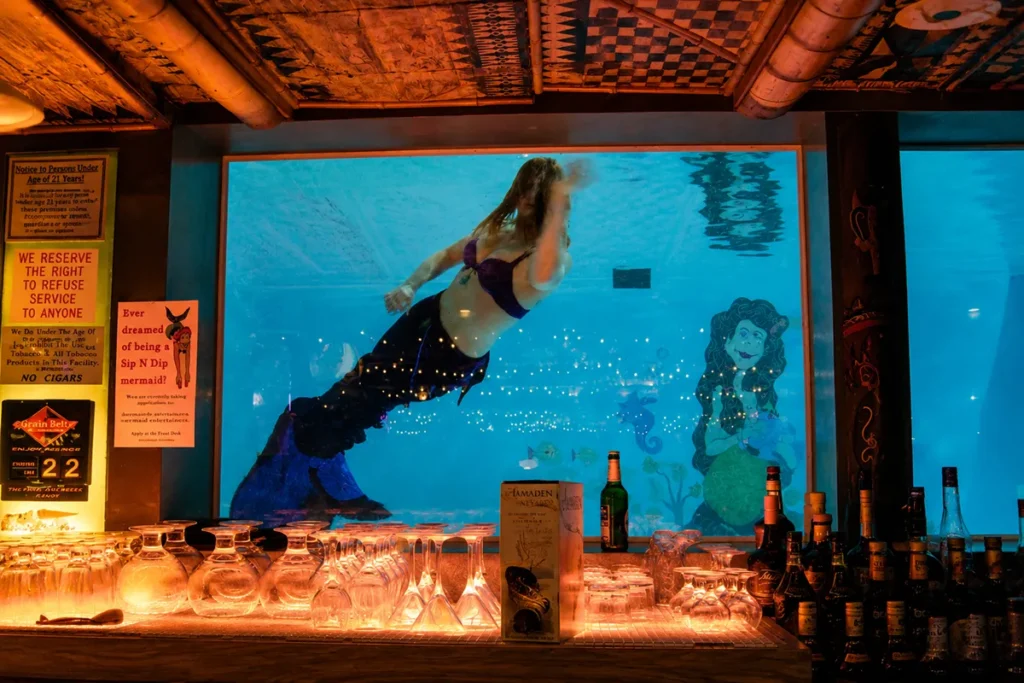
This is the Great Falls experience that every travel guide either mentions in one sentence or skips entirely. Let me actually explain what it is, because no competitor does:
The Sip ‘n’ Dip Lounge is a tiki bar inside the O’Haire Motor Inn on 10th Avenue South. Behind the bar, visible through a large window, is the hotel’s swimming pool. Professional mermaids perform in the pool — swimming, posing, and engaging with bar patrons through the glass during evening hours.
At the piano in the corner sits Piano Pat, who has been playing nightly at the Sip ‘n’ Dip for decades — a local institution unto herself, known to take requests through the evening as the mermaids circle behind the bar glass.
Newsweek once named it one of the best bars in the world. Atlas Obscura features it as a top Great Falls attraction. travelmontananow.com teases “one of the top things to do involves mermaids — read on!” and then delivers a paragraph. No travel blog gives it the section it deserves.
Why it works: it’s genuinely, almost defiantly, the opposite of what you expect in a Montana city known for its Western art collection and Lewis & Clark history. The cognitive dissonance of tropical tiki decor, swimming mermaids, and a ragtime piano in the middle of north-central Montana is the whole point.
Location: O’Haire Motor Inn, 17 7th Street South. Hours: Evening hours; mermaids perform on a schedule — call ahead or check social media for current mermaid night schedule.
15. Great Falls Voyagers Baseball and the Mariana UFO Incident ⭐
The Great Falls Voyagers are a Pioneer League professional baseball team. The team name refers to Lewis and Clark’s Voyage of Discovery — but the stadium’s history goes considerably further into unexplained territory.
In August 1950, a man named Nick Mariana was standing on the field at the Great Falls baseball stadium when he noticed two metallic, shining objects moving in the sky in a manner that didn’t match any known aircraft. He pulled out a movie camera and filmed them.
The resulting footage — the Mariana UFO Incident — became one of the most analyzed and debated pieces of UFO evidence in history, studied by the U.S. Air Force’s Project Blue Book and never conclusively explained.
The Voyagers baseball team has embraced this history completely: the mascot is an alien, the concessions include space ice cream and UFO-shaped burgers, and the promotional calendar includes themed games and giveaways. A baseball game at this stadium is a uniquely Great Falls experience — professional baseball in a small ballpark with a genuinely unusual history underneath the dugout.
Season: Summer. [Verify current schedule at greatfallsvoyagers.com.]
Tip: Check for fireworks nights, which add an extra spectacle to the UFO ambiance.
16. Montana Downs Horse Racing
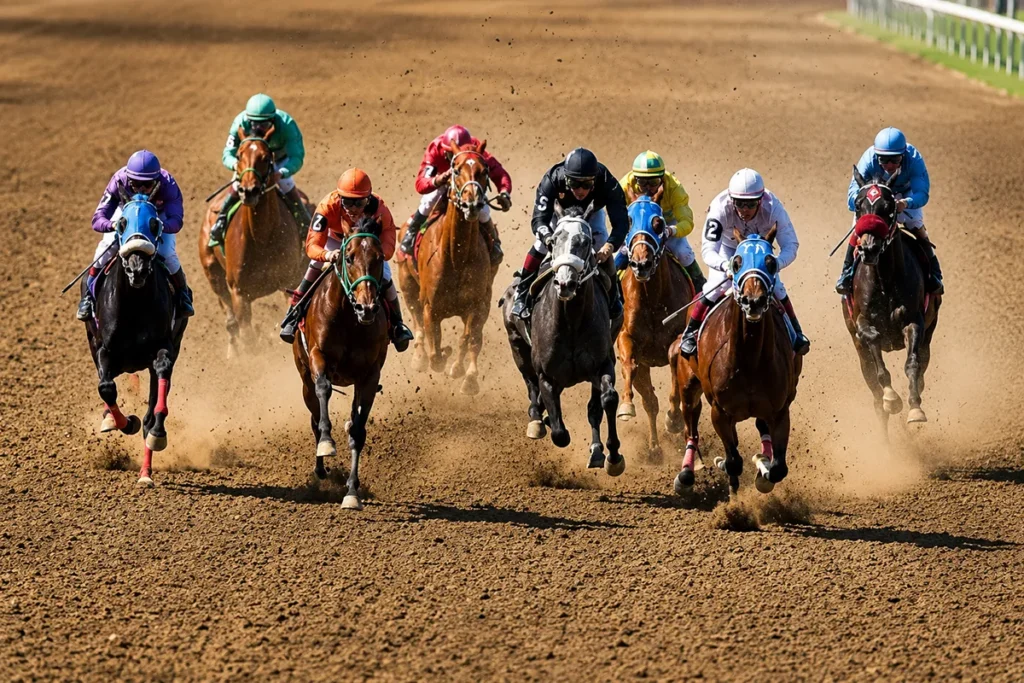
Montana Downs at Montana ExpoPark is one of the few horse racing venues in Montana, operating live racing during its summer season. Promotions, contests, live music, and special races make it more festival than purely equestrian — a genuine community event that draws families and serious racing fans alike.
TripAdvisor notes that “racing fans and visitors” both find Montana Downs worthwhile. For visitors who’ve never attended live horse racing in a small Montana track setting, the atmosphere is distinct from both major racetracks and rodeos.
[Verify current racing season dates at montanaexpoparkevents.com.]
17. Murals of Great Falls
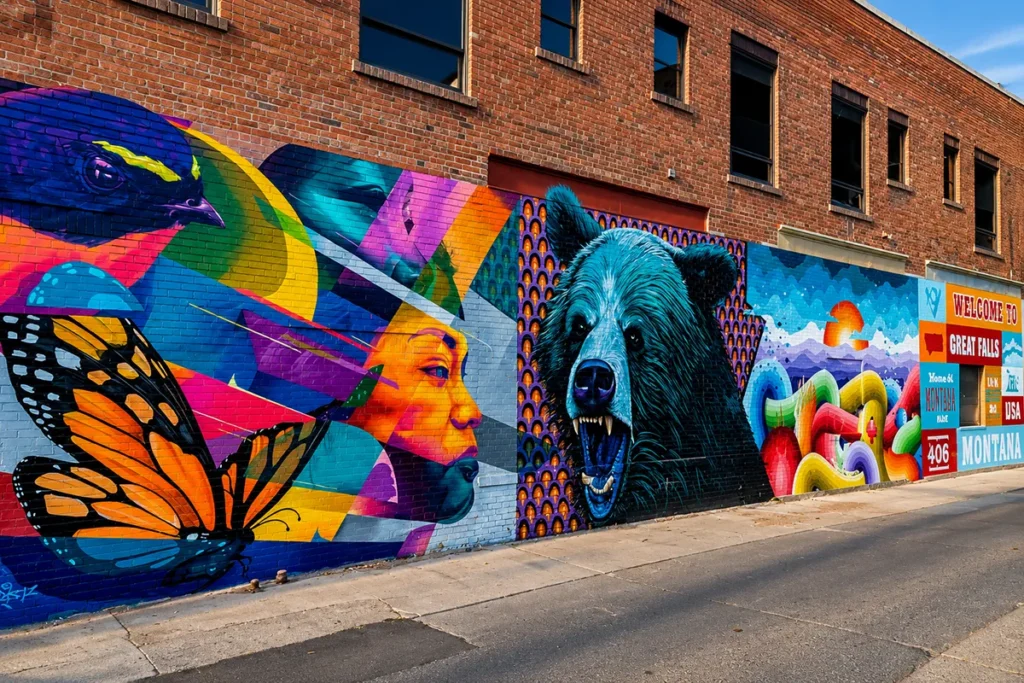
Atlas Obscura specifically features Great Falls’ public mural program as a must-see — a collection of large-scale murals on building facades throughout downtown depicting the city’s history, Western heritage, and cultural identity.
A self-guided mural walk makes for an hour of downtown exploration that connects the arts heritage to the physical streetscape.
No travel blog has built out the Great Falls mural walk as a dedicated activity. The murals are free, accessible, and represent a genuinely compelling outdoor art experience.
Food, Drink, and Local Culture
18. The Montana Club
The Montana Club is Great Falls’ classic steakhouse — the kind of place that earns “reliable” as the highest compliment. Prime rib, huckleberry cocktails, and a happy hour that runs daily. travelawaits.com recounts a Thanksgiving Day prime rib dinner there when the turkey ran out — a characteristically Great Falls moment.
19. Celtic Cowboy Pub — and the Arvon Block ⭐
The Celtic Cowboy Pub occupies the historic Arvon Block in downtown Great Falls — and the building’s name is a wordplay worth knowing. The block was constructed by Robert Vaughn, the area’s first European settler, who was from Wales. Vaughn named the building “Arvon” — a phonetic compression of “R. Vaughn.” It’s a quiet, layered act of immigrant self-inscription in stone that honors the Welsh origin while Americanizing the signature.
The menu invokes both Vaughn’s Celtic heritage (shepherd’s pie) and his Montana ranching identity (beef medallions). travelawaits.com calls it specifically for the historical context. The pub is worth stopping for both the food and the story.
20. Roadhouse Diner
epic7travel.com highlights the Roadhouse Diner specifically for the sourcing: “All beef sourced from grass-fed cattle from the McCafferty Ranch in Belt, Montana.” In a city whose identity is rooted in the Western ranching landscape, eating beef that comes from a specific named ranch in the surrounding county is a different experience from a standard burger.
The huckleberry lemonade soda and the spiced ranch sauce are specifically recommended. The diner is noted as a good stop before visiting the C.M. Russell Museum nearby.
21. Great Falls Original Farmers’ Market ⭐
150 vendors gather every Saturday morning from 8:30 AM to 1:00 PM at the Civic Center location from June through September. jaredsdetours.com gives this market its fullest coverage: the origin dates to the 1970s when Hutterite families sold produce door-to-door before establishing a formal market, which eventually became an official non-profit trade association.
Booths sell produce, handcrafted items, baked goods, honey, syrups, food, and more from North Central Montana producers. Live music and community vendors fill out the atmosphere. For local coffee before the market, see my Great Falls coffee shops guide.
Location: Civic Center, downtown Great Falls. Saturdays, 8:30 AM – 1:00 PM, June through September.
22. Montana Mosaic
Montana Mosaic is travelawaits.com’s recommended stop for Montana-made souvenirs: “pottery, sculptures, framed paintings, and more” — local artists’ work sold in a dedicated gallery/gift shop. For visitors who want Montana-made goods rather than imported “Montana”-branded merchandise, this is the correct stop.
23. Hi-Line Climbing Center
Great Falls’ downtown rock climbing gym, recommended by travelawaits.com: “Perfect your rock climbing skills at The Hi-Line Climbing Center downtown. Before you visit, complete your waiver online.” A rainy-day option and an active-adventure choice for visitors who want vertical rather than horizontal recreation.
Water and Summer Activities
24. Electric City Water Park (Summer) ⭐
Great Falls’ primary summer water attraction sits along River Drive South adjacent to the Missouri River. As of summer 2026, the Flow Rider and Lazy River are both closed for structural safety issues, but the Mitchell Pool (Montana’s largest heated outdoor swimming pool), Power Tower Plunge slides, and Little Squirts Soak Zone remain open.
2026 status alert: Always call ahead — (406) 454-9008 — to verify current operational status before visiting. For the complete guide including hours, pricing, current closures, and the “Electric City” name’s connection to the city’s hydroelectric history, see my detailed Electric City Water Park guide.
25. Missouri River Fly Fishing
The Missouri River through Great Falls provides access to both warmwater species (walleye, catfish, northern pike) and tailwater trout fishing below the dams. The tailwater fisheries below dams on large rivers often produce exceptional trout water — the cold, consistent-temperature releases support dense insect populations and large fish.
For guided fishing trips, see my Montana guided tours guide for outfitters servicing the central Montana region.
Events: Great Falls’ Annual Calendar
Montana State Fair (Late July)
Montana ExpoPark hosts the Montana State Fair in late July — the state’s largest annual fair, with rodeos, concerts, 4-H exhibitions, carnival rides, food vendors, and exhibits across a 133-acre grounds. Expedia specifically recommends timing your visit to coincide with the fair.
[Verify current dates and headliner announcements at montanafair.com.]
Great Falls Symphony
The Great Falls Symphony performs throughout the year at the Mansfield Theater — a historic downtown venue hosting both symphony performances and community events. A performance during your visit adds cultural dimension to what’s otherwise an outdoor-heavy itinerary.
[Check current season calendar at greatfallssymphony.org.]
Winter in Great Falls
Most Great Falls travel guides focus on summer. The official tourism site is more honest: “We don’t stop enjoying the area just because we have to wear a warmer coat.”
26. Showdown Montana — Montana’s First Ski Hill ⭐
Showdown Montana sits 60 miles south of Great Falls near Neihart — and the official Great Falls tourism site calls it their top attraction in winter. The official claim: Montana’s first ski hill, with a relaxed atmosphere, full rental shop, and notably short lift lines. Live music runs most weekends; competitions run throughout the season.
No travel blog covering Great Falls has built out Showdown Montana as a genuine destination activity. For the full Montana skiing comparison, see my Montana ski resorts guide.
Distance: 60 miles south of Great Falls on US-89.
27. Silver Crest Trails
Near Showdown Montana, Silver Crest Trails provides groomed cross-country skiing and snowshoeing through mountain terrain with views that justify the drive from Great Falls.
28. Fat Biking at Gibson Park
When snow covers Gibson Park’s paths and the duck pond is frozen, fat bikes (wide-tire bikes designed for snow) provide winter recreation within city limits. The official Great Falls tourism site specifically recommends fat biking as a winter activity at Gibson Park — an accessible, inexpensive winter alternative to driving to the ski area.
Things to Do in Great Falls by Traveler Type
For History Enthusiasts
Lewis & Clark National Historic Trail Interpretive Center (non-negotiable), C.M. Russell Museum (non-negotiable), First Peoples Buffalo Jump State Park (Ulm Pishkun), Five Falls Missouri River visitor itinerary via Rivers Edge Trail, Malmstrom AFB Museum (free, Mon–Fri). Two full days minimum.
For Families
Giant Springs State Park (spring + Roe River + fish hatchery), Gibson Park (flower gardens, duck pond, bandshell, playground adjacent), Children’s Museum of Montana, Electric City Water Park (summer, verify 2026 status), Great Falls Voyagers baseball (alien mascot, UFO-shaped burgers), Freezeout Lake bird migration.
For Art Lovers
C.M. Russell Museum (plan 3 hours), Paris Gibson Square Museum of Art (in the original 1896 high school building), Great Falls Mural Walk (self-guided, free), Montana Mosaic gift shop, Paris Gibson Square Shop.
For the Genuinely Curious
Sip ‘n’ Dip Lounge (evening, call ahead for mermaid schedule), Great Falls Voyagers baseball (Mariana UFO Incident history + alien burgers), Roe River at Giant Springs (201 feet, once the world’s shortest river), Malmstrom AFB Museum (nuclear missile history, free).
For Outdoor Enthusiasts
Rivers Edge Trail by bike (Knicker Biker rentals), Missouri River fly fishing (tailwater trout below dams), Benton Lake NWR (Prairie Marsh Wildlife Drive), Freezeout Lake migration, Showdown Montana skiing (winter).
Free Activities
Lewis & Clark Interpretive Center (children under 15 free), Giant Springs State Park (free), Rivers Edge Trail (free), Gibson Park (free), Benton Lake NWR (free), Malmstrom AFB Museum (free Mon–Fri), Great Falls Mural Walk (free).
Practical Planning
Getting to Great Falls: Great Falls International Airport (GTF) has direct flights from Seattle, Denver, and Salt Lake City. The airport is 10 minutes from downtown. From Helena: 90 miles north on I-15 (1.25 hours). From Billings: 225 miles northwest (3 hours). From Glacier National Park’s east entrance (Browning): approximately 2.5 hours south on US-89.
How long to stay: 2 days covers the Lewis & Clark Center, C.M. Russell Museum, Giant Springs, Rivers Edge Trail, Gibson Park, and Sip ‘n’ Dip. 3 days adds First Peoples Buffalo Jump, Benton Lake, Voyagers baseball, and a day trip possibility.
Great Falls as a Glacier base camp: The Rocky Mountain Front runs directly east of Glacier, and Great Falls at 2.5 hours from the park’s east entrance (Many Glacier, Browning) makes it a practical and affordable alternative to Glacier’s expensive gateway lodging.
For seasonal timing, see my best time to visit Montana guide.
What Competitors Miss About Great Falls
After reviewing every competing travel guide for this keyword, here are the angles that all of them miss or undercover:
The Sip ‘n’ Dip full story — every guide either teases “there are mermaids!” without explaining what the bar actually is, or skips it. The combination of tiki decor, professional mermaids in a hotel swimming pool visible through the bar glass, and a piano player who has been performing there for decades is genuinely one of the most unusual bar experiences in America. It deserves a proper section. Now it has one.
The Mariana UFO Incident at the baseball field — wereintherockies.com covers the UFO-themed Voyagers; nobody tells the actual story. Nick Mariana, the baseball team manager, filmed two metallic spinning objects from this field in 1950 and spent years defending the footage’s authenticity. The team’s alien mascot and UFO burgers are more interesting when you know what started it.
The Five Falls as a visitor itinerary — listing the falls is not the same as explaining how to visit them, which ones are accessible, which is submerged, and how to connect them via the Rivers Edge Trail. The falls are the reason the city exists and no travel blog has produced a practical visiting guide.
Benton Lake as the birding destination — travelawaits.com gives it one sentence. The Prairie Marsh Wildlife Drive’s 10 numbered stops, 5,000 acres, 28 mammalian species, and spectacular spring migration represent a full half-day destination that Great Falls travel guides consistently underserve.
Showdown Montana and winter Great Falls — the official tourism site leads with Showdown for winter visitors. No travel blog treats it as a reason to visit Great Falls in winter.
Explore More Montana Cities
Montana has a lot of ground to cover. Whether you’re building a road trip route or just curious what the next town down the highway has to offer, here are the city guides we’ve put together so far:
- Things to Do in Bozeman, Montana — Montana’s fastest-growing city, with great restaurants, the Museum of the Rockies, and easy access to Gallatin Canyon and Big Sky.
- Things to Do in Livingston, Montana — The original Yellowstone gateway; a fly fishing capital with a surprising arts scene, vintage neon downtown, and the Absaroka Mountains as a backdrop.
- Things to Do in Missoula, Montana — Western Montana’s outdoor playground, where the Clark Fork River flows through downtown and hiking, breweries, art galleries, and live music are all part of daily life.
- Things to Do in Whitefish, Montana — The gateway to Glacier National Park, with a walkable downtown, ski resort access at Whitefish Mountain, and Whitefish Lake on the edge of town.
- Things to Do in Kalispell, Montana — The commercial hub of the Flathead Valley; close to Glacier, Flathead Lake, and some of the best scenic drives in northwest Montana.
- Things to Do in Bigfork, Montana — A small arts village on Flathead Lake that punches above its size with galleries, live theater, and excellent waterfront dining.
- Things to Do in Polson, Montana — Sitting on the southern shore of Flathead Lake, Polson combines lake recreation, cherry orchards, and sweeping views of the Mission Mountains.
- Things to Do in Butte, Montana — One of Montana’s most historically layered cities; mining heritage, Victorian architecture, and a working-class character that’s entirely its own.
- Things to Do in Helena, Montana — Montana’s compact, walkable capital; the state capitol building, Last Chance Gulch, and the Cathedral of Saint Helena are all within easy reach downtown.
- Things to Do in Great Falls, Montana — The Electric City is home to the Missouri River’s famous waterfalls, the Lewis and Clark National Historic Trail Interpretive Center, and an impressive collection of museums.
- Things to Do in Billings, Montana — Montana’s largest city offers a mix of urban amenities, sandstone Rimrocks, vibrant breweries, family attractions, and easy access to nearby state parks and national monuments.
- Things to Do in Dillon, Montana — A quiet southwestern Montana town with serious fly fishing access on the Beaverhead River and a pace that feels far removed from the tourist trail.
- Things to Do in Hamilton, Montana — Nestled in the scenic Bitterroot Valley, Hamilton is known for hiking, fishing, historic downtown charm, and easy access to the Bitterroot Mountains.
- Things to Do in West Yellowstone, Montana — The busiest gateway to Yellowstone National Park, offering wildlife viewing, snowmobiling, museums, and year-round outdoor adventures.
- Things to Do in Gardiner, Montana — Yellowstone’s original entrance town, famous for the Roosevelt Arch, abundant wildlife, river rafting, and quick access to Mammoth Hot Springs.
- Things to Do in Red Lodge, Montana — A charming mountain town at the base of the Beartooth Highway, known for its historic downtown, outdoor recreation, and one of America’s most scenic drives.
- Things to Do in Polebridge, Montana — Glacier’s remote northwest corner; no cell service, no power grid, a legendary bakery, and some of the most untouched backcountry in the park.
- Things to Do in Miles City, Montana — Eastern Montana’s cowboy capital, home to the Bucking Horse Sale and a historic downtown that hasn’t changed much since the cattle drives.
- Things to Do in Havre, Montana — A welcoming Hi-Line community where railroad history, underground tours, and wide-open prairie landscapes showcase a different side of northern Montana.
- Libby, Montana Guide — A timber town in the far northwest tucked along the Kootenai River, with Kootenai Falls and the Cabinet Mountains Wilderness on its doorstep.
Final Thoughts
Great Falls grows on you at a pace that the travel itinerary websites never allow for. The C.M. Russell Museum takes longer than expected because Russell’s work is better than the name suggests if you don’t already know it.
The Lewis & Clark Interpretive Center takes longer because the expedition’s story at this specific spot is more dramatic than the summary version. And the Sip ‘n’ Dip takes longer because Piano Pat is still playing at midnight and a mermaid just swam past the window and somehow you’re in Montana.
Lewis called these falls “the grandest sight I ever beheld” after having already crossed most of the continent. He wasn’t wrong about the river. And the city that grew up around his portage route has added a few surprises of its own.
Give it more than one night.
Questions about Great Falls? Drop them in the comments.
Frequently Asked Questions
What are the best things to do in Great Falls Montana?
Great Falls’ essential experiences: Lewis & Clark National Historic Trail Interpretive Center (the best Lewis & Clark museum in the country), C.M. Russell Museum (world’s largest collection of Western art, plus Russell’s original house and studio), Giant Springs State Park (one of the largest freshwater springs in the US, plus the Roe River), Rivers Edge Trail (53–60 miles connecting all major attractions), Sip ‘n’ Dip Lounge (professional mermaids, Piano Pat, Newsweek-endorsed), the Five Falls of the Missouri, and First Peoples Buffalo Jump State Park.
Why is Great Falls called the Electric City?
Great Falls earned the nickname “The Electric City” because of the five hydroelectric dams built on the Missouri River’s falls in the early 20th century. The dams converted the natural energy of the Missouri River’s five waterfalls into electricity that powered regional development — making Great Falls one of the first cities in Montana to have widespread electrical power. The same falls that Meriwether Lewis called “the grandest sight I ever beheld” were subsequently dammed for power generation.
What is Sip ‘n’ Dip Lounge in Great Falls Montana?
The Sip ‘n’ Dip Lounge is a tiki bar inside the O’Haire Motor Inn in Great Falls where professional mermaids perform in the hotel swimming pool, visible through a large window behind the bar. Piano Pat performs at the lounge piano nightly — she has played there for decades. Newsweek has named the Sip ‘n’ Dip one of the best bars in the world. It is genuinely one of the most unusual bar experiences in America. Call ahead for current mermaid performance schedules. Location: 17 7th Street South, Great Falls.
What is the Roe River in Great Falls?
The Roe River is a 201-foot-long channel at Giant Springs State Park in Great Falls that connects Roe Island — where Giant Springs emerges — to the Missouri River. At 201 feet, it was once listed in the Guinness World Records as the shortest river in the world. A dispute with Oregon’s D River and Guinness’s eventual discontinuation of the “shortest river” category left the matter unresolved, but Great Falls still claims the record. The Roe River is accessible at Giant Springs State Park, which is free to enter.
What happened at the Great Falls Voyagers baseball field?
In August 1950, Voyagers team manager Nick Mariana filmed what appeared to be two metallic, spinning, disc-shaped objects moving over the Great Falls baseball field. The footage became one of the most analyzed pieces of UFO evidence in history, studied by the U.S. Air Force’s Project Blue Book and never conclusively explained. The incident is known as the Mariana UFO Incident. The Great Falls Voyagers baseball team has embraced this history — the mascot is an alien, and the concessions include space ice cream and UFO-shaped burgers.
How far is Great Falls from Glacier National Park?
Great Falls is approximately 2.5 hours from Glacier National Park’s east entrance near Browning, Montana — about 150 miles on US-89 along the spectacular Rocky Mountain Front. The drive itself is scenic, passing through Choteau and the dramatic interface between the Great Plains and the Rocky Mountains. Great Falls makes an excellent and affordable base camp for Glacier’s east side (Many Glacier, Two Medicine, St. Mary) compared to the pricier gateway communities closer to the park.
Is Great Falls Montana worth visiting?
Yes — Great Falls is Montana’s most underrated city for cultural tourism. The Lewis & Clark National Historic Trail Interpretive Center alone is worth a dedicated visit; the C.M. Russell Museum is genuinely world-class; the Five Falls provide historical depth that other Montana cities don’t have. Add the Sip ‘n’ Dip Lounge, the UFO-themed Voyagers baseball game, Giant Springs’ natural wonder, and the Rocky Mountain Front access, and Great Falls justifies 2–3 days rather than a highway rest stop.