The first thing that hit me when I crossed the Clark Fork River into downtown Missoula was the sound of cheering from the bridge. I looked down expecting a boat race and found people surfing. In a Montana river. Downtown. On a Wednesday afternoon.
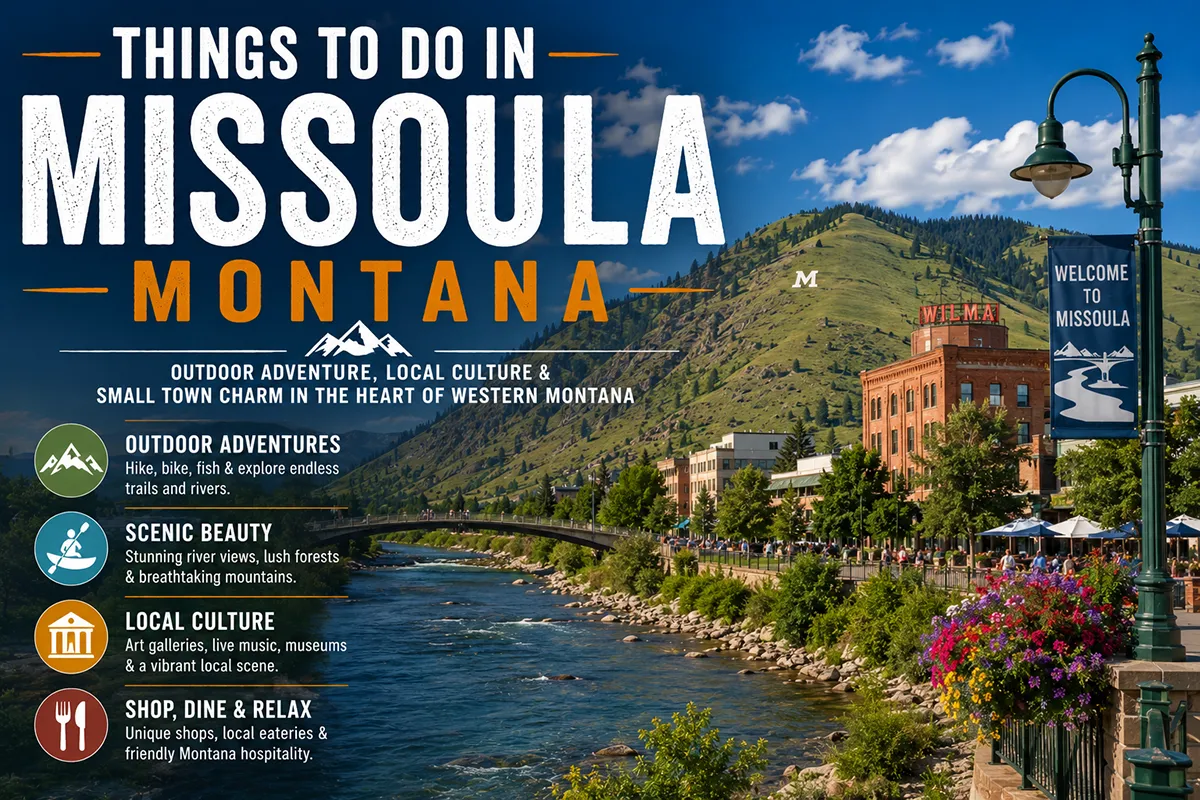
That’s Missoula — a city that keeps surprising you with what it’s decided to be. The University of Montana gives it intellectual energy. Five mountain ranges give it a 270-degree trail system. The Clark Fork River gives it a downtown waterfront that most cities would pay billions to create artificially. And 75,000 people who genuinely love living here give it the warmth that keeps visitors coming back.
Quick Answer — Things to Do in Missoula Montana
Missoula’s essential experiences: hike the M Trail on Mount Sentinel (Montana’s most popular trail), float the Clark Fork River with the free shuttle, watch surfers at Brennan’s Wave (a manmade surf spot in downtown Montana), visit the Smokejumper Visitor Center (the country’s largest aerial firefighting base), ride A Carousel for Missoula (built by 100,000+ volunteer hours), explore Garnet Ghost Town (50 miles east), cycle the Moonlight Rail Trail (15-mile downhill through 10 train tunnels), and spend an evening on the Hip Strip with a stop at Western Cider. Budget 3–5 days.
- Missoula is Montana’s second-largest city, nicknamed “Zootown,” surrounded by five mountain ranges and the Clark Fork River
- The M Trail is officially the most popular hiking trail in Montana — and it starts at the edge of downtown
- Brennan’s Wave is the only manmade surf wave in a Montana river — and watching from the bridge is free
- The Moonlight Rail Trail (15 miles, all downhill, 10 train tunnels) is a world-class cycling experience almost no travel guide covers
- The Smokejumper Visitor Center is one of the most unique attractions in the Mountain West
- Day trips: Glacier (2.5 hrs), Flathead Lake (1 hr), Lolo Hot Springs (30 min), Garnet Ghost Town (1 hr)
Liked this article?
Add Roaming Montana as a preferred source so you see more of our articles and guides on Google.
Why Missoula Rewards More Time Than People Give It
I’ve spent time in most of Montana’s notable cities and Missoula is the one people most consistently underestimate. They pass through on I-90 and see a college town. They stay a night and scratch the surface. They come back — usually multiple times — because the surface was a fraction of what was there.
Missoula sits in a convergence zone: five mountain ranges, three rivers (Clark Fork, Blackfoot, Bitterroot), the University of Montana, and a creative class drawn by all of the above. The combination produces a city with walkable neighborhoods, a genuine arts ecosystem, world-class outdoor access from downtown, and an overflowing restaurant and brewery scene.
The “Zootown” nickname has several claimed origins — some say it’s because watching Missoula from above makes the city look like a collection of animals going in all directions; others attribute it to the wild energy of college culture. Whatever the etymology, it fits. Missoula is loose, energetic, and genuinely itself.
For lodging, see my Missoula hotels guide and Missoula RV parks guide. For the full city overview, see my Missoula city guide.
All 30 Things to Do in Missoula Montana
Hiking & Outdoor Trails:
- M Trail on Mount Sentinel — Montana’s most popular trail
- Rattlesnake National Recreation Area — wilderness 2 miles from downtown
- Kim Williams Nature Trail — Clark Fork riverside, accessible
- Waterworks Hill — quick local hilltop views
- Lee Metcalf Wildlife Refuge — birding, grasslands, Bitterroot backdrop
River Activities: 6. Float the Clark Fork River (free shuttle!) 7. Brennan’s Wave — surf in downtown Montana 8. Whitewater rafting (multiple outfitters) 9. Clark Fork Riverfront Trail — both banks, bike or walk
Cycling: 10. Moonlight Rail Trail — 15-mile downhill, 10 train tunnels ⭐ 11. Missoula urban trail network
Culture & Arts: 12. A Carousel for Missoula 13. Missoula Art Museum (free) 14. Missoula Makers Collective (80+ local artists) 15. Fact & Fiction independent bookstore 16. Zootown Arts Community Center
Museums & Learning: 17. Smokejumper Visitor Center — aerial firefighting HQ 18. Fort Missoula Historical Museum + 25th Infantry Bicycle Corps ⭐ 19. Rocky Mountain Elk Foundation Visitor Center 20. Montana Natural History Center 21. Missoula Butterfly House & Insectarium ⭐
University of Montana: 22. UM Campus walk + campus tours (free) 23. Montana Grizzlies home games
Unique Experiences: 24. Blue Heron Nature Tours — guided watercolor, birding, seasonal tours ⭐ 25. Missoula PaddleHeads baseball ⭐ 26. Turner Farms 406 — organic farm + fall harvest festivals ⭐
Food, Drink & Shopping: 27. Hip Strip neighborhood — South Higgins Ave 28. Western Cider + craft brewery scene ⭐ 29. Big Dipper Ice Cream + Veera Donuts + Saturday Farmers Market
Day Trips: 30. Lolo Hot Springs, Garnet Ghost Town, National Bison Range, Seeley Lake & Morrell Falls, Flathead Lake, Glacier National Park
Hiking and Outdoor Trails
1. The M Trail — Montana’s Most Popular Hike ⭐
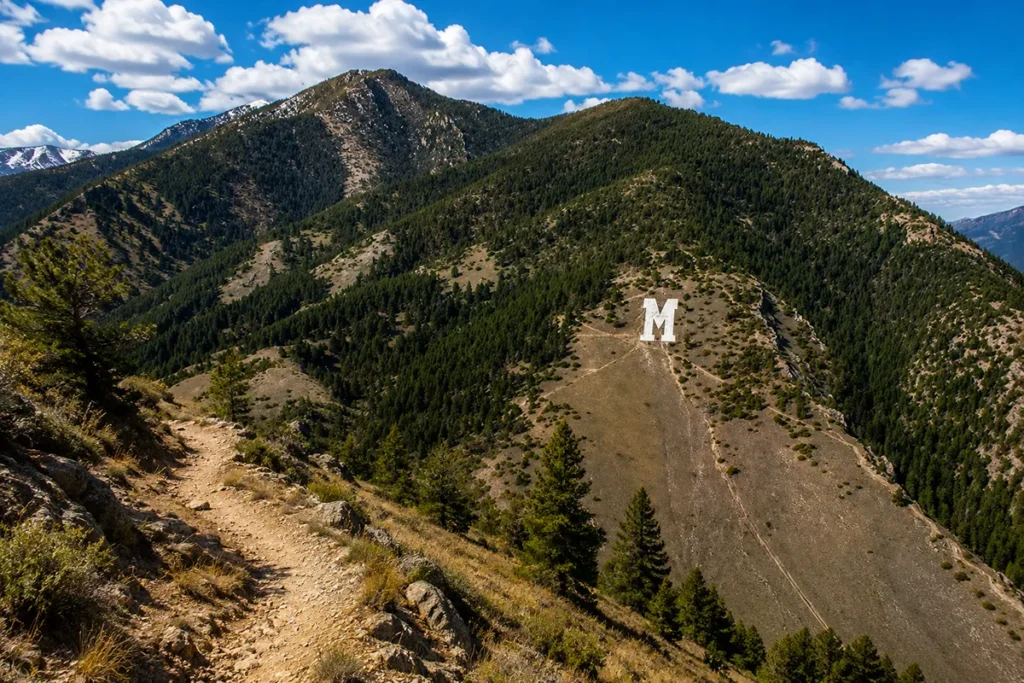
The University of Montana’s “M” has sat on the face of Mount Sentinel since the 1900s, and the trail to it has become the single most-hiked trail in Montana. The stats: 13 switchbacks, 620 feet of elevation gain, and a trailhead at the literal back door of UM’s campus.
The climb takes most hikers 20–40 minutes depending on fitness. What you get at the top: the entire Missoula valley spread below, the five mountain ranges ringing the city, the Clark Fork threading through downtown, and a perspective on Missoula’s geography that makes every subsequent activity make more sense.
The trail is also deceptively challenging for a 3/4-mile ascent — the switchbacks are relentlessly steep and the surface is rocky. Wear actual shoes, not sandals.
Trailhead: Maurice Avenue, behind UM Campus. Cost: Free. Best time: Early morning on weekdays — it fills on summer weekends.
2. Rattlesnake National Recreation Area
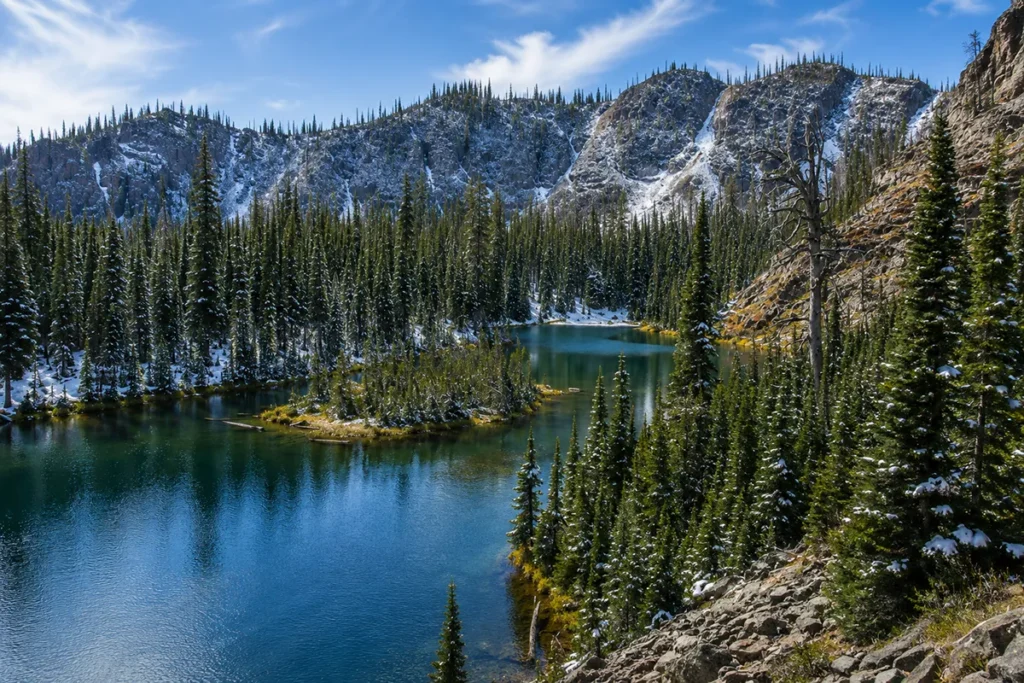
Two miles from downtown Missoula, the Rattlesnake National Recreation Area is one of the most remarkable examples of wilderness adjacent to an American city. Over 61,000 acres of roadless forest, streams, and peaks — designated to protect watershed, wildlife, and recreational values.
Trail options range from casual creek-side walks to multi-day wilderness backpacking. The lower Rattlesnake Creek trail is flat and suitable for families; the upper reaches require experience and proper equipment. The recreation area is Missoula’s most-used wilderness and explains much of the city’s quality-of-life appeal for outdoor-oriented residents.
Cost: Free.
Trailhead: Rattlesnake Creek Road.
3. Kim Williams Nature Trail
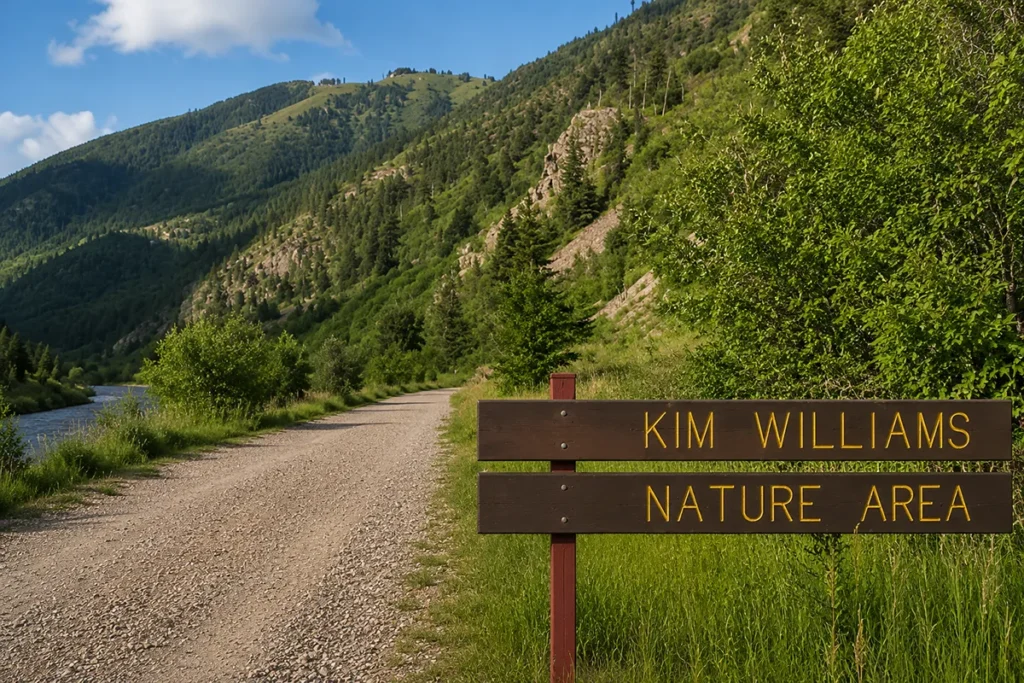
A 2.5-mile flat trail along the Clark Fork River’s south bank, connecting downtown to the Rattlesnake area via easy terrain. Named for a beloved Missoula radio personality and writer who championed the trail’s creation. Dog-friendly, stroller-accessible, and one of the best urban nature walks in Montana.
The trail runs under cottonwood canopy along the river — osprey fishing overhead, the Clark Fork visible through the trees, and the sounds of downtown never entirely disappearing. The contrast between city and wild makes it particularly satisfying.
4. Lee Metcalf Wildlife Refuge
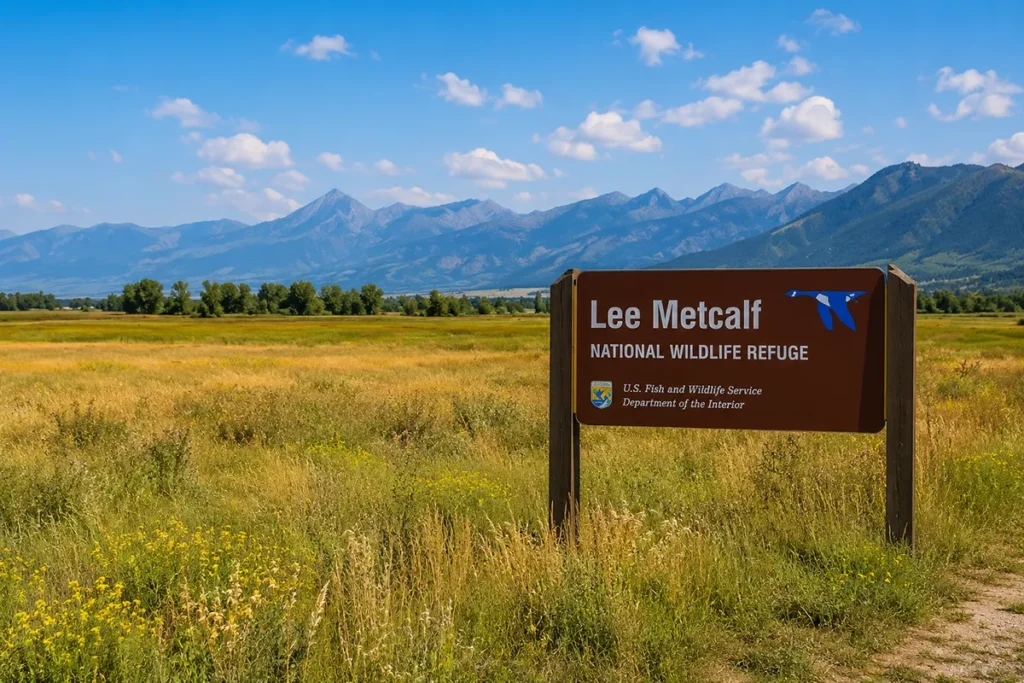
Just south of Missoula in the Bitterroot Valley, the Lee Metcalf Wildlife Refuge is a US Fish and Wildlife Service grassland and wetland complex. I visited on a morning in early fall and walked through open grasslands with the Bitterroot Mountains providing a dramatic western backdrop. Blue herons, sandhill cranes, and ducks were all visible from the walking trail.
The refuge is free, accessible, and almost entirely overlooked by travel guides. For a Missoula visitor who wants genuine wildlife viewing without driving two hours, this is the answer. [Verify current trail conditions and access at fws.gov/refuge/lee-metcalf.]
River Activities
5. Float the Clark Fork River ⭐
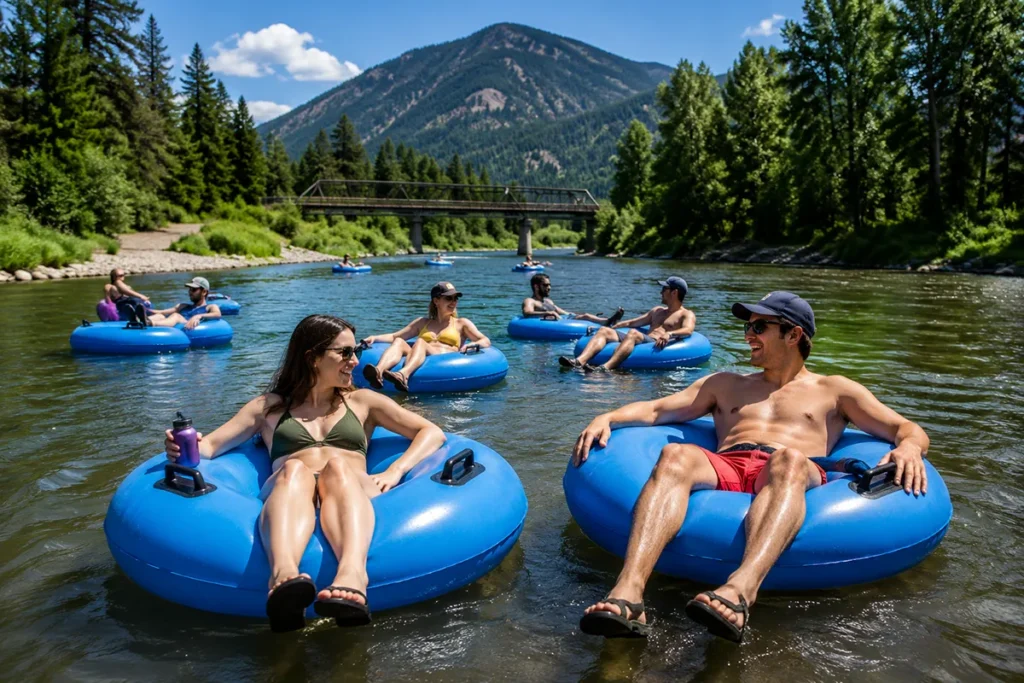
Floating the Clark Fork through and past the University of Montana campus is one of Montana’s great summer traditions — and the free shuttle service makes it genuinely accessible.
The logistics: put in upstream, drift downstream through the heart of Missoula, exit at a downstream access point, and take the free River Shuttle back to the put-in.
The University of Montana specifically highlights this free shuttle as part of their summer activity guide — and it’s the piece of practical information no travel blog mentions. Without it, floating the Clark Fork requires two cars or significant walking. With the free shuttle, it’s a self-contained afternoon.
Pick up tubes in town (multiple rental shops) or bring your own. The river runs at varying speeds depending on snowmelt — the float is most relaxed in August when water levels have dropped from peak spring flow. Always check water conditions before floating — the Clark Fork can be fast and cold earlier in the season.
Cost: Tube rental ~$15–20; shuttle free.
Best time: July–September.
6. Brennan’s Wave — Surf in Downtown Montana ⭐
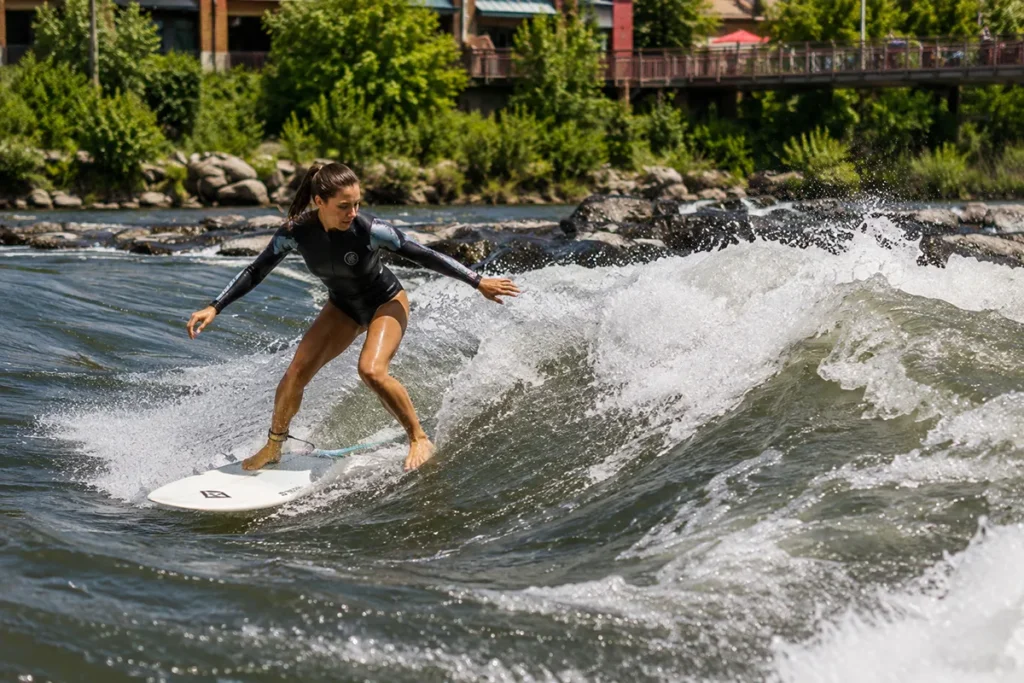
Here’s the one that stops every first-time visitor: Missoula has a manmade surf wave in the Clark Fork River, in the middle of downtown, and people actually surf it.
Brennan’s Wave is a standing wave engineered into the Clark Fork near Caras Park — a permanent feature used by kayakers and surfers who line up at the riverbank, paddle out into the current, and ride the wave in place. On warm summer afternoons, a rotating lineup of paddlers keeps the wave occupied all day.
What no travel guide adequately covers: watching from the Higgins Bridge is its own experience. Non-surfers, non-kayakers, and casual passersby routinely stop on the bridge and watch for 15-20 minutes.
Seeing someone rip a backhand turn on a river wave in downtown Montana, with the Higgins Street Bridge and downtown buildings in the background, is genuinely surreal. It’s free. It’s right there. It’s the image that captures Missoula’s character better than any brochure could.
Experienced paddlers can join the wave — beginner surfers should learn on ocean waves first; river surfing is a different technical challenge.
Location: Clark Fork River, near Caras Park and Higgins Bridge.
Cost: Free to watch; gear required to participate.
7. Whitewater Rafting
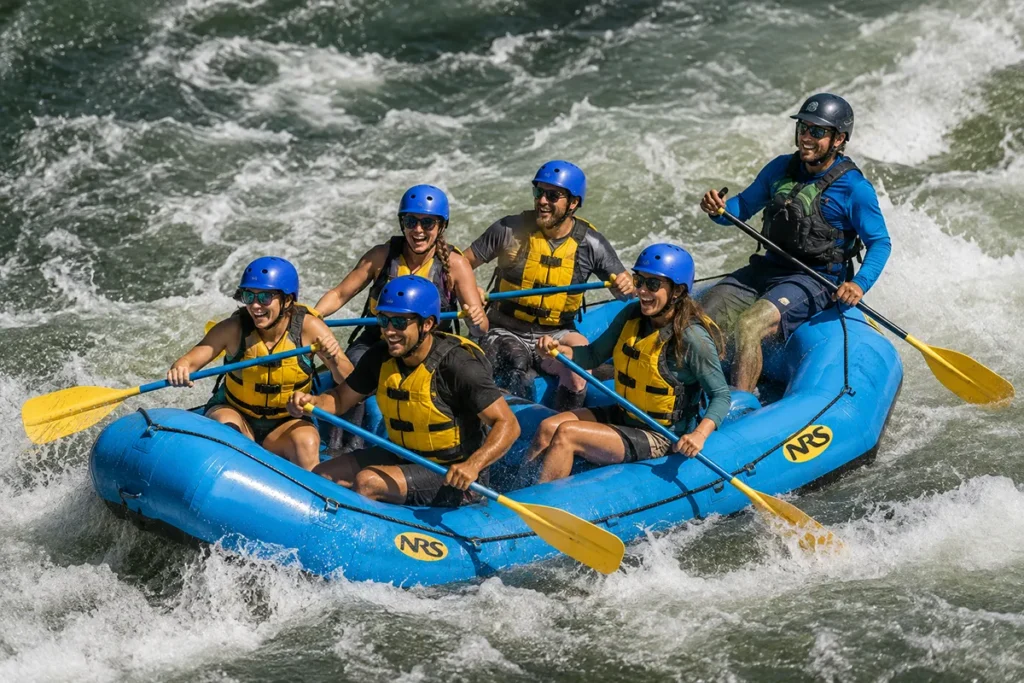
Multiple outfitters in Missoula guide trips on the Clark Fork and Blackfoot Rivers with options ranging from family-friendly Class II floats to technical Class III–IV sections. Half-day trips start around $70–90/person. See my Montana guided tours guide for outfitter context.
8. Clark Fork Riverfront Trail
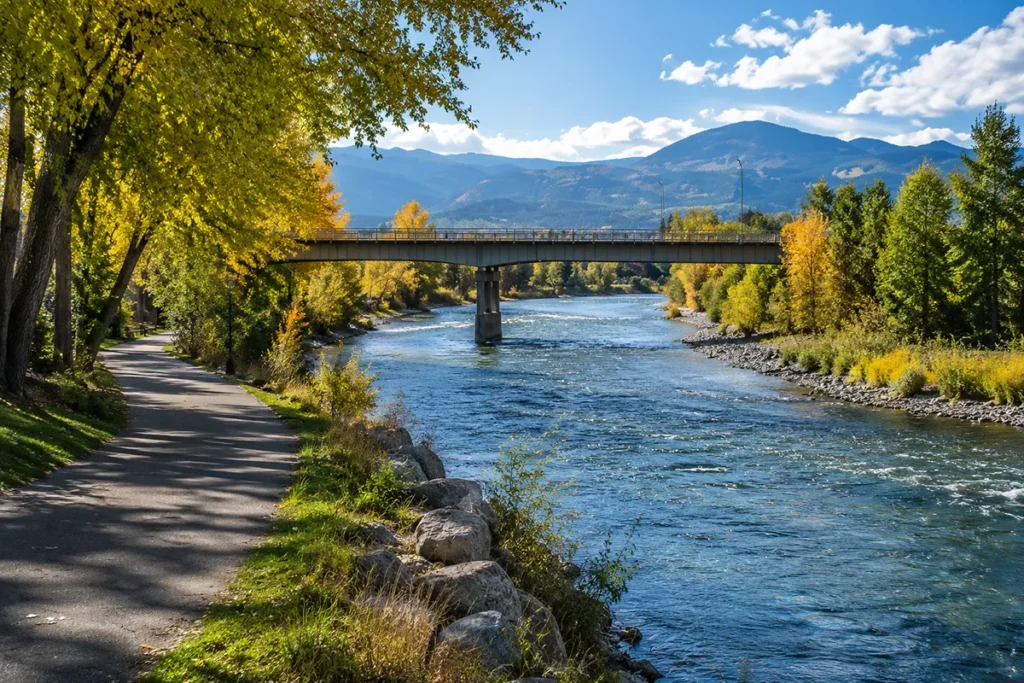
The paved Riverfront Trail runs both the north and south banks of the Clark Fork through downtown Missoula. Walking, cycling, or running it gives you the full downtown waterfront experience — Caras Park, Brennan’s Wave, the Higgins Bridge, university campus proximity, and the characteristic Missoula backdrop of mountains and river.
The south bank (north of the Hip Strip) and the north bank both have specific character. Walk both if you have the time.
Moonlight Rail Trail — The Experience No Guide Covers ⭐
Let me slow down here because this deserves its own section. The Moonlight Rail Trail (sometimes called the Route of the Hiawatha) is one of the most distinctive cycling experiences accessible from Missoula, and it’s genuinely extraordinary — 15 miles, entirely downhill, with a shuttle to the top.
The trail uses an old Northern Pacific railway corridor that was abandoned when a longer tunnel made the original route obsolete.
The abandoned corridor’s infrastructure remains: 10 historic train tunnels (some nearly a mile long, requiring lights and a jacket regardless of outside temperature) and 7 sky-high wooden trestle bridges crossing valleys at significant height.
Because it’s all downhill — following the original railway grade — you don’t need to be an athlete. The shuttle service to the top makes the logistics simple: drive to the trailhead, rent a bike and headlamp, take the shuttle to the upper end, and spend 2–3 hours cruising downhill through tunnels and across trestles while the route descends toward the valley.
The combination of the tunnel darkness (genuinely pitch black without a headlamp), the sudden emergence onto a sky-high trestle, and the mountain landscape surrounding the route is unlike any other cycling experience I’ve encountered in Montana.
Location: Approximately 2 hours from Missoula on the Idaho-Montana border.
Best time: Late May through September (snow at elevation).
Cost: Shuttle fee + rental; [verify current pricing at the Route of the Hiawatha website.]**
Culture and Arts
9. A Carousel for Missoula ⭐
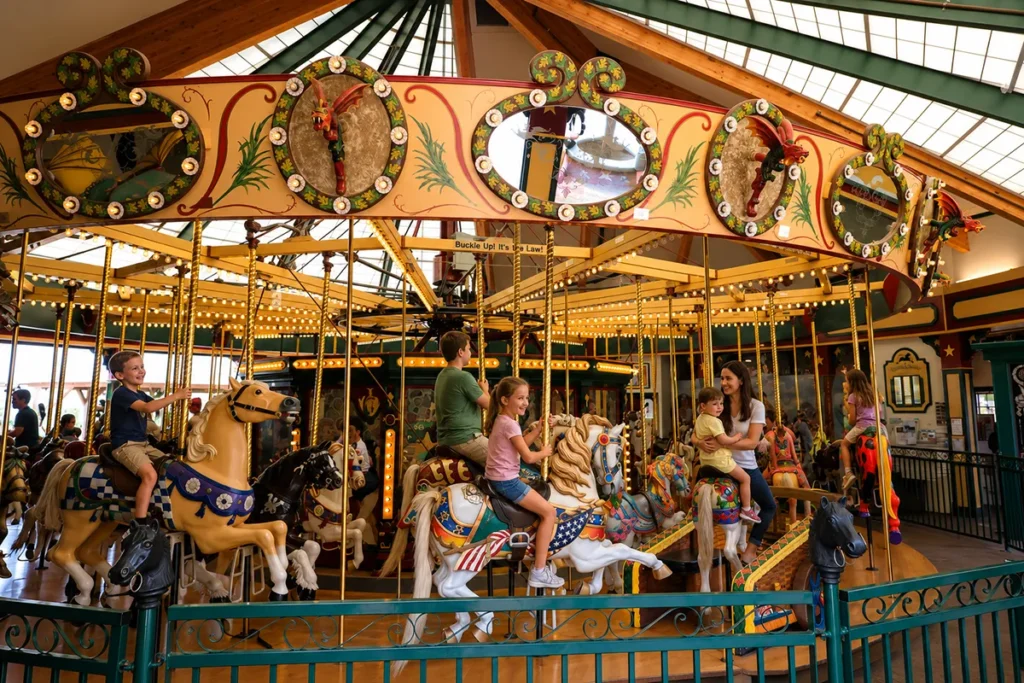
When the timber industry declined in the early 1990s and Missoula faced economic hardship, an unemployed cabinetmaker named Chuck Kaparich proposed building a carousel by hand. The community rallied. Over 100,000 volunteer hours later, A Carousel for Missoula opened in Caras Park in 1995.
The carousel is not museum-speed slow. It’s fast — visitors are explicitly warned to hang on. The ponies are hand-crafted, each with a story connected to Montana’s history or character. The dragon in the center has a brass ring you can attempt to grab. For families with children, it’s a magical, accessible, completely Montana experience.
Location: Caras Park, Missoula.
Cost: A few dollars per ride.
Hours: Daily during summer season.
10. Missoula Art Museum (MAM)
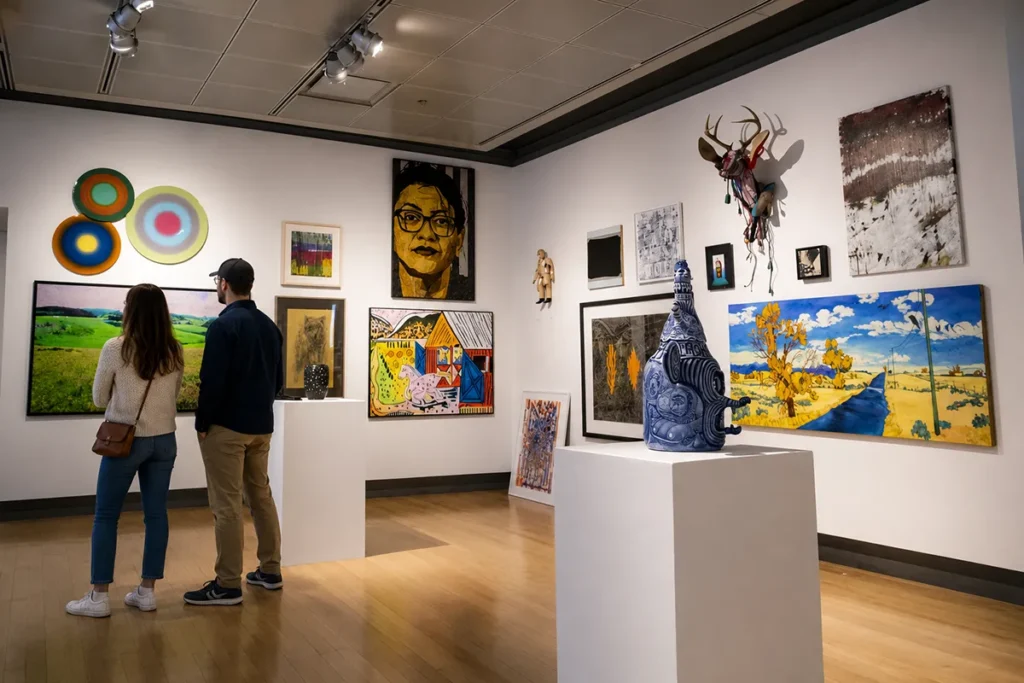
Free admission, rotating exhibitions of regional and national artists, and a permanent collection emphasizing Montana and Indigenous art.
The MAM consistently hosts exhibitions with genuine curatorial ambition for a city of 75,000. Located downtown, a natural companion to a Caras Park visit or a Hip Strip afternoon.
11. Missoula Makers Collective
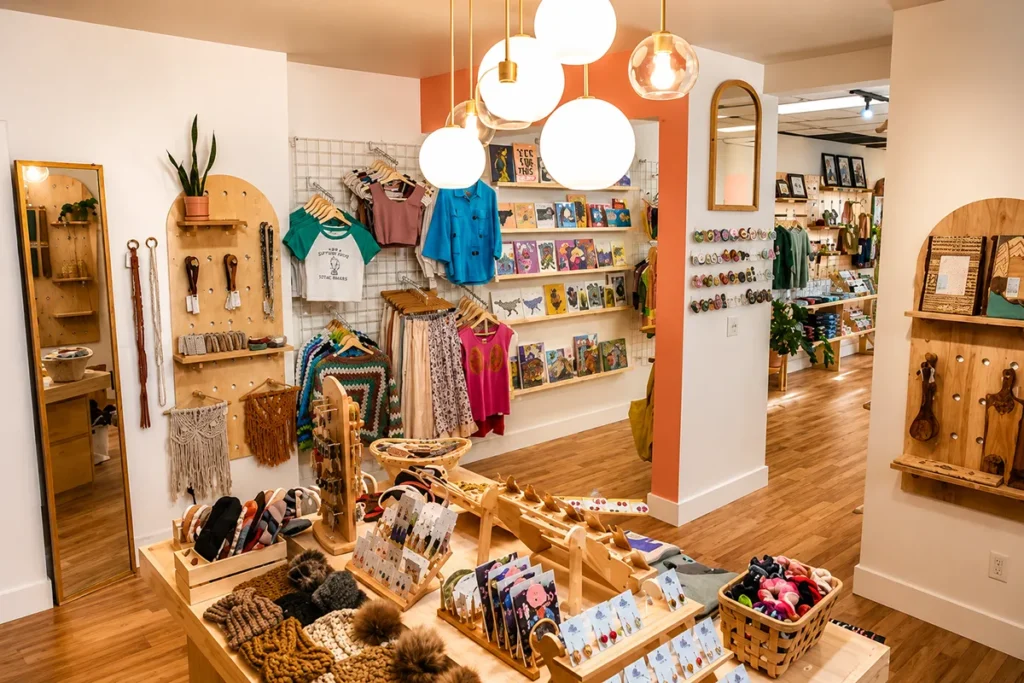
Covered by yournorthwestiebestie.com as one of their favorites: the Missoula Makers Collective showcases over 80 local artists in a single space — embroidered Montana sweatshirts, ceramic mugs, handmade jewelry, and genuinely local goods that aren’t available anywhere outside Montana.
For visitors who want souvenirs with a direct connection to local artists rather than imported Montana-branded merchandise, this is the correct stop.
12. Fact & Fiction Independent Bookstore
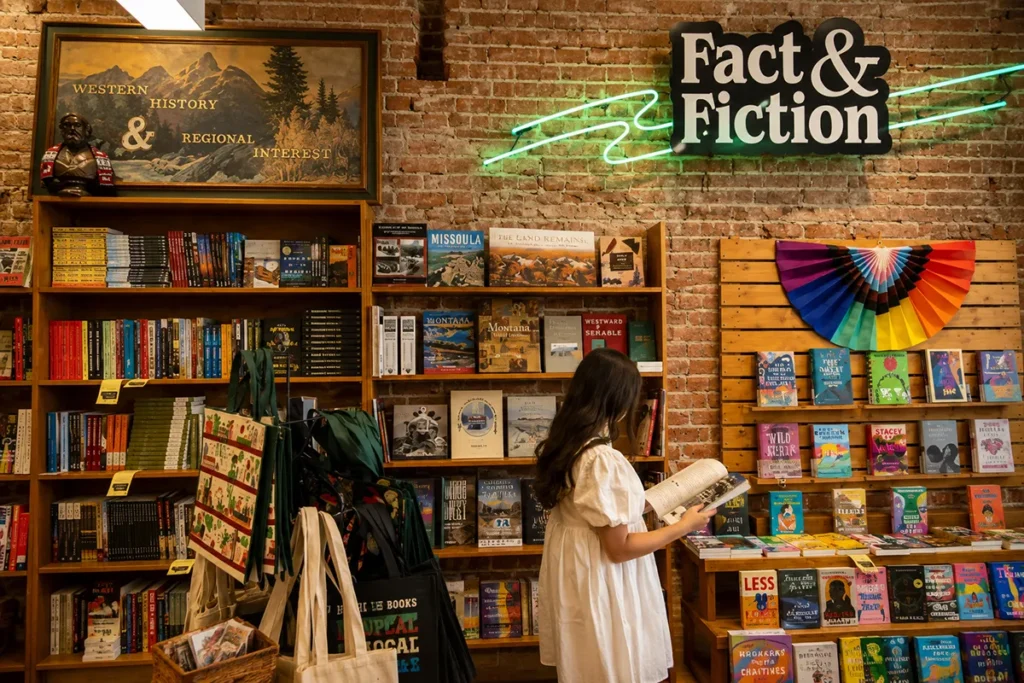
One of the better independent bookstores in the Mountain West. The local interest section is particularly worth time — books on Montana wildlife, Indigenous culture, Norman Maclean’s Clark Fork country, and regional history that you won’t find at chain stores.
Multiple Missoula travel writers specifically call it out as a stop that “helps you feel connected to the area.”
Missoula has been a literary city since Norman Maclean set A River Runs Through It here. The bookstore’s curation reflects that heritage.
Museums and Learning
13. Smokejumper Visitor Center ⭐
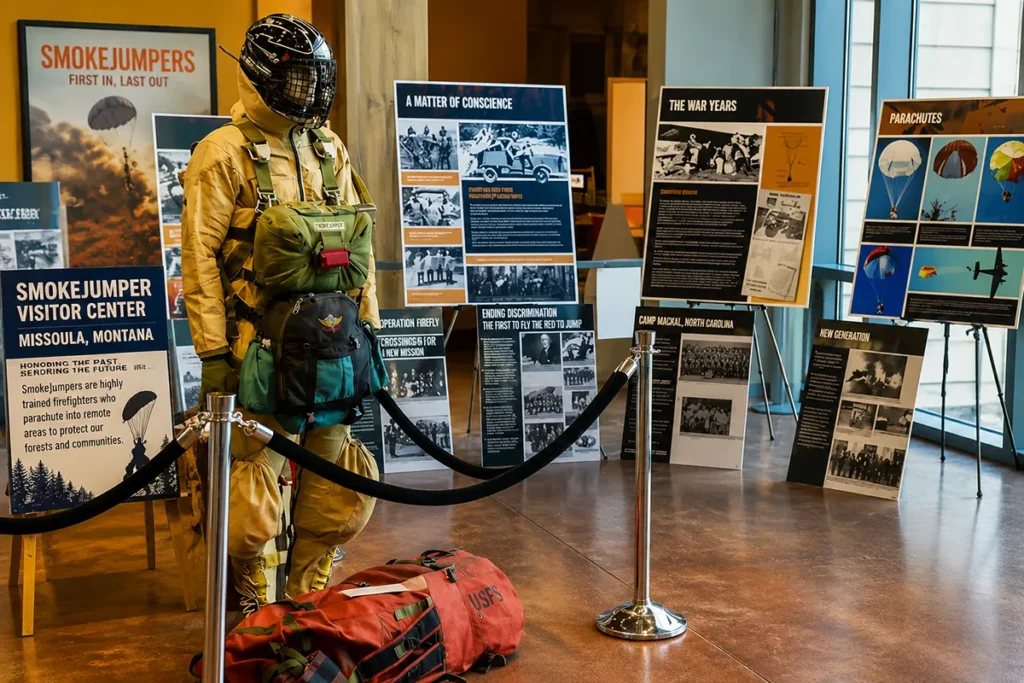
One of the most distinctive and underappreciated attractions in Montana. The Missoula Smokejumper Base is the largest aerial firefighting base in the United States — the place where the highly trained specialists who parachute into remote wildfires to fight them from the ground are based, trained, and equipped.
The Visitor Center provides free guided tours (summer season) of the base, the parachute loft where chutes are packed and maintained, the training facilities, and the history of smokejumping since 1940.
The guides are often active or retired smokejumpers themselves — the insider knowledge they provide about working a fire from the inside of a parachute is genuinely gripping.
In a summer when Montana is experiencing active wildfire season, the context provided by a smokejumper tour is particularly resonant.
Cost: Free.
Season: Summer; tours typically on the hour. [Verify current tour schedule at fs.usda.gov/main/r1/recreation.]
14. Fort Missoula Historical Museum — and the 25th Infantry Bicycle Corps ⭐
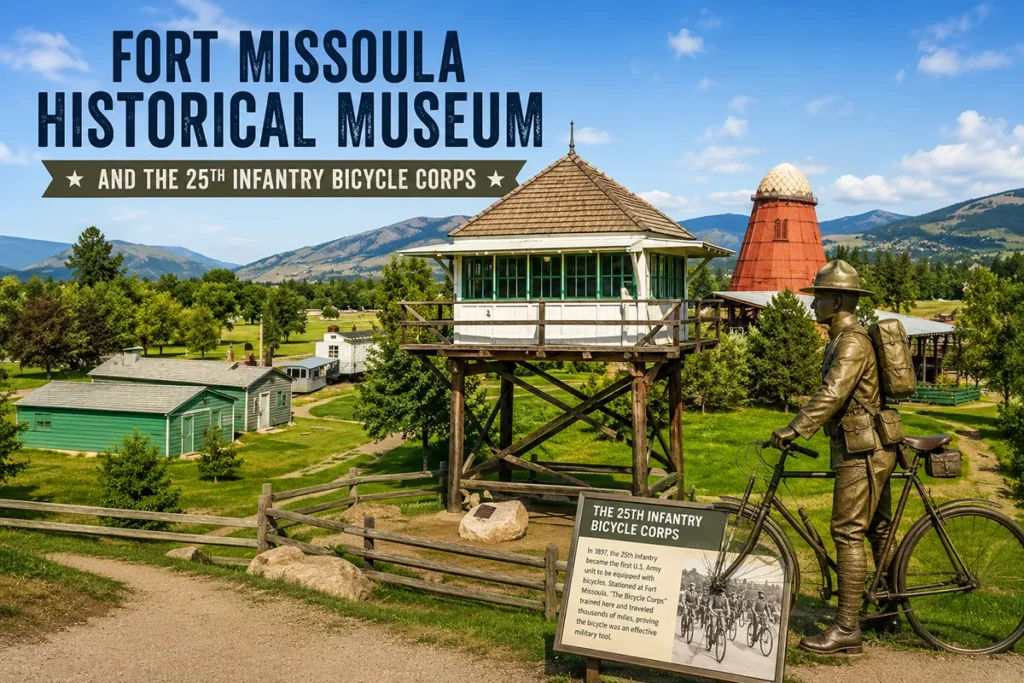
Every guide mentions Fort Missoula. None of them cover its most remarkable story.
Fort Missoula was established in 1877 as a military post and later became home to the 25th Infantry Regiment, one of the original Buffalo Soldier regiments — all-Black U.S. Army units created after the Civil War. In 1897, the 25th Infantry conducted one of the most extraordinary military experiments in American history: a 1,900-mile bicycle expedition from Fort Missoula to St. Louis, covering the distance in 41 days to test whether bicycles could serve as military transport through rough terrain.
The museum devotes an entire wing to the 25th Infantry Bicycle Corps — their equipment, their route, the social context of Black soldiers in 1890s America, and the remarkable physical achievement the expedition represented.
This is genuinely one of the most compelling untold stories in Montana history, and it starts — and should be told — at Fort Missoula.
The museum also includes rotating exhibits on Fort Missoula’s WWII history (it served as an Italian internee camp) and the broader history of Missoula.
Cost: Small admission. Hours: [Verify at fortmissoulamuseum.org.] Closed Mondays.
15. Rocky Mountain Elk Foundation Visitor Center
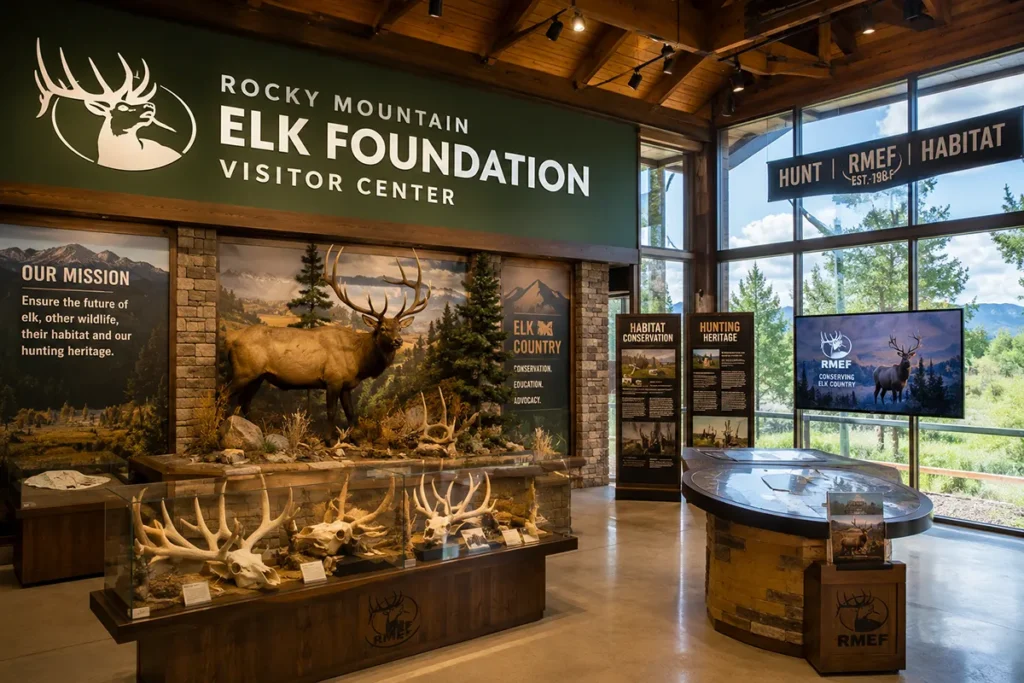
Headquartered in Missoula, the RMEF is one of the most significant wildlife conservation organizations in North America. Their visitor center makes conservation come to life through hands-on exhibits, life-size wildlife displays, and immersive educational experiences. Free to visit and genuinely educational for adults and children equally.
16. Missoula Butterfly House & Insectarium ⭐
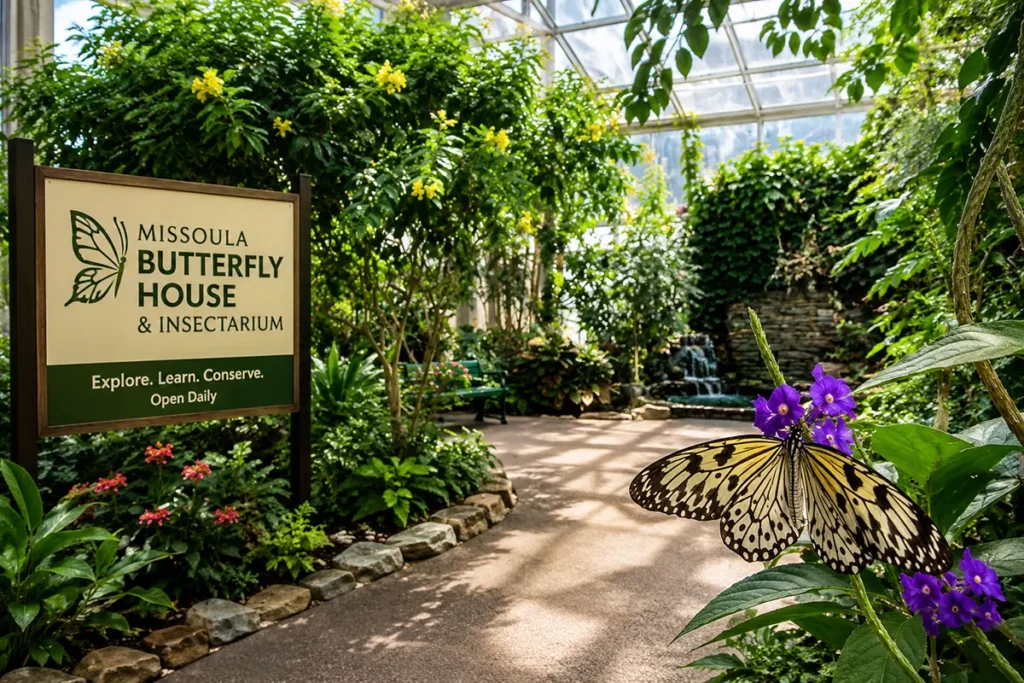
TripAdvisor lists this as a top Missoula attraction and no travel blog has covered it. The Missoula Butterfly House & Insectarium features a tropical greenhouse filled with live butterflies from around the world alongside an exhibit area housing insects, arachnids, millipedes, centipedes, and crustaceans.
The experience of walking through a tropical greenhouse full of free-flying butterflies while surrounded by Montana mountains is genuinely dreamlike. Children love it. Adults are usually more delighted than they expected.
[Verify current hours and admission at missoulabutterflyhouse.org.]
17. Montana Natural History Center
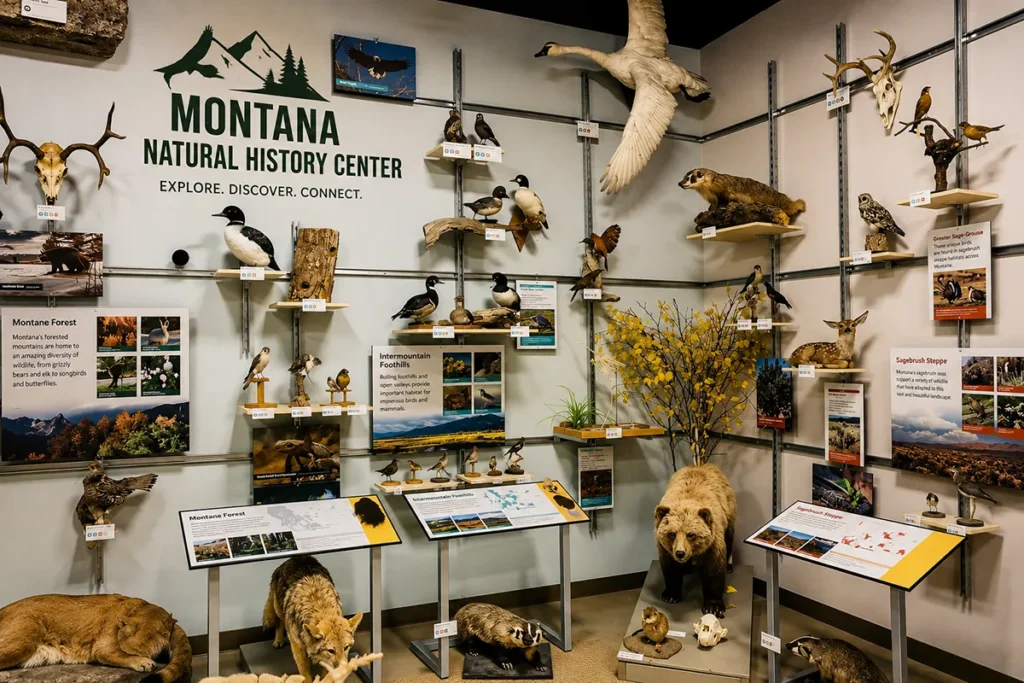
A community-focused natural history institution promoting the understanding and stewardship of Montana’s natural environment. Exhibits, programs, and rotating displays connect visitors to the ecosystems, geology, and natural heritage of the region. The on-site bookstore carries regional field guides and natural history titles worth browsing.
University of Montana Campus
18. UM Campus Walk and Free Tours
The University of Montana occupies 200 acres at the base of Mount Sentinel, directly alongside the Clark Fork River. Founded in 1893, UM enrolls around 13,000 students and anchors Missoula’s intellectual and cultural life.
The campus is beautiful and freely walkable. The Oval — UM’s central quad — with its hammock stands and expansive lawn is exactly the kind of space that explains why people choose to live here. The Clark Fork River is visible from the south edge of campus; Mount Sentinel rises directly behind it.
Free campus tours run daily through the Admissions office and are open to anyone — not just prospective students. The guides provide historical and architectural context.
19. Montana Grizzlies Home Games
UM’s Division I athletics — particularly football at Washington-Grizzly Stadium — are a cultural institution in western Montana. Fall Grizzly home games pack the stadium with 25,000+ fans and produce a community energy that’s genuinely different from any other fall activity in the area.
Check the UM Athletics schedule (gogriz.com) before your visit — if a home game coincides with your Missoula trip, attending is one of the most authentic Montana social experiences available.
Unique Experiences Competitors Don’t Cover
20. Blue Heron Nature Tours ⭐
yournorthwestiebestie.com (a 2026-fresh guide) covers this and it’s the best recommendation in their article: Blue Heron Nature Tours offers year-round guided outdoor experiences led by Elena, a Missoula local with over 20 years of experience in the area.
The spring watercolor tour is the signature offering: a guided wildflower walk with plant identification, followed by a watercolor workshop where participants create their own paintings of what they’ve seen. Other tours include birding, cross-country skiing (winter), and seasonal wildlife walks.
This is genuinely unlike any other guided activity available near Missoula — the combination of natural history education and creative output makes it memorable in a way that standard hiking tours don’t.
[Verify current tour schedule and booking at blueheronnaturetours.com or equivalent.]
21. Missoula PaddleHeads Baseball ⭐
The Missoula PaddleHeads are a Pioneer League professional baseball team playing at Ogren Park at Allegiance Field along the Clark Fork River. Pioneer League games have the atmosphere of small-city professional baseball at its most authentic — affordable tickets, a genuinely community-oriented crowd, and a ballpark small enough that every seat is a good seat.
The UM blog specifically lists catching a PaddleHeads game as one of summer Missoula’s signature activities — including the fireworks games that run on select dates.
Season: Summer. [Verify current schedule at milb.com/missoula or paddleheadsbaseball.com.]
22. Turner Farms 406 ⭐
bontraveler.com calls this one of their best Missoula finds: Turner Farms 406 is a family-run organic farm approximately 15 minutes from downtown.
Throughout the year it operates as a working farm selling organic produce. In fall, it transforms into a harvest festival experience with pumpkin patches, games for children, live music, donuts, and a mini-fair atmosphere.
This is exactly the kind of seasonal, local, authentic experience that Missoula residents do and most visitors miss. If you’re visiting in September or October, Turner Farms 406 is worth a half-day.
Food, Drink, and Neighborhood Life
23. The Hip Strip — South Higgins Avenue ⭐
The Hip Strip is Missoula’s most characterful commercial neighborhood — the stretch of South Higgins Avenue between the Higgins Bridge and the University District. Independent restaurants, funky bars, coffee shops, and local boutiques line a corridor that feels genuinely organic rather than tourism-manufactured.
Clyde Coffee on the Hip Strip is specifically recommended by bontraveler.com — a modern industrial cafe with expertly brewed coffee and baked pastries. Black Coffee on East Main is another local recommendation with specialty seasonal drinks and housemade toasts.
The Hip Strip is where Missoula residents actually go. Walking it in the evening — when the restaurants are busy and the bars are starting up — is the closest thing to experiencing the city from the inside.
24. Western Cider + Craft Brewery Scene ⭐
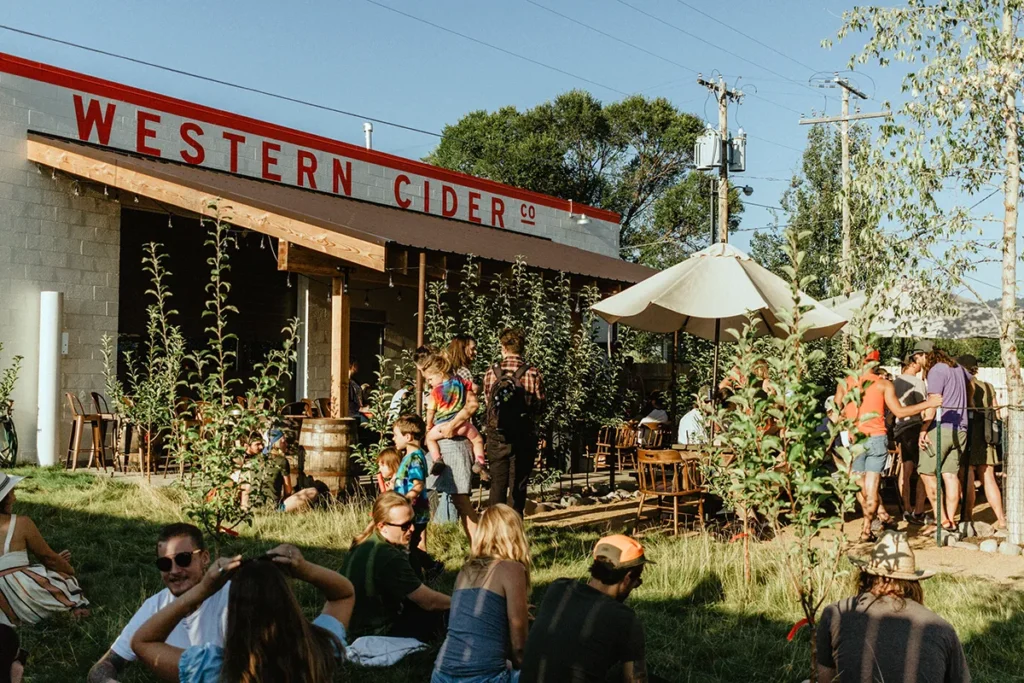
Every guide covers Missoula’s brewery scene. None of them cover Western Cider — and it’s the most distinctive Missoula drink option.
Western Cider is a Montana hard cider company making dry, complex ciders from regional apples. Their taproom hosts regular events including — only in Missoula — Sunday morning yoga in the cidery. The cider itself is genuinely excellent for visitors who lean toward lower-hop, more apple-forward beverages.
For the complete Missoula craft brewery landscape, see my dedicated Missoula breweries guide.
25. Big Dipper Ice Cream, Veera Donuts, and the Saturday Farmers Market
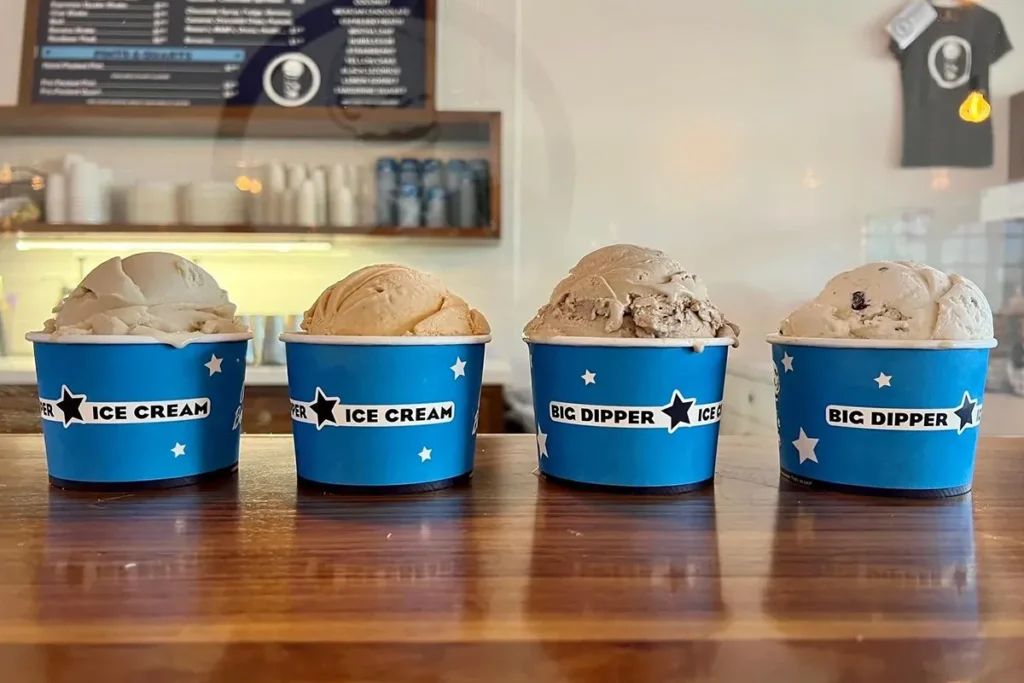
Big Dipper Ice Cream has been a Missoula institution since 1995 — two locations, flavors including huckleberry, espresso, mint oreo, mango habanero sorbet, and black licorice. The UM summer activities blog calls it a community staple.
Veera Donuts produces handcrafted doughnuts in innovative flavors — huckleberry lemonade is the signature — in a cozy downtown space. bontraveler.com specifically calls it a must-visit.
The Saturday Farmers Market runs from June through October in downtown Missoula with fresh produce, local meats and cheeses, hot food, and live music. The Wednesday Out to Lunch at Caras Park (11am–1pm) adds a midweek market option with Clark Fork views.
Day Trips From Missoula
Missoula’s central western Montana location makes it the best base camp for regional day trips.
26. Lolo Hot Springs (30 minutes west)
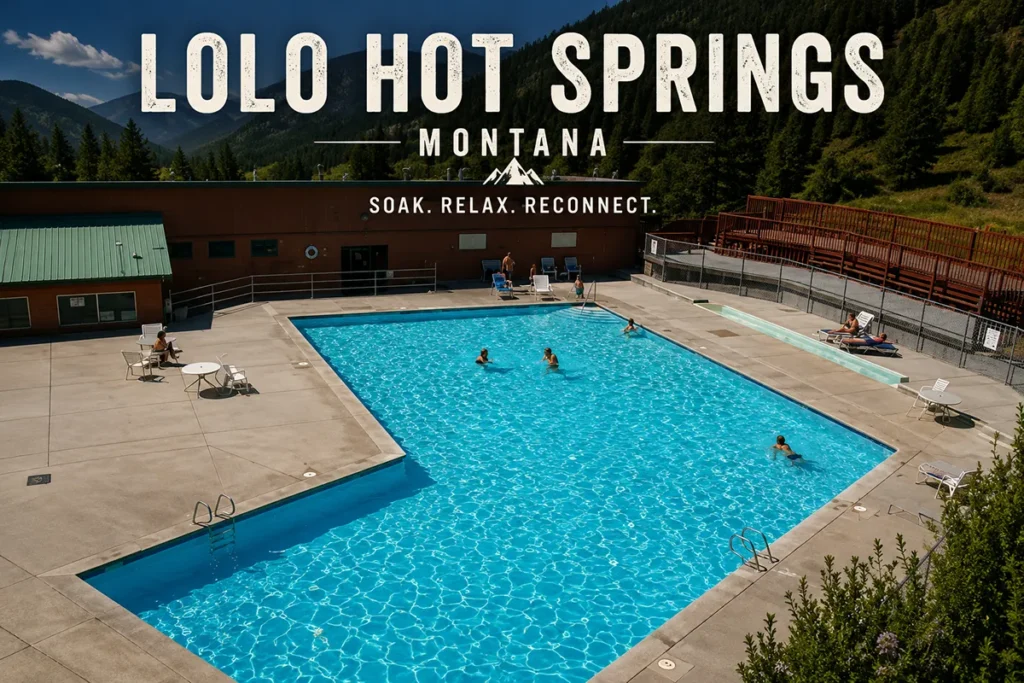
Lolo Hot Springs sits 30 miles west of Missoula on US-12, along the Lewis and Clark National Historic Trail. A natural geothermal hot springs with resort facilities — pools, lodging, and a restaurant — it’s the easiest hot springs day trip from Missoula. The drive along US-12 through the Lochsa corridor is scenic in its own right.
Quinn’s Hot Springs (40 miles northwest near Paradise, on the Clark Fork River) offers a more polished resort experience. See my Quinn’s Hot Springs guide.
27. Garnet Ghost Town (50 miles east)
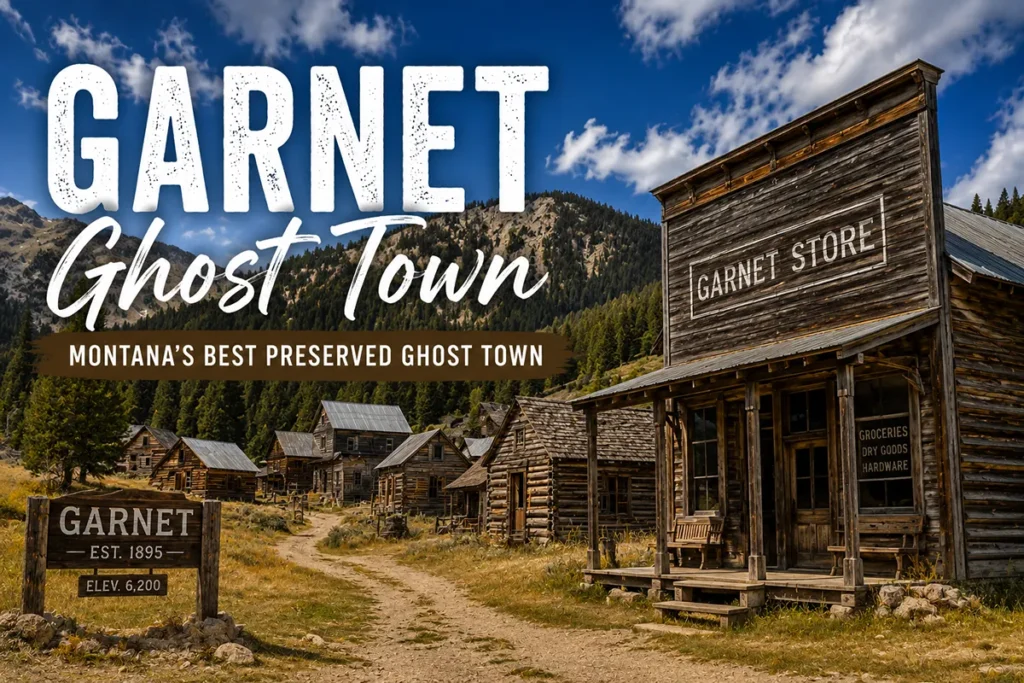
One of Montana’s best-preserved ghost towns, Garnet sits in the mountains east of Missoula via a rough forest road. Over 30 buildings survive — a hotel, saloon, mine buildings, and scattered cabins — in various states of dignified weathering. January–April, the road closes to vehicles; snowmobile access only in winter.
wereintherockies.com specifically highlights it: “One of the best-preserved ghost towns you’ll ever see.” For full ghost town context, see my Montana ghost towns guide.
28. National Bison Range (45 miles north)
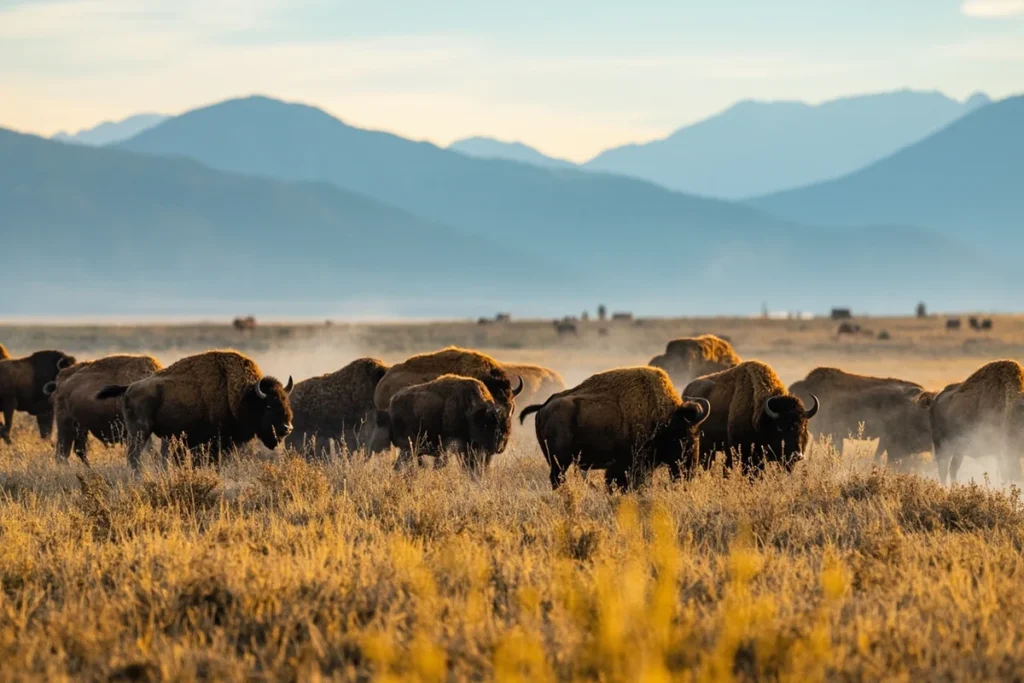
The National Bison Range near Moiese — 45 minutes north — is the most reliable bison viewing experience in Montana. Around 350–500 bison year-round on a 19-mile scenic driving loop through the Mission Valley. The approach with the Mission Mountains rising to the east is one of Montana’s great views.
29. Seeley Lake and Morrell Falls (1 hour northeast)
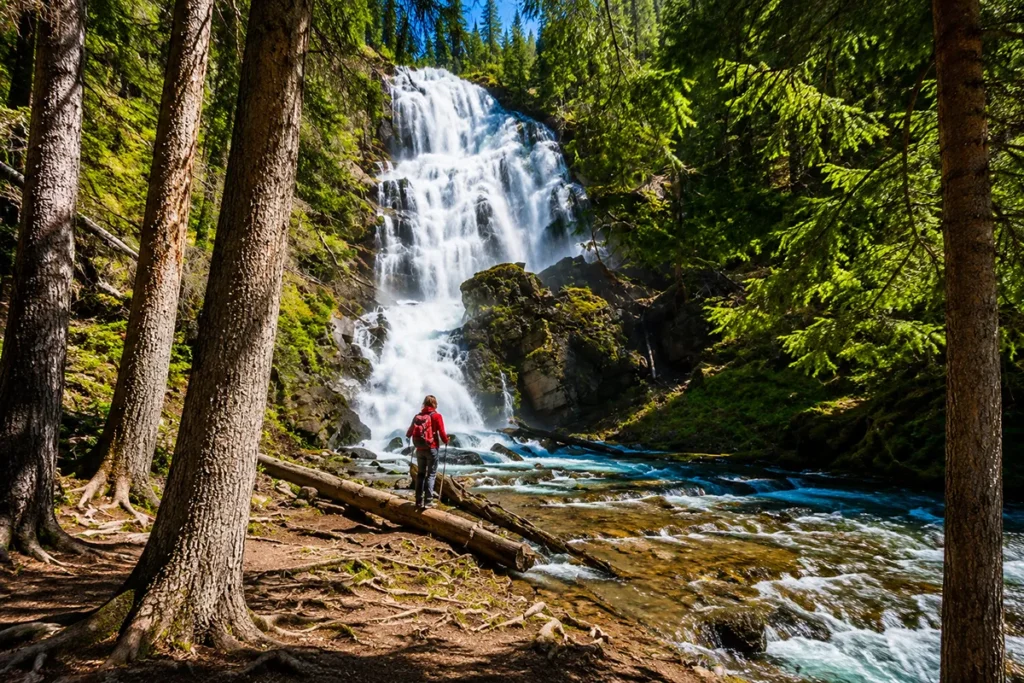
Drive north from Missoula through the Blackfoot River corridor to Seeley Lake — a mountain lake resort community — and continue to the Morrell Falls trailhead.
The 5-mile round-trip hike to Morrell Falls rewards with a 90-foot waterfall in a dense conifer canyon. wereintherockies.com calls it one of their favorite Montana hikes. For all Montana waterfall planning, see my Montana waterfalls guide.
30. Glacier National Park (2.5 hours northwest)
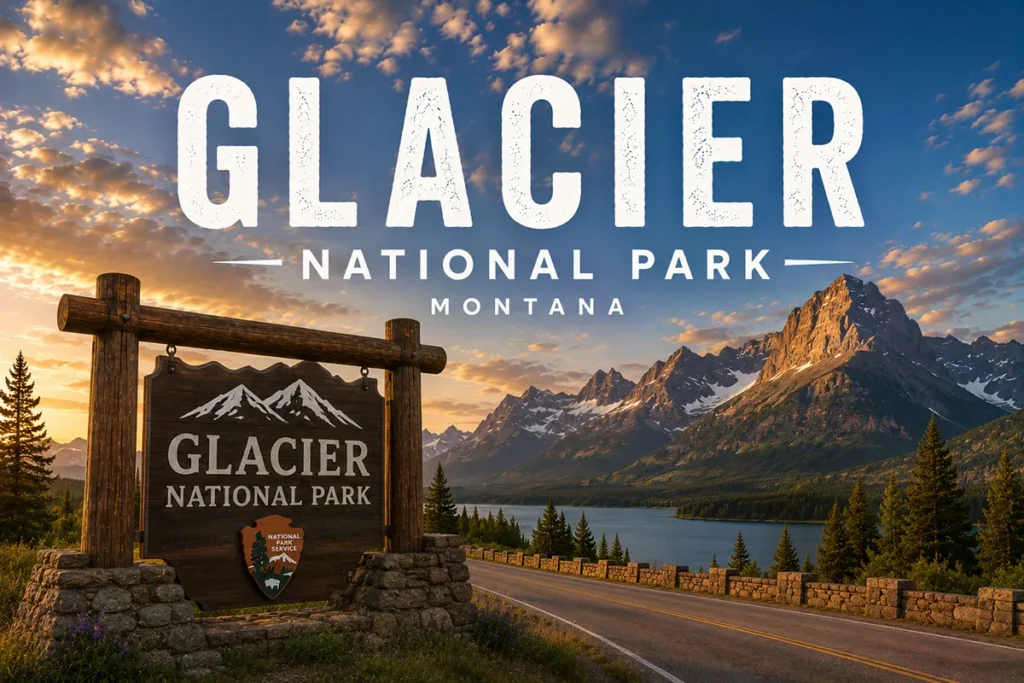
Glacier is 137 miles northwest — one of the most accessible major national park day trips from any Montana city. Vehicle reservations are required from late May through early September for Going-to-the-Sun Road (recreation.gov).
Plan an early departure; Glacier day trips from Missoula require significant driving on both ends.
Flathead Lake (1 hour north) is the easier day trip when Glacier logistics are daunting — Montana’s massive natural freshwater lake with swimming, boating, and cherry-stand season in late July.
Things to Do in Missoula by Traveler Type
For Outdoor Enthusiasts
M Trail (start here — it’s mandatory), Rattlesnake National Recreation Area (wilderness 2 miles from downtown), float the Clark Fork with free shuttle, Moonlight Rail Trail cycling, whitewater rafting with Clark Fork outfitters, Brennan’s Wave kayaking.
For Families
A Carousel for Missoula (Caras Park), Missoula Butterfly House & Insectarium, Fort Missoula Historical Museum (children’s exhibits), Garnet Ghost Town (summer daytime), National Bison Range driving tour, Big Dipper Ice Cream, Saturday Farmers Market.
For Arts and Culture Lovers
Missoula Art Museum (free), Missoula Makers Collective (80+ local artists), Fact & Fiction bookstore, Zootown Arts Community Center, UM campus architecture walk, Caras Park summer performance series.
For History Enthusiasts
Fort Missoula Historical Museum — specifically the 25th Infantry Bicycle Corps wing (the most underrated historical story in western Montana), Smokejumper Visitor Center (aerial firefighting history since 1940), UM campus (Montana’s oldest public university).
For Food and Drink
Saturday Farmers Market, Big Dipper Ice Cream, Veera Donuts, Missoula breweries (see Missoula breweries guide), Western Cider taproom, Hip Strip restaurant crawl (South Higgins Ave).
Budget/Free Activities
M Trail (free), Kim Williams Nature Trail (free), Rattlesnake National Recreation Area (free), Missoula Art Museum (free), Clark Fork float with free shuttle, Brennan’s Wave viewing (free), Rocky Mountain Elk Foundation Visitor Center (free), UM Campus walk (free), Lee Metcalf Wildlife Refuge (free), Smokejumper Visitor Center (free).
Practical Planning
Getting to Missoula: Missoula International Airport (MSO) has direct flights from Seattle, Denver, Salt Lake City, Los Angeles, and Chicago. The airport has mountain views and an outdoor patio — yournorthwestiebestie.com calls it “unlike any airport I’ve seen.” From Seattle: ~7 hours by car (475 miles) on I-90 or a 1-hour direct flight.
How long to stay: 3 days covers the M Trail, Clark Fork float, Caras Park and Carousel, Smokejumper Visitor Center, Fort Missoula, and the Hip Strip. 5 days adds Garnet Ghost Town, Morrell Falls, the Moonlight Rail Trail, and deeper exploration of the arts scene.
Getting around: Missoula is bicycle-friendly with an urban trail network. The M Trail, Kim Williams Trail, Hip Strip, and downtown are all bikeable. A car is needed for day trips (Glacier, Garnet, Bison Range, Seeley Lake).
For seasonal planning across Montana, see my best time to visit Montana guide.
Missoula in each season:
- Summer: Peak for floating, outdoor concerts, Farmers Market, PaddleHeads games, hiking
- Fall: Best hiking weather, leaf color through the Rattlesnake and Bitterroot, Turner Farms harvest
- Winter: Montana Snowbowl skiing (see my Montana ski resorts guide), cross-country skiing, cozy brewery season
- Spring: Blue Heron watercolor tours, wildflowers, migratory birds at Lee Metcalf, Clark Fork running full
Explore More Montana Cities
Montana has a lot of ground to cover. Whether you’re building a road trip route or just curious what the next town down the highway has to offer, here are the city guides we’ve put together so far:
- Things to Do in Bozeman, Montana — Montana’s fastest-growing city, with great restaurants, the Museum of the Rockies, and easy access to Gallatin Canyon and Big Sky.
- Things to Do in Livingston, Montana — The original Yellowstone gateway; a fly fishing capital with a surprising arts scene, vintage neon downtown, and the Absaroka Mountains as a backdrop.
- Things to Do in Missoula, Montana — Western Montana’s outdoor playground, where the Clark Fork River flows through downtown and hiking, breweries, art galleries, and live music are all part of daily life.
- Things to Do in Whitefish, Montana — The gateway to Glacier National Park, with a walkable downtown, ski resort access at Whitefish Mountain, and Whitefish Lake on the edge of town.
- Things to Do in Kalispell, Montana — The commercial hub of the Flathead Valley; close to Glacier, Flathead Lake, and some of the best scenic drives in northwest Montana.
- Things to Do in Bigfork, Montana — A small arts village on Flathead Lake that punches above its size with galleries, live theater, and excellent waterfront dining.
- Things to Do in Polson, Montana — Sitting on the southern shore of Flathead Lake, Polson combines lake recreation, cherry orchards, and sweeping views of the Mission Mountains.
- Things to Do in Butte, Montana — One of Montana’s most historically layered cities; mining heritage, Victorian architecture, and a working-class character that’s entirely its own.
- Things to Do in Helena, Montana — Montana’s compact, walkable capital; the state capitol building, Last Chance Gulch, and the Cathedral of Saint Helena are all within easy reach downtown.
- Things to Do in Great Falls, Montana — The Electric City is home to the Missouri River’s famous waterfalls, the Lewis and Clark National Historic Trail Interpretive Center, and an impressive collection of museums.
- Things to Do in Billings, Montana — Montana’s largest city offers a mix of urban amenities, sandstone Rimrocks, vibrant breweries, family attractions, and easy access to nearby state parks and national monuments.
- Things to Do in Dillon, Montana — A quiet southwestern Montana town with serious fly fishing access on the Beaverhead River and a pace that feels far removed from the tourist trail.
- Things to Do in Hamilton, Montana — Nestled in the scenic Bitterroot Valley, Hamilton is known for hiking, fishing, historic downtown charm, and easy access to the Bitterroot Mountains.
- Things to Do in West Yellowstone, Montana — The busiest gateway to Yellowstone National Park, offering wildlife viewing, snowmobiling, museums, and year-round outdoor adventures.
- Things to Do in Gardiner, Montana — Yellowstone’s original entrance town, famous for the Roosevelt Arch, abundant wildlife, river rafting, and quick access to Mammoth Hot Springs.
- Things to Do in Red Lodge, Montana — A charming mountain town at the base of the Beartooth Highway, known for its historic downtown, outdoor recreation, and one of America’s most scenic drives.
- Things to Do in Polebridge, Montana — Glacier’s remote northwest corner; no cell service, no power grid, a legendary bakery, and some of the most untouched backcountry in the park.
- Things to Do in Miles City, Montana — Eastern Montana’s cowboy capital, home to the Bucking Horse Sale and a historic downtown that hasn’t changed much since the cattle drives.
- Things to Do in Havre, Montana — A welcoming Hi-Line community where railroad history, underground tours, and wide-open prairie landscapes showcase a different side of northern Montana.
- Libby, Montana Guide — A timber town in the far northwest tucked along the Kootenai River, with Kootenai Falls and the Cabinet Mountains Wilderness on its doorstep.
Final Thoughts
Missoula is the Montana city that surprised me the most — and I’m not alone in that. Every visitor I’ve talked to who gave it more than one night has come back.
The city has a way of peeling back layers: the first day is the trail and the river; the second day is the museums and the bookstore; the third day is the brewery you hadn’t planned on and the conversation with a stranger that turned into a four-hour afternoon.
Norman Maclean understood this about the Missoula river country. He wrote that “eventually, all things merge into one, and a river runs through it.” The Clark Fork does that for Missoula — it ties the trails to the downtown to the university to the Brennan’s Wave crowd to the floating families, and makes it all feel coherent.
Give it more days than you planned. You’ll use them.
Questions about Missoula? Drop them in the comments.
Frequently Asked Questions
What are the best thingsto do in Missoula Montana?
Missoula’s essential experiences: hike the M Trail on Mount Sentinel (Montana’s most popular trail), float the Clark Fork River using the free shuttle, watch surfers at Brennan’s Wave (manmade surf spot in downtown), tour the Smokejumper Visitor Center (largest aerial firefighting base in the US, free tours in summer), ride A Carousel for Missoula in Caras Park, explore the Fort Missoula Historical Museum (including the 25th Infantry Bicycle Corps story), and cycle the Moonlight Rail Trail (15 miles downhill through 10 historic train tunnels).
What is Brennan’s Wave in Missoula?
Brennan’s Wave is a permanent manmade standing wave engineered into the Clark Fork River near Caras Park in downtown Missoula. Kayakers and surfers ride the wave in place while standing on the bank watching. Non-surfers can observe for free from the Higgins Bridge above. It’s one of Missoula’s most distinctive and surprising features — a surf spot in the heart of landlocked Montana.
How far is Missoula from Glacier National Park?
Missoula is approximately 137 miles (2.5 hours by car) northwest of Glacier National Park’s West Entrance at Apgar. Vehicle reservations for Going-to-the-Sun Road are required from late May through early September (recreation.gov). Plan a full day — 5 hours of driving plus park time. Flathead Lake (1 hour north) is an easier day trip when Glacier logistics are daunting.
What is the Moonlight Rail Trail near Missoula?
The Moonlight Rail Trail (also called the Route of the Hiawatha) is a 15-mile cycling trail built on an abandoned Northern Pacific Railway corridor near the Montana-Idaho border, approximately 2 hours from Missoula. The trail is entirely downhill from start to finish (following the original railway grade) and passes through 10 historic train tunnels and across 7 sky-high wooden trestle bridges. A shuttle service takes cyclists to the top; rentals available at the trailhead. One of the most distinctive cycling experiences in the Mountain West.
Is Missoula Montana worth visiting?
Yes — Missoula is Montana’s most underestimated city. It combines the outdoor access of a mountain town (M Trail, Rattlesnake Wilderness, Clark Fork river activities) with the cultural depth of a university city (MAM, Missoula Children’s Theater, Fact & Fiction bookstore, strong brewery and restaurant scene) and the authentic character of a place that doesn’t perform for tourists. Budget 3–5 days minimum.
What is the free Clark Fork River float shuttle in Missoula?
During summer, the City of Missoula operates a free shuttle service that transports floaters from the downstream take-out point back to the upstream put-in on the Clark Fork River, allowing a self-contained float without two cars. This free shuttle is mentioned by the University of Montana’s summer activities guide but is absent from most travel blog coverage. Pick up a tube at any local rental shop, float downstream, and ride the shuttle back.
What is the 25th Infantry Bicycle Corps at Fort Missoula?
In 1897, the 25th Infantry Regiment — an all-Black U.S. Army unit (one of the original Buffalo Soldier regiments) stationed at Fort Missoula — conducted a 1,900-mile bicycle expedition from Fort Missoula to St. Louis, covering the distance in 41 days to test bicycle transport for military use. The Fort Missoula Historical Museum devotes an entire wing to this expedition, covering the Buffalo Soldiers’ equipment, route, historical context, and the remarkable physical achievement. It’s one of the most compelling untold stories in Montana history.
What hot springs are near Missoula?
Lolo Hot Springs is 30 miles west of Missoula on US-12 — a natural geothermal hot springs with resort facilities along the Lewis and Clark National Historic Trail. Quinn’s Hot Springs is 40 miles northwest near Paradise on the Clark Fork River — a more polished resort with natural rock formations and a strong restaurant.