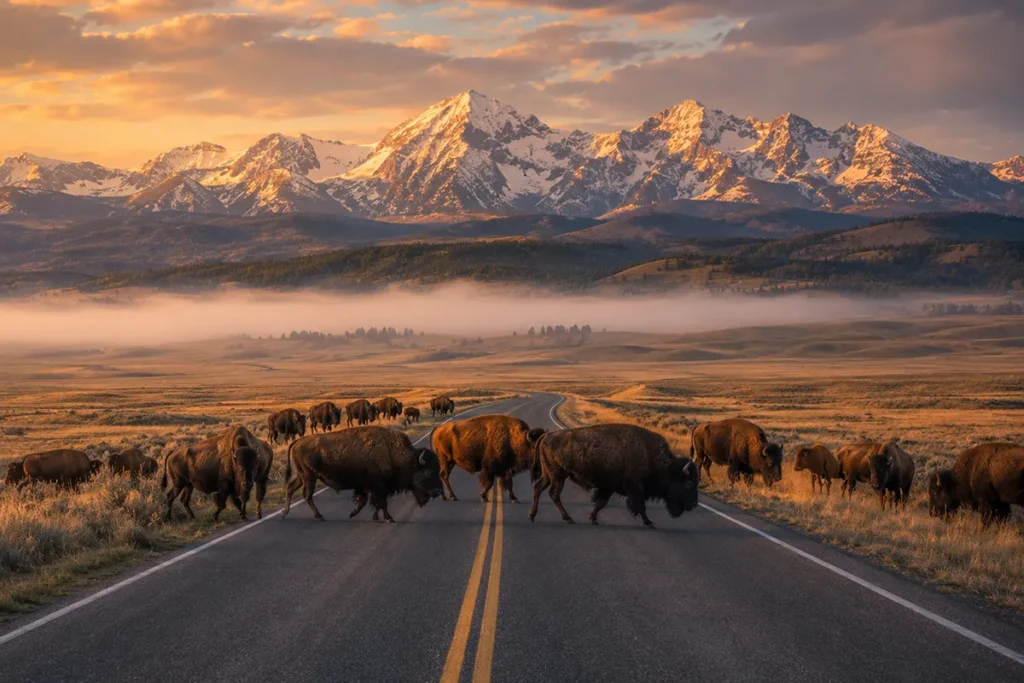
I once watched the same bison cross the road three times in 45 minutes near Mammoth Hot Springs — once because traffic was stopped, once because she changed her mind, and once because a 2,000-pound animal does whatever she wants.
The minivan in front of me had New Jersey plates and a kid in the back seat losing his mind in the best way. Welcome to Yellowstone Country, where the wildlife runs the schedule.
TL;DR
Yellowstone Country covers south-central Montana and is anchored by the Montana side of Yellowstone National Park — accessed via the North, Northeast, and West Entrances. The region includes Bozeman, Big Sky, Livingston, Gardiner, West Yellowstone, Cooke City, Red Lodge, and the spectacular Paradise Valley and Beartooth Highway. Best window for first-timers: late May through September. Best for wildlife: early June and late September. Don’t make the mistake of basing in Bozeman if your goal is Yellowstone — Gardiner or Livingston save real money and time. And yes, the Beartooth Highway closes for snow most of the year, so check the dates before you plan a loop drive.
Liked this article?
Add Roaming Montana as a preferred source so you see more of our articles and guides on Google.
What Is Yellowstone Country?
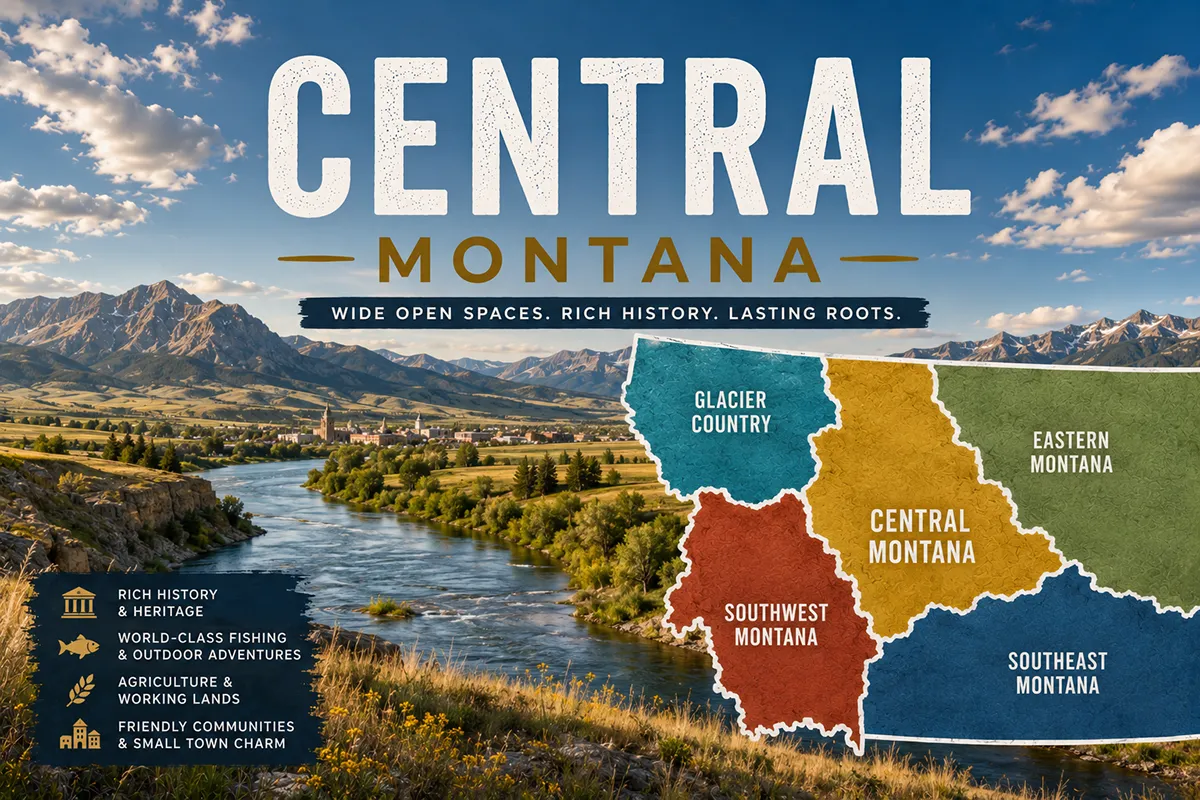
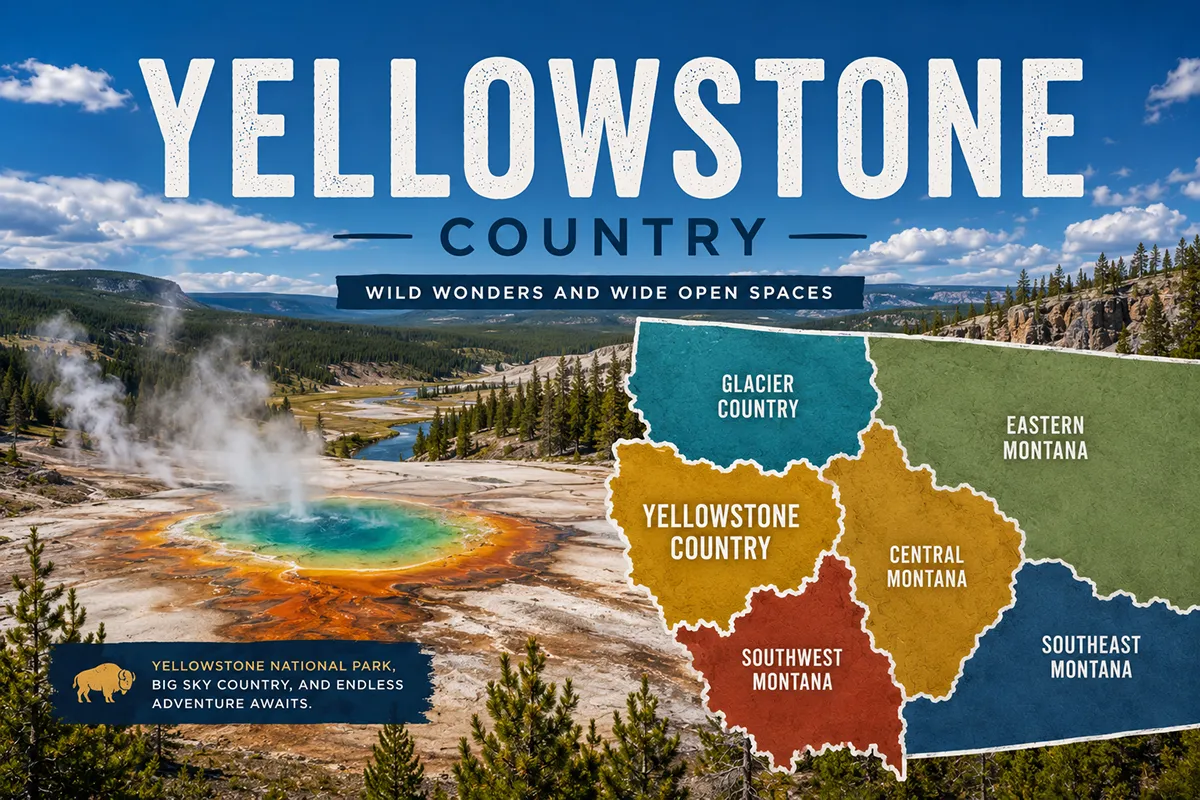
Yellowstone Country is one of Montana’s six tourism regions, established in 1986–87 along with the state lodging tax that funds tourism promotion. It covers the south-central portion of the state and includes six counties: Gallatin, Park, Sweet Grass, Stillwater, Carbon, and Meagher.
A quick note on naming, because this trips up almost everyone: Yellowstone Country (the tourism region) is not the same thing as Yellowstone County (the political county that contains Billings).
Billings is in the Southeast Montana tourism region. If you’re flying into BIL and reading travel guides that put Billings in “Yellowstone Country,” they’re confused. I see this mistake constantly.
The region is officially marketed as “Montana’s Yellowstone Country” by its DMO. It contains three of Yellowstone National Park’s five entrances — the North Entrance at Gardiner, the Northeast Entrance at Cooke City (accessed via the Beartooth Highway in summer), and the West Entrance at West Yellowstone.
It’s also home to Montana’s largest concentration of resort towns, the state’s busiest commercial airport, the best fly fishing in the lower 48, and arguably the best food scene anywhere in Montana.
The Three Montana Entrances to Yellowstone: Which One You Want
This is the most overlooked planning decision, so let me lay it out clearly.
North Entrance (Gardiner)
- Open: Year-round to vehicles (the only year-round entrance to the park)
- Best for: Wildlife watching in Lamar Valley, winter visits, base for serious park exploration
- Iconic feature: The Roosevelt Arch, dedicated by Teddy Roosevelt in 1903
- Drive from Bozeman: ~1 hour 25 min, 80 miles
- Nearest town: Gardiner (population ~875)
Northeast Entrance (Cooke City)
- Open: Year-round, but accessible only via the Beartooth Highway in summer or via Gardiner the rest of the year (which means you drive through the park to get here in winter)
- Best for: Beartooth scenery, fewer crowds, Lamar Valley access
- Iconic feature: The Beartooth Highway — Charles Kuralt called it “the most beautiful drive in America”
- Beartooth Highway open dates: Typically late May through mid-October — exact dates vary year to year. Check before you go.
- Nearest towns: Cooke City (essentially the entrance) and Silver Gate
West Entrance (West Yellowstone)
- Open: Late April through early November to standard vehicles; snowmobiles and snowcoaches only in winter
- Best for: First-time visitors, Old Faithful access, family logistics
- Iconic feature: It’s the closest entrance to Old Faithful, Norris Geyser Basin, and the Madison River
- Drive from Bozeman: ~1 hour 30 min, 90 miles
- Nearest town: West Yellowstone
If you only pick one: First-timers should choose the West Entrance for the geyser basins. Repeat visitors and wildlife-focused travelers should choose Gardiner for the North Entrance.
The Towns of Yellowstone Country
Where you base shapes your trip more here than in any other Montana region.
Bozeman
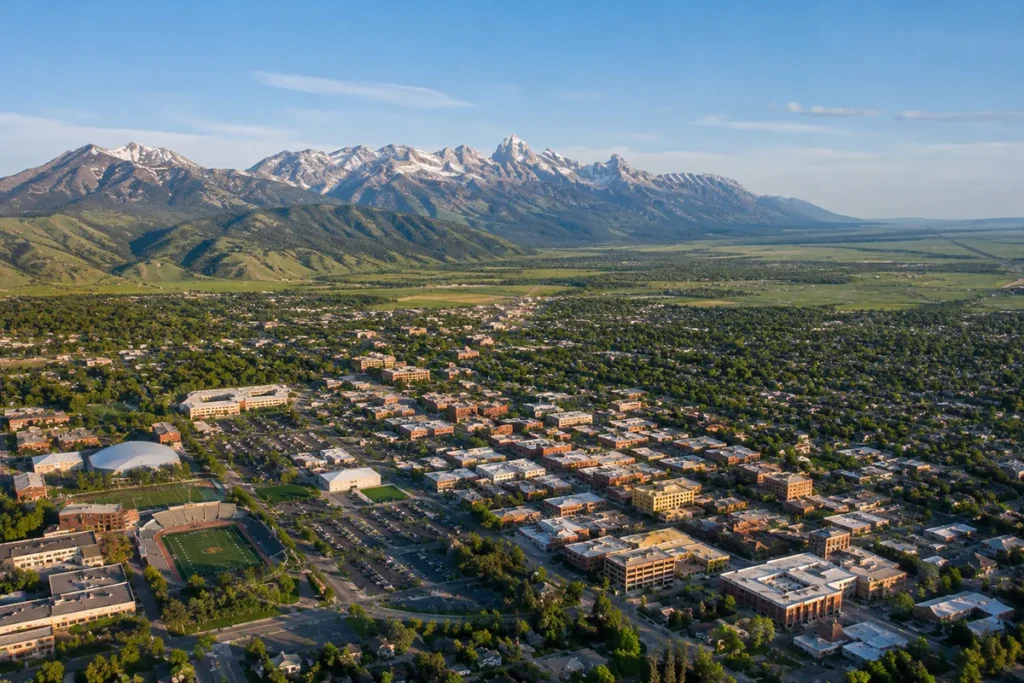
The boomtown. Bozeman is Montana’s fastest-growing city, home to Montana State University and the state’s busiest airport (Bozeman Yellowstone International, BZN). The food scene is genuinely excellent. The downtown is walkable and beautiful. The mountains visible from the back patio of any bar — the Bridgers to the north, the Gallatin Range to the south — are properly impressive.
The catch: Bozeman has gotten expensive. A hotel room downtown in July will run double what it cost five years ago. Traffic during summer rush hour is a real thing now. And it’s still 1.5 hours to Yellowstone’s North Entrance.
Base in Bozeman if: You want a real city experience, you’re flying into BZN and don’t want to drive on arrival day, food and breweries are a priority, you’re combining the trip with skiing at Bridger Bowl or Big Sky.
➡️ Things to do in Bozeman | Bozeman breweries | Best pizza in Bozeman | Bozeman facts
Big Sky
The mega-resort. Big Sky is technically an unincorporated community, but it’s home to Big Sky Resort — one of the largest ski resorts in North America by acreage.
In summer it transitions into a mountain biking, hiking, and fly fishing base, with prices to match. You’ll find some of the best restaurants in Montana here, and some of the most expensive lodging.
Base in Big Sky if: You’re skiing, you’re after a luxury mountain experience, you want to be in the Gallatin River canyon, money is not the limiting factor.
Livingston
Bozeman’s grittier, more interesting older sibling. Livingston sits on the Yellowstone River at the gateway to Paradise Valley and the Absaroka-Beartooth Wilderness.
It’s an artists’ and writers’ town (Tom McGuane, Jim Harrison, Russell Chatham, Tim Cahill all spent serious time here), with proper bars, excellent restaurants, and lodging that’s a fraction of Bozeman prices.
Base in Livingston if: You want Bozeman’s character without the cost, you’re heading to the park’s North Entrance daily (you’re 50 minutes from Gardiner), Paradise Valley fly fishing is on your list.
Gardiner
The North Entrance town. Gardiner is small (under 1,000 residents), straddles the Yellowstone River, and exists primarily because of the park.
It’s also the most strategic base for serious wildlife watching — you can be in Lamar Valley at sunrise from a Gardiner hotel room, which is exactly when you want to be there.
Base in Gardiner if: Wildlife watching is your priority, you’re visiting in winter (it’s the only year-round park entrance), or you want to walk to the park entrance from your hotel.
West Yellowstone
The summer-only mega-gateway. West Yellowstone essentially shuts down in winter (except for snowmobile tours and the IMAX theater), then explodes with traffic from May through October.
Hotels here are clean and convenient but interchangeable. The town itself has the Grizzly & Wolf Discovery Center — a legitimate wildlife conservation facility, not a roadside attraction.
Base in West Yellowstone if: You’re prioritizing Old Faithful, geyser basins, and the Madison River fly fishing.
Cooke City
The Northeast Entrance and one of the most unique places in Montana. Cooke City has a year-round population of about 75 people.
It’s a former mining town surrounded by the most rugged country in the Lower 48. Most people pass through on the Beartooth Highway in summer. Stay overnight and you’ll understand why.
Red Lodge
The Beartooth gateway. Red Lodge sits at the eastern foot of the Beartooth Highway in Carbon County. It’s a former coal mining town turned ski-and-summer destination — Red Lodge Mountain Ski Area is here, plus a charming brick-and-stone main street, hot springs nearby, and the famous Red Lodge Ales brewery.
Base in Red Lodge if: You’re doing a Beartooth loop, you want to visit Yellowstone via the most scenic route, you like quiet historic towns.
Smaller Towns Worth Knowing
- Big Timber — gateway to the Crazy Mountains, real ranch country
- Columbus, Absarokee, Belgrade — practical bases between Bozeman and Red Lodge
- Three Forks — historic town at the headwaters of the Missouri River (where Lewis & Clark named the three rivers that join here)
- Wilsall and Clyde Park — quiet Shields Valley towns north of Livingston
Yellowstone National Park: The Montana Side
A few things I tell every first-time visitor.
The Geyser Basins Are in Wyoming, Mostly
Yellowstone is roughly 96% in Wyoming, 3% in Montana, and 1% in Idaho. The famous thermal features — Old Faithful, Grand Prismatic, Norris, Mammoth — are mostly in the Wyoming portion of the park, which means you’ll be doing significant driving from any Montana base. Plan for it.
Lamar Valley Is the Montana-Adjacent Wildlife Wonderland
The valley itself is technically in Wyoming, but you access it through Montana’s North or Northeast Entrances. Lamar Valley has earned the nickname “America’s Serengeti” because of the density and visibility of large mammals — bison herds in the thousands, elk, pronghorn, grizzlies, black bears, and the most famous wolf packs in the world.
For wolf watching: Be at a pullout by 30 minutes before sunrise. Have a spotting scope or rent one in Gardiner. The pros wear earpieces and communicate by radio — if you see a group of people with massive lenses pointed at the same hillside, walk up quietly and ask what they’re seeing. They’re almost always happy to share.
The Best Months in Yellowstone
| Month | What to expect |
|---|---|
| Jan–Feb | Snow only. Snowcoach/snowmobile access from West Yellowstone. North Entrance road to Cooke City open (the only road open to vehicles). Magical, cold, quiet. |
| March | Same as winter, with hints of spring at lower elevations. |
| April | Lower roads opening. Bear sightings increase. Very few visitors. |
| May | Most roads open mid-month. Wildlife calving season. Bears emerging. Few crowds. Excellent. |
| Early June | Peak waterfalls. Bison calves. Wildflowers starting. Cooler temps. Excellent. |
| Mid–Late June | Crowds building. Beartooth Highway typically open by Memorial Day weekend. |
| July | Peak crowds. Warm. Geyser basins packed. Lamar still excellent at dawn. |
| August | Same as July, plus wildfire smoke risk. |
| Sept | My favorite. Elk rut. Bugling everywhere. Cooler temps. Crowds thinning fast. |
| October | Beartooth typically closes mid-month. Higher elevations getting snow. |
| Nov–Dec | Park transitioning to winter access only. |
Beartooth Highway: The Drive Everyone Should Make Once
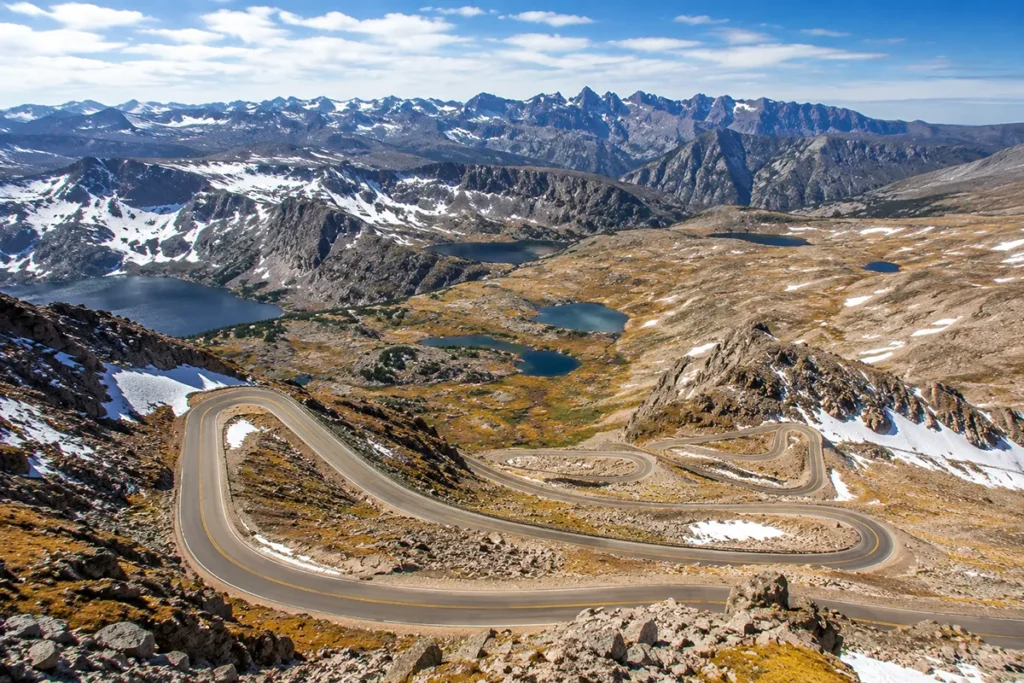
The Beartooth Highway (US-212) climbs from Red Lodge through 10,947-foot Beartooth Pass and drops into Cooke City. It’s 68 miles, takes about 2.5–3 hours with stops, and is closed for snow most of the year — typically open late May through mid-October, but storms can shut it down anytime. There’s exactly zero cell service across the pass. Bring water, sunscreen, and a full tank of gas.
The summit views are bigger than anywhere else you’ll drive in Montana. The pullouts are spectacular. The wildlife (mountain goats, marmots) is right next to the road. If you only have one day of “non-park” driving in Yellowstone Country, give it to the Beartooth.
Paradise Valley: The Most Underrated Drive in the State
Between Livingston and Gardiner runs Paradise Valley along US-89 — 50 miles of wide green ranchland flanked by the Absaroka Range to the east and the Gallatin Range to the west.
The Yellowstone River flows north through the valley. Tom McGuane wrote books here. Russell Chatham painted it. Brad Pitt and others bought ranches. The valley has somehow stayed mostly working ranchland in spite of all that.
You will pass Chico Hot Springs about halfway down — a soakable institution dating to 1900 that’s now a full resort and one of the best dinners in Montana.
➡️ Full guide to Chico Hot Springs Resort
Skiing in Yellowstone Country
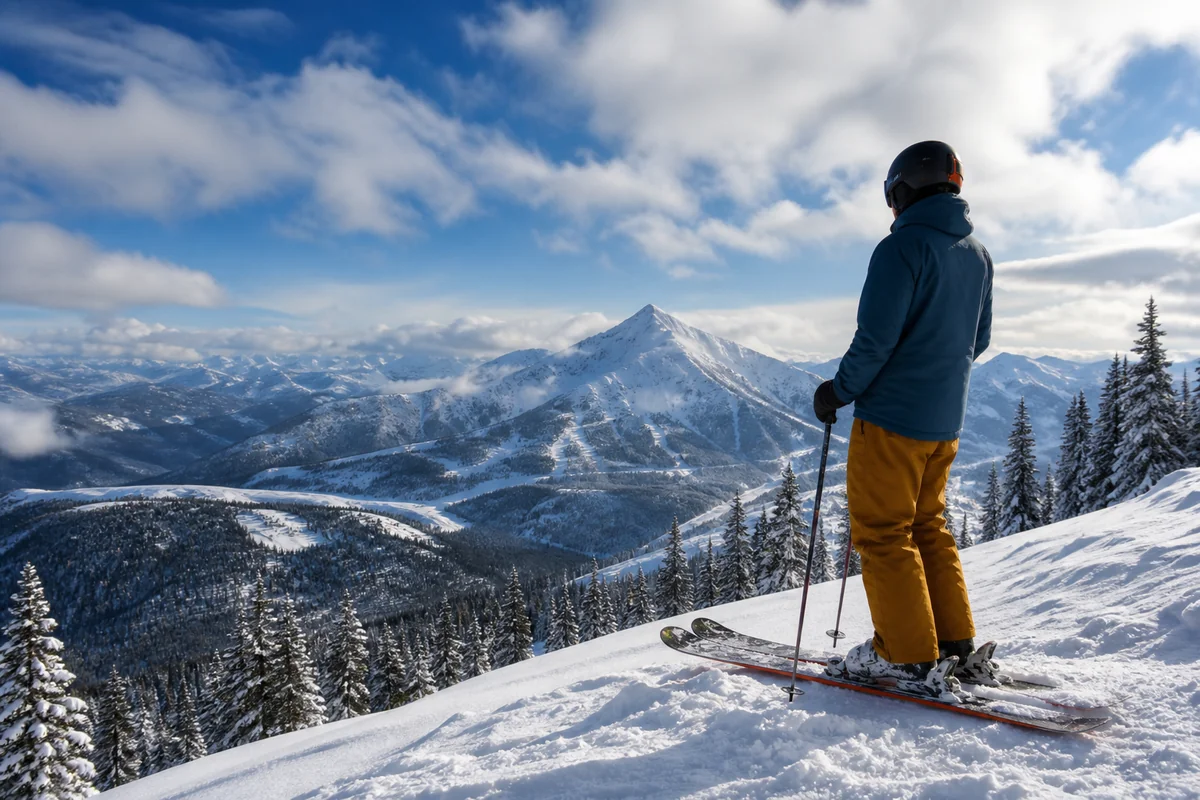
The region has four serious downhill ski destinations:
- Big Sky Resort — one of the largest in North America by acreage, with terrain for every level, summer ops too
- Bridger Bowl — local-loved nonprofit just outside Bozeman, no frills, great snow, much cheaper
- Red Lodge Mountain — quieter, beautiful, family-friendly, often overlooked
- Yellowstone Club — private, members-only; you can’t go unless you’re invited
Plus excellent cross-country (Lone Mountain Ranch, Rendezvous Ski Trails in West Yellowstone) and backcountry options in the Gallatin and Bridger ranges.
Full breakdown: Montana ski resorts
Hot Springs in Yellowstone Country
Beyond the obvious thermal features inside the park (which you cannot soak in), the region has some excellent commercial hot springs:
- Chico Hot Springs — Paradise Valley, the iconic one
- Bozeman Hot Springs — multi-pool family-friendly facility just outside Bozeman
- Yellowstone Hot Springs — in Gardiner, newer facility with mineral pools
For the full statewide picture: best natural hot springs in Montana
Wildlife: What You’ll Actually See
The wildlife density in Yellowstone Country is, frankly, ridiculous. Inside the park, you’re nearly guaranteed to see:
- Bison — herds of hundreds in Lamar and Hayden Valleys
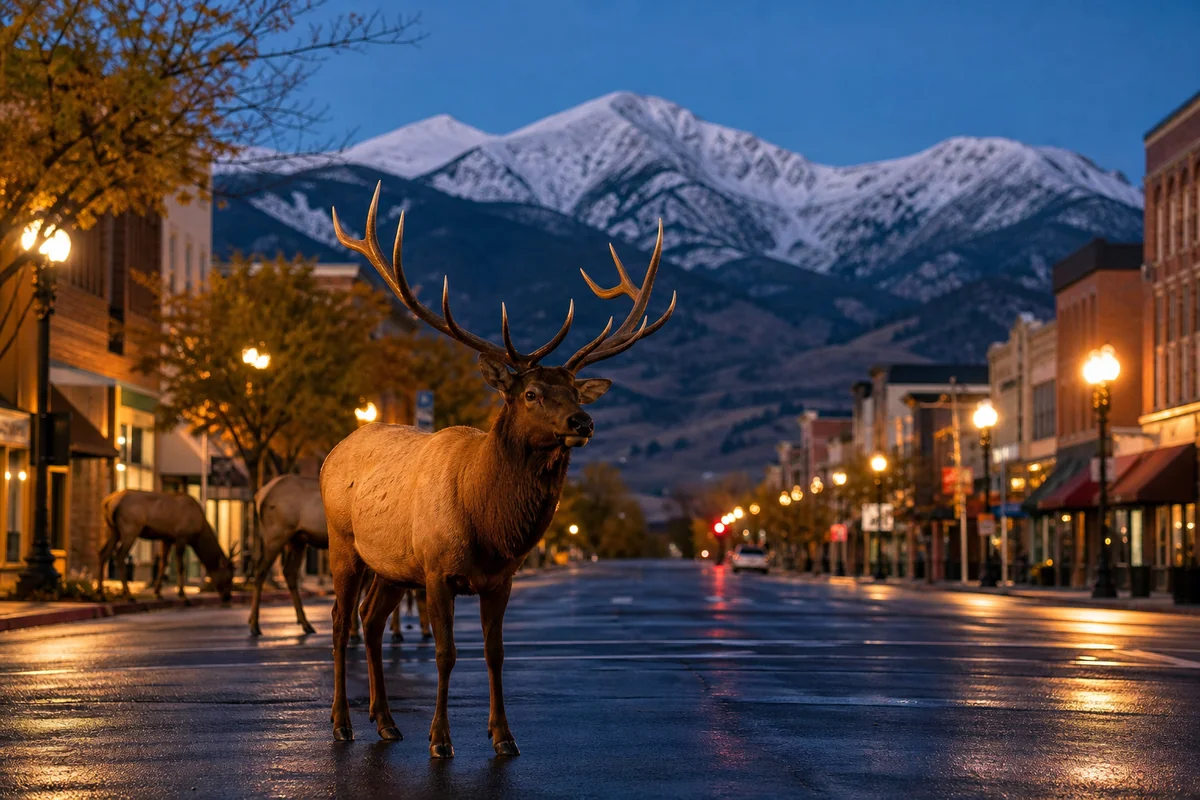
- Elk — everywhere, especially Mammoth, Madison, and the valleys
- Pronghorn antelope — the fastest land mammal in North America; Lamar Valley
- Coyotes — common; harder to confuse with wolves than people think
- Bald eagles, osprey, sandhill cranes — abundant
Less guaranteed but realistic:
- Black bears — Tower-Roosevelt area, Mt. Washburn
- Grizzly bears — Lamar, Hayden, Pelican Valley
- Wolves — Lamar Valley at dawn, requires patience and binoculars
- Moose — willow flats in the Lamar drainage and Soda Butte Creek
Bear country safety is non-negotiable. Always carry bear spray when hiking. Keep 100 yards from bears and wolves, 25 yards from all other wildlife. People get gored by bison annually because they walked up for a selfie. Don’t.
Waterfalls Worth the Hike (Outside the Park)
Yellowstone gets all the waterfall press, but the surrounding region has some real beauties:
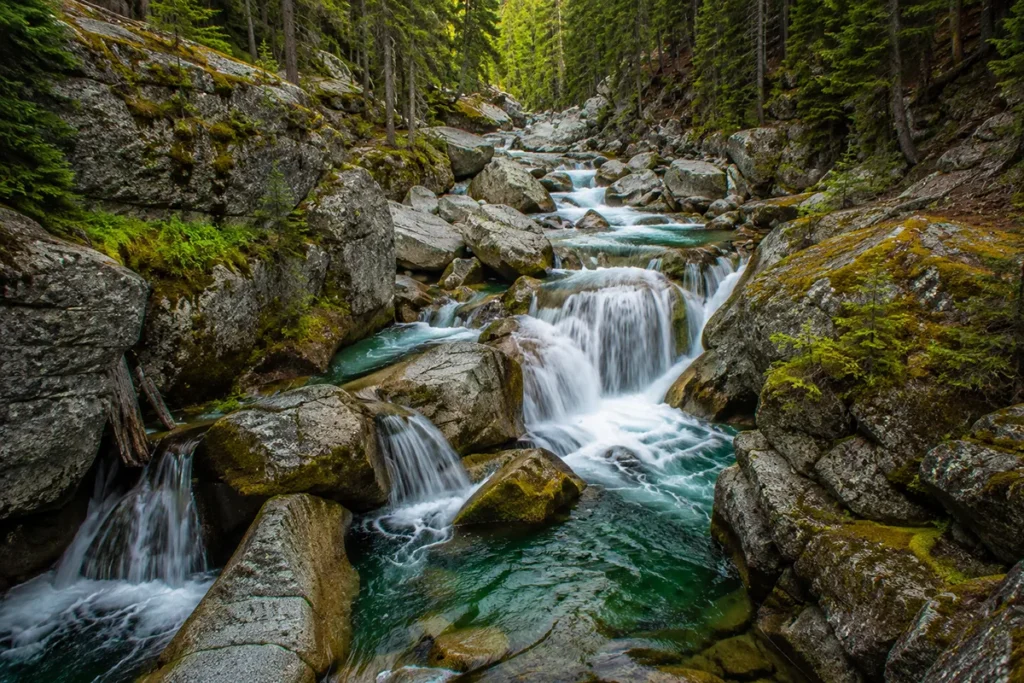
- Grotto Falls — Hyalite Canyon south of Bozeman, family-friendly hike
- Palisade Falls — also Hyalite Canyon, paved short trail
- Ousel Falls — Big Sky area, easy and gorgeous
- Pioneer Falls — Big Sky backcountry, longer hike, mostly empty
Fly Fishing: This Is the Best in the Lower 48, Period
I have to mention this because Yellowstone Country is genuinely one of the best fly fishing destinations on Earth.
Top rivers:
- Madison River — between Hebgen Lake and Three Forks, the classic blue-ribbon water
- Yellowstone River — runs the length of Paradise Valley, fishable year-round
- Gallatin River — accessible from US-191 between Bozeman and Big Sky
- Boulder River — north of Big Timber, less crowded
- Stillwater River — between Absarokee and Columbus
Hire a guide for at least your first day. There’s a reason guided trips here cost what they cost.
A 5-Day Yellowstone Country Itinerary
What I’d recommend for a first-time visitor:
- Day 1: Fly into BZN. Drive to Livingston or Gardiner. Settle in. Sunset on the Yellowstone River.
- Day 2: Pre-dawn drive into Lamar Valley for wildlife. Slow afternoon. Soak at Chico Hot Springs.
- Day 3: North Entrance day. Mammoth Hot Springs, Tower-Roosevelt, return via Lamar at golden hour.
- Day 4: Beartooth Highway from Cooke City to Red Lodge (if open). Or Paradise Valley fly fishing day.
- Day 5: Drive to Bozeman. Downtown explore, dinner, fly out next morning from BZN.
Want geyser basins too? Add a Day 4 detour through Norris and Old Faithful (long day, lots of driving) or relocate to West Yellowstone for Days 4–5.
Practical Info Box: Yellowstone Country at a Glance
| Item | Details |
|---|---|
| Major airport | Bozeman Yellowstone International (BZN) — busiest in Montana |
| Best season overall | Late May through September |
| Best wildlife months | May–June, late September (elk rut) |
| Yellowstone NP entrance fee | [Verify current Yellowstone NP fee]; America the Beautiful Pass accepted |
| Vehicle reservation required? | No (unlike Glacier — Yellowstone has no timed-entry system as of 2026; verify before going) |
| Bear country? | Yes, both grizzly and black bears — carry spray |
| Beartooth Highway open | Late May–mid October (approximate) |
| Counties included | Gallatin, Park, Sweet Grass, Stillwater, Carbon, Meagher |
| Major rivers | Yellowstone, Madison, Gallatin, Boulder, Stillwater |
| Time zone | Mountain Time (MST/MDT) |
What I Wish I’d Known Before My First Trip
Don’t base in Bozeman if Yellowstone is your goal. Bozeman is wonderful, but it’s 90 minutes from Gardiner. Livingston cuts that to 50 minutes and saves you 30%–50% on lodging. Gardiner itself puts you right at the entrance.
Lamar Valley at sunrise is non-negotiable. Everything you’ve heard is true. Be there before the light. Bring layers. Bring snacks. Bring patience. You’ll see things tour buses never see.
Yellowstone is mostly in Wyoming. From any Montana base you’ll drive significantly inside the park. Plan for it. Tank up.
Bozeman has gotten expensive. Hotel rates downtown in July are genuinely shocking. Look at Belgrade, Three Forks, or Livingston for value.
West Yellowstone is sleepy in winter but the snowmobile and snowcoach experience is unforgettable if you can swing it.
The North Entrance is the only year-round entrance. If you’re a winter visitor, that’s where you’re going.
Service can be slow in resort towns at peak. August in Big Sky, July in West Yellowstone — restaurants book up, wait times balloon. Make reservations.
Cell service in the park is poor. Download offline maps. Tell someone where you’re going. Don’t rely on Maps in Lamar.
The food scene rivals any major city. Bozeman especially. Plan dinner with the same seriousness as your sightseeing. The best steakhouses in Montana are well-represented here.
Where to Stay (Quick Reference)
| Stay style | Best location |
|---|---|
| Walkable downtown | Bozeman, Livingston |
| Park-gateway (close to entrance) | Gardiner, West Yellowstone, Cooke City |
| Resort luxury | Big Sky |
| Historic small-town charm | Red Lodge, Big Timber |
| Ranch/dude ranch experience | Paradise Valley, Shields Valley north of Livingston |
| Cabin rentals | Throughout Paradise Valley and Gallatin Canyon |
| RV / camping | Gardiner, Bozeman outskirts, Big Sky |
➡️ RV parks in Bozeman | Gardiner RV parks | Big Sky RV parks | Winter Airbnb rentals
How Yellowstone Country Compares to Glacier Country
I get this question constantly. Both regions are headline Montana, but they offer different experiences:
| Factor | Yellowstone Country | Glacier Country |
|---|---|---|
| Headline park | Yellowstone (south boundary) | Glacier (within the region) |
| Wildlife visibility | Excellent (Lamar Valley) | Good (bears, goats, moose) |
| Mountain scenery | Vast valleys + peaks | Jagged peaks + glaciers |
| Crowds | Heavy, manageable | Heavy, more concentrated |
| Towns | Bigger (Bozeman) | More small-town variety |
| Hot springs | Several, all developed | Several, all developed |
| Best season | May–September | Mid-July–mid-September |
| Reservation system | None (as of 2026, verify) | Yes — Going-to-the-Sun timed entry |
| Driving | Big distances | More compact |
➡️ See the full Glacier Country guide | Or zoom out to the Montana regions overview
Should You Visit Yellowstone Country?
If you’ve never been to Montana and you only have time for one region, Yellowstone Country is the easiest answer. You’ll fly into the biggest airport in the state, the infrastructure is the most developed, the food is the best, and the wildlife experience is the most reliable. You will also share that experience with millions of other people, especially in July and August.
If you’ve been before, come back for the shoulder seasons — May for waterfalls and wildlife, September for the elk rut and the changing aspens. Or come in winter, base in Gardiner, and have Lamar Valley to yourself.
Save this guide for your trip planning or pin it for later. Got a specific question about Yellowstone Country? Drop it in the comments. I read and answer every one. And when you’re ready for region #3, Southwest Montana is next — historic mining towns, ghost towns, the densest hot springs anywhere in the state, and almost none of the crowds.
➡️ Back to the main Montana Regions guide
Written by Sarah Bennett. I’ve spent more dawns in Lamar Valley than I can count, and every one of them has been worth the alarm clock.