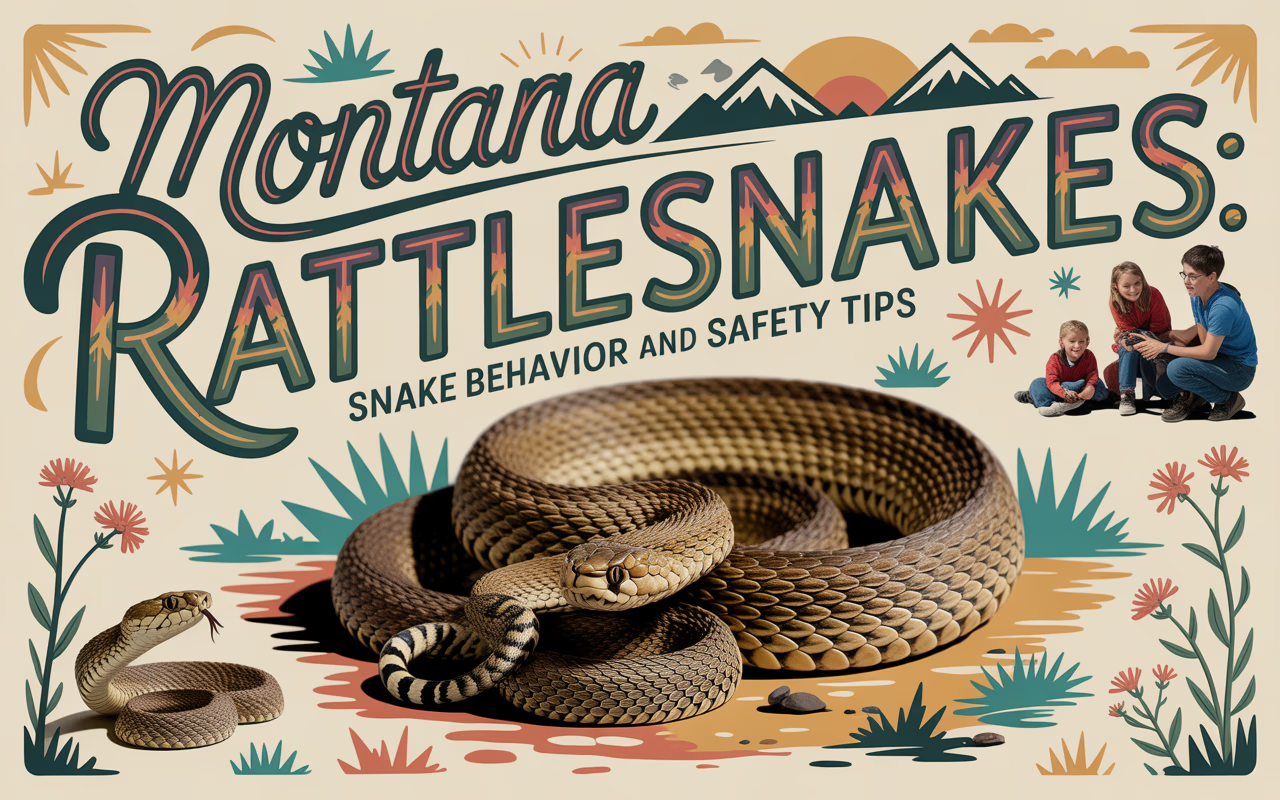
Did you know that Montana is home to 10 native snake species, but only one of them is venomous? Whether you’re hiking through Glacier National Park or tending your backyard in Billings, understanding Montana’s snakes is crucial for both safety and appreciation of the state’s diverse wildlife.
Many Montanans harbor unnecessary fears about snakes, often leading to dangerous encounters or the needless killing of beneficial species. But with the right knowledge, you can confidently identify common snakes, understand their behaviors, and implement effective safety practices for yourself, your family, and your pets.
This comprehensive guide will take you on a journey through Montana’s snake population, from the harmless garter snake to the venomous prairie rattlesnake. You’ll learn how to identify different species, understand their habitats and behaviors, and discover practical tips for snake safety in the wild and around your property. By the end, you’ll have the tools to safely coexist with these fascinating reptiles while enjoying Montana’s natural beauty to the fullest.
- Related article: Montana Wildlife Discovery
So, whether you’re a seasoned outdoors person or simply curious about the slithering neighbors in your backyard, let’s dive into the world of Montana rattlesnakes and unravel the myths and facts surrounding these important members of our ecosystem.
Table of Contents
General Overview of Snakes in Montana
Montana’s diverse landscapes support a surprisingly rich snake population despite its northern location and colder climate. The state is home to 10 native snake species, ranging from the harmless garter snake to the venomous prairie rattlesnake. These reptiles have adapted remarkably well to Montana’s challenging environment, with most species concentrated in the warmer, lower-elevation regions of central and eastern Montana where the prairie ecosystem dominates.
Montana snakes typically emerge from hibernation (known as brumation in reptiles) in late April or early May when temperatures consistently rise above freezing. They remain active through the summer months and begin seeking winter denning sites by September or October. During the peak summer months, snakes are most active during cooler morning and evening hours, often seeking shade during the hottest parts of the day.
The state’s snake habitats vary considerably across regions. In eastern Montana, snakes thrive in grasslands, sagebrush plains, and along riverbanks. The mountainous western regions support fewer snake species, though garter snakes and rubber boas can be found at surprising elevations. Rocky outcroppings, which provide both basking opportunities and quick retreat options, are particularly favored by many Montana snake species.
Ecologically, snakes play a crucial role in Montana’s ecosystems as both predators and prey. They help control rodent populations—a single bull snake can consume dozens of mice and rats annually, providing natural pest management for agricultural areas. Simultaneously, snakes serve as food sources for birds of prey, badgers, and other predators, forming an important link in the food web. The presence of healthy snake populations indicates a balanced ecosystem, as these reptiles are sensitive to environmental changes and habitat disruption.
While most Montanans may encounter snakes only occasionally, these reptiles maintain a constant, beneficial presence throughout the state’s diverse ecosystems, contributing to the ecological balance that makes Montana’s natural areas so unique.
Snake Identification in Montana
Montana’s diverse landscapes are home to 10 distinct snake species, each with unique characteristics that help with identification. Learning to identify these snakes is not only fascinating but also essential for safety and conservation.
When identifying snakes in Montana, focus first on overall body shape and size. Montana snakes range from the small 12-inch Western Terrestrial Garter Snake to the impressive 5-foot Bullsnake. Body shape can be slender and whip-like (like Racers) or more robust and thick-bodied (like Rattlesnakes).
Head shape provides crucial identification clues. Venomous Prairie Rattlesnakes have distinct triangular heads that are wider than their necks, while most non-venomous species have rounded heads that blend more smoothly with their bodies. However, some harmless snakes like Bullsnakes can flatten their heads when threatened, mimicking the triangular shape of rattlesnakes.
Color patterns are perhaps the most obvious identification feature. Montana snakes display solid colors, stripes, blotches, or distinct patterns. The Prairie Rattlesnake exhibits a distinctive pattern of dark, diamond-shaped blotches along its back, while the Western Terrestrial Garter Snake shows characteristic stripes running lengthwise down its body.
Pay attention to specific features like the presence of a rattle (exclusive to rattlesnakes), pupil shape (vertical in rattlesnakes, round in non-venomous species), and scale patterns. The arrangement of scales, particularly on the underside and head, can help experts make definitive identifications.
Proper identification matters for several reasons. First, it prevents unnecessary killing of beneficial, non-venomous snakes that help control rodent populations. Second, it allows for appropriate medical response in the rare case of a venomous bite. Finally, it contributes to conservation efforts for these important ecosystem members.
Common misidentifications occur between Bullsnakes and Prairie Rattlesnakes. Bullsnakes have evolved to mimic rattlesnakes as a defense mechanism—they flatten their heads, hiss loudly, and even vibrate their tails in leaves to sound like a rattle. The Western Terrestrial Garter Snake is sometimes mistaken for the Common Garter Snake, though they have distinct pattern differences.
Several resources can help with snake identification. The Montana Field Guide (available online), local nature centers, and university extension offices offer identification materials. Smartphone apps like iNaturalist allow you to photograph snakes for community identification while maintaining a safe distance. Remember, when in doubt, maintain a respectful distance from any snake you cannot confidently identify.
Solid-Colored Snakes in Montana
Montana’s landscape is home to several solid-colored snake species that often go unnoticed due to their subtle appearances. Unlike their patterned relatives, these snakes display relatively uniform coloration across their bodies, making them distinct in their own right.
The Rubber Boa (Charina bottae) is perhaps Montana’s most unique solid-colored snake. With its smooth, glossy appearance and uniform tan to olive-brown coloration, this snake is often mistaken for a worm or small branch. Rubber Boas are characterized by their blunt tails and heads that look remarkably similar, a defensive adaptation that confuses predators. These docile creatures are primarily nocturnal and spend much of their time underground in forested areas of western Montana, emerging to hunt small mammals, birds, and reptiles.
The Plains Hognose Snake (Heterodon nasicus) features a more consistent sandy brown or grayish coloration, though some individuals may show faint blotching. Their most distinctive feature is an upturned snout used for digging in sandy soils. When threatened, these harmless snakes put on an impressive defensive display—flattening their heads, hissing loudly, and sometimes even playing dead by rolling onto their backs with mouth agape. They inhabit grasslands and agricultural areas in eastern Montana.
The Smooth Green Snake (Opheodrys vernalis), sometimes called the grass snake, displays a striking uniform bright green coloration on its dorsal side with a contrasting white or yellow belly. This slender species blends perfectly with vegetation in meadows and grassy areas, where it hunts insects and spiders. Though relatively uncommon in Montana, they can be found in the northeastern portions of the state.
The Eastern Racer (Coluber constrictor) in its adult form often presents as a solid-colored snake, with uniform blue-black, gray, or olive coloration on its back and a lighter belly. These fast-moving snakes can reach up to six feet in length and are active hunters during daylight hours. Eastern Racers prefer open habitats like grasslands and are commonly encountered in eastern and central Montana.
When identifying solid-colored snakes, focus on body shape, head structure, and behavior rather than patterns. Most of these species are non-venomous and beneficial, controlling rodent and insect populations throughout Montana’s diverse ecosystems.
Striped Snakes in Montana
Montana’s landscape is home to several distinctive striped snake species that can be identified by their longitudinal stripes running the length of their bodies. These striped patterns serve as both camouflage and, in some cases, warning signals to potential predators.
The Common Garter Snake (Thamnophis sirtalis) is perhaps the most frequently encountered striped snake in Montana. Typically displaying three yellow or white stripes against a dark background, these adaptable reptiles can be found in a variety of habitats from forests to meadows and suburban areas. They’re most active during daylight hours, especially in the morning and late afternoon when temperatures are moderate. Common garter snakes are excellent swimmers and often live near water sources where they hunt for amphibians, small fish, and earthworms.
The Western Terrestrial Garter Snake (Thamnophis elegans) features a similar striped pattern but can be distinguished by its olive, brown, or grayish body with three light-colored stripes—one down the center of the back and one on each side. These snakes prefer slightly drier habitats than their common garter cousins, though they’re still frequently found near water. They’re known for their varied diet, which includes fish, amphibians, small mammals, birds, slugs, and leeches.
The Plains Garter Snake (Thamnophis radix) displays a distinctive orange or yellow stripe down its back, complemented by two lighter stripes on its sides against a dark brown or black background. Found primarily in eastern Montana’s grasslands and prairie regions, these snakes are well-adapted to open areas with scattered water sources. They’re particularly active hunters, constantly on the move in search of prey.
Wandering Garter Snakes (Thamnophis elegans vagrans), a subspecies of the Western Terrestrial Garter Snake, feature a checkered pattern between their stripes, creating a unique identification characteristic. They inhabit a wide range of environments from mountain meadows to river valleys.
All of Montana’s striped snakes share some behavioral traits—they’re generally docile but may release a foul-smelling musk if handled or threatened. They’re non-venomous and beneficial predators that help control rodent and insect populations. During winter months, these snakes often brumate (reptilian hibernation) in communal dens, sometimes gathering in large numbers for warmth and protection.
While occasionally entering yards and gardens, especially those near natural water sources, striped snakes pose no threat to humans and actually provide natural pest control services. Their presence often indicates a healthy, balanced ecosystem.
Patterned Snakes in Montana
Montana’s landscape is home to several snake species with distinctive patterns that help both naturalists and hikers identify them in the wild. These patterned snakes display an array of blotches, diamonds, and other markings that serve as natural camouflage and, in some cases, warning signals to potential predators.
Bull Snake
The Bull Snake (Pituophis catenifer) is perhaps Montana’s most recognizable patterned snake. Growing up to 8 feet long, these impressive constrictors feature a yellowish-tan base color adorned with large brown or black blotches down the back and smaller matching spots along the sides. Their distinctive pointed head and keeled scales give them a rough appearance. Despite their intimidating size and tendency to hiss loudly when threatened, Bull Snakes are completely harmless to humans and actually beneficial as they control rodent populations throughout Montana’s grasslands and agricultural areas.
Milk Snake
The Western Milk Snake (Lampropeltis gentilis) is among Montana’s most strikingly beautiful serpents. With a vibrant pattern of red, black, and cream or yellow bands circling its body, the Milk Snake is sometimes mistaken for the venomous Coral Snake (which doesn’t live in Montana). Remember the rhyme: “Red touches black, friend of Jack; red touches yellow, kill a fellow.” In Milk Snakes, red bands touch black, confirming their harmless nature. These secretive snakes primarily inhabit rocky hillsides and woodland edges in the eastern and central parts of the state.
Gopher Snake
The Gopher Snake (Pituophis catenifer) displays a series of large square blotches against a tan or yellowish background. These blotches are dark brown to black and run the length of its body. Often confused with rattlesnakes due to similar coloration, Gopher Snakes can be distinguished by their narrower head and lack of rattles. When threatened, they may flatten their heads, hiss loudly, and vibrate their tails against dry vegetation to mimic a rattlesnake. They thrive in Montana’s open grasslands, agricultural areas, and sagebrush plains.
Wandering Garter Snake
While primarily striped, some Wandering Garter Snakes (Thamnophis elegans vagrans) in Montana display distinct checkered patterns between their stripes. Their base color ranges from olive to brown or black, with a yellow, green, or blue dorsal stripe and two lateral stripes. Between these stripes, they often have alternating black spots creating a checkered appearance. These adaptable snakes can be found near water sources throughout most of Montana.
Plains Hognose Snake
The Plains Hognose Snake (Heterodon nasicus) features a unique upturned snout and distinctive dark blotches on a gray, tan, or yellowish background. These blotches are typically arranged in rows, with larger ones down the center of the back and smaller ones on the sides. When threatened, Hognose Snakes put on an elaborate display—flattening their necks like cobras, hissing, and striking with a closed mouth. If this fails, they’ll roll over and play dead, even emitting a foul smell and hanging their tongue out. Despite this dramatic performance, they’re harmless to humans and primarily eat toads and frogs in Montana’s eastern plains.
The patterned snakes of Montana not only add to the state’s biodiversity but also play crucial roles in controlling rodent populations and maintaining ecosystem balance. Learning to identify these distinctive serpents enhances outdoor experiences and helps foster appreciation rather than fear of these remarkable reptiles.
Prairie Rattlesnake: The Only Venomous Montana Snake
The Prairie Rattlesnake (Crotalus viridis) holds the distinction of being Montana’s sole venomous snake species. With its distinctive appearance and warning rattle, this reptile is both feared and misunderstood by many Montana residents.
Detailed Description
Prairie Rattlesnakes typically grow to 3-4 feet in length, though some specimens may reach up to 5 feet. They display a greenish-gray to brown base color adorned with a series of dark brown, oval-shaped blotches along their back. These blotches are outlined with a lighter color, creating a distinctive pattern. Their most recognizable feature is the segmented rattle at the end of their tail, which grows with each shedding of skin. Prairie Rattlesnakes have a broad, triangular head with heat-sensing pits between their eyes and nostrils, allowing them to detect warm-blooded prey even in complete darkness.
Habitat Range in Montana
In Montana, Prairie Rattlesnakes are primarily found in the eastern and central portions of the state, though they can occasionally be encountered in western valleys. They prefer grasslands, sagebrush plains, rocky outcrops, and open pine forests at lower elevations. During summer months, these snakes can be found basking on rocks, hunting in tall grass, or seeking shelter in rodent burrows and rock crevices. As cold-blooded creatures, they hibernate during Montana’s harsh winters, often gathering in communal dens called “hibernacula” in rock crevices or abandoned mammal burrows.
Behavior Patterns
Prairie Rattlesnakes are generally shy and non-aggressive, preferring to avoid confrontation when possible. They typically hunt during dawn and dusk hours in warmer months, though they may become nocturnal during the hottest parts of summer. When threatened, a rattlesnake’s first response is usually to remain motionless, relying on camouflage. If further disturbed, it will often vibrate its tail, creating the distinctive rattling sound as a warning. Striking is typically a last resort when the snake feels cornered or directly threatened.
These snakes are excellent swimmers and can climb low bushes and trees when necessary. During breeding season in late spring, male rattlesnakes may engage in “combat dances,” intertwining their bodies in contests of strength to win mating rights with females.
Venom Toxicity
Prairie Rattlesnake venom is primarily hemotoxic, meaning it attacks blood cells and tissue. Their bite delivers a potent mixture of enzymes and toxins that can cause tissue damage, internal bleeding, and in severe cases, organ failure if left untreated. While certainly dangerous, Prairie Rattlesnake bites are rarely fatal to humans if proper medical attention is received promptly.
The severity of a bite depends on several factors, including the size of the snake, the amount of venom injected (some bites are “dry” with no venom), the location of the bite, and the victim’s size and health. Children and elderly individuals typically face greater risks from rattlesnake envenomation due to their smaller body mass or compromised immune systems.
Warning Signs
Encountering a Prairie Rattlesnake in the wild comes with several potential warning signs:
- The distinctive rattle sound, which resembles a buzzing or hissing
- A coiled posture with raised head and neck formed into an S-shape
- Rapid tail vibration (even juvenile snakes without developed rattles will vibrate their tails)
- Hissing sounds and a flattened head
- Tongue flicking rapidly to gather scent information
It’s important to note that rattlesnakes don’t always rattle before striking, especially if suddenly surprised or cornered. Additionally, very young rattlesnakes have only a single “button” on their tail and cannot produce the warning rattle until after several sheds.
Rattlesnake Myths vs. Facts
Myth: Rattlesnakes always rattle before striking.
Fact: While rattling is a common warning behavior, rattlesnakes may strike without rattling if suddenly startled or cornered.
Myth: Baby rattlesnakes are more dangerous than adults.
Fact: While younger snakes may have less control over venom release, adult rattlesnakes deliver larger amounts of venom with more developed delivery systems, making them potentially more dangerous.
Myth: Rattlesnakes chase people.
Fact: Rattlesnakes do not chase humans. What appears to be pursuit is usually the snake trying to reach a familiar shelter that happens to be in the human’s direction.
Myth: Cutting and sucking venom from a bite is effective first aid.
Fact: This outdated approach is ineffective and potentially harmful. Modern snake bite treatment involves keeping the victim calm, immobilizing the affected area, and seeking immediate medical attention.
Myth: Rattlesnakes always die after using their venom.
Fact: Rattlesnakes replenish their venom supply over time and can deliver multiple venomous bites throughout their lifetime.
Understanding the true nature of Prairie Rattlesnakes helps Montana residents appreciate these important predators while taking appropriate precautions to avoid dangerous encounters.
Rattlesnake Behavior and Biology
The Prairie Rattlesnake displays fascinating behavioral patterns that have evolved over millennia to ensure its survival in Montana’s varied landscapes. Understanding these behaviors is crucial for both appreciating these remarkable creatures and staying safe in their territory.
Seasonal Patterns
Prairie Rattlesnakes exhibit distinct seasonal behaviors throughout the year. In spring (typically April to May), they emerge from their winter dens, often appearing sluggish as they warm their bodies after hibernation. Summer months (June through August) represent their most active period, when they’re frequently encountered during dawn and dusk hours. By late September, they begin returning to their winter dens, with most snakes completely retreated by mid-October.
Hunting Behavior
As ambush predators, Prairie Rattlesnakes typically remain motionless, waiting for prey to come within striking distance. Their hunting strategy relies heavily on their heat-sensing pits, which detect infrared radiation from warm-blooded prey. When hunting, these rattlesnakes can strike at speeds approaching 175 mph, delivering venom that both immobilizes prey and begins the digestive process. After striking, they often release their prey and track it using their exceptional sense of smell until it succumbs to the venom.
Reproductive Cycle
Prairie Rattlesnakes mate in late summer, but females store sperm through winter hibernation. They give birth to live young (rather than laying eggs) in late summer of the following year, with litters typically ranging from 4-12 young snakes. Baby rattlesnakes, approximately 10 inches long at birth, are born fully venomous and equipped with a single rattle segment. These young snakes are independent from birth, receiving no parental care as they immediately begin hunting small prey like mice and lizards.
Hibernation Habits
In Montana’s harsh winters, Prairie Rattlesnakes hibernate in communal dens called “hibernacula,” often located in rock crevices, abandoned mammal burrows, or deep fissures that extend below the frost line. These dens may house dozens or even hundreds of snakes, sometimes including non-venomous species. The same hibernation sites are often used for generations, with snakes traveling up to two miles to return to their traditional dens each autumn.
Defense Mechanisms
Contrary to popular belief, rattlesnakes prefer avoidance over confrontation. Their iconic rattle serves as a warning system, rapidly vibrating interlocked keratin segments to create their distinctive buzzing sound. Before striking defensively, they typically coil, raise their head, and rattle—a clear warning to potential threats. When cornered without escape options, they may strike, though they often deliver “dry bites” (without venom) to conserve their precious venom resources.
Sensing Capabilities
Prairie Rattlesnakes possess remarkable sensory adaptations. Their forked tongue collects airborne particles that are analyzed by the Jacobson’s organ in the roof of their mouth, effectively “tasting” their environment. The distinctive heat-sensing pits between their eyes and nostrils can detect temperature differences as small as 0.003°C, allowing them to create a thermal image of their surroundings. While their vision is adequate, detecting movement rather than detail, their ground-contact sensitivity enables them to detect vibrations from approaching animals or humans from considerable distances.
Outdoor Snake Safety Tips
When exploring Montana’s beautiful wilderness, encountering snakes is a possibility that requires preparation rather than fear. Following these preventative measures can significantly reduce your risk of negative snake encounters while hiking, camping, or enjoying outdoor activities.
Preventative Measures While Hiking
Always stick to established trails where visibility is better and snakes can be spotted more easily. Snakes typically avoid open areas with human traffic, preferring secluded spots where they can remain undisturbed. When hiking, use a walking stick to probe areas ahead of you, especially in tall grass or rocky terrain where rattlesnakes might be sunning themselves.
During warmer months, plan your hikes for mid-day when snakes are less active. Rattlesnakes are most active during dawn and dusk when temperatures are moderate, making these times higher risk for encounters.
Proper Footwear and Clothing
Your clothing choices provide a crucial layer of protection against potential snake bites:
- Wear high-top hiking boots or snake gaiters that cover your ankles and lower legs
- Choose thick socks that offer additional protection
- Opt for loose-fitting long pants rather than shorts
- Consider tucking pant legs into boots for extra security
- Avoid sandals or open-toed footwear in snake country
The majority of snake bites occur on the lower extremities, so proper leg protection is your first line of defense.
Trail Awareness
Developing situational awareness is essential for snake safety:
- Scan the trail ahead as you walk
- Look before you place your hands when climbing rocks or logs
- Avoid reaching into crevices, dense vegetation, or rock piles without visual confirmation
- Listen for the distinctive rattlesnake warning sound
- Be especially vigilant near water sources, where snakes often congregate
Remember that snakes are typically non-aggressive and prefer to avoid confrontation. Most bites occur when snakes are surprised or cornered.
Safe Camping Practices
When setting up camp in snake country:
- Choose open, cleared areas for your tent
- Inspect your campsite thoroughly before setting up
- Keep your tent zipped closed when not in use
- Store food in sealed containers to avoid attracting rodents, which attract snakes
- Use a flashlight when moving around camp after dark
- Shake out sleeping bags and check boots before use
Creating a small perimeter of cleared space around your immediate camping area can help you spot any snakes that might approach.
What to Do When Encountering a Snake
If you do encounter a snake on the trail:
- Stop moving immediately and assess the situation
- Give the snake plenty of space—at least 5 feet
- Back away slowly if needed, watching where you step
- Allow the snake to retreat on its own
- If the snake is on the trail, wait patiently or find an alternative route
- Never attempt to move, touch, or provoke the snake
Remember that snakes perceive humans as predators, not prey. They want to avoid you as much as you want to avoid them. By remaining calm and respectful of their space, you can ensure both your safety and the snake’s wellbeing while enjoying Montana’s natural landscapes.
Snake Bite Prevention and First Aid
Despite your best efforts to avoid snakes, encounters can sometimes result in bites. Knowing how to respond can make a critical difference in the outcome, especially with venomous rattlesnake bites in Montana.
How to Avoid Snake Bites
Prevention remains the most effective strategy against snake bites:
- Stay alert and watch where you place your hands and feet when in snake territory
- Wear appropriate footwear (hiking boots) and long pants when hiking
- Use a walking stick to probe areas ahead of you on trails
- Make noise while hiking to give snakes time to retreat
- Avoid reaching into rock crevices, woodpiles, or dense vegetation without checking first
- Keep pets on leashes in snake-prone areas
- Use a flashlight when walking outdoors at night
Immediate Actions If Bitten
If a snake bite occurs, follow these critical steps:
- Move away from the snake to prevent additional bites
- Keep the bite victim calm and still to slow venom spread
- Remove jewelry or tight clothing near the bite area before swelling begins
- Position the bite site at or below heart level
- Clean the wound gently with soap and water if available
- Mark the edge of swelling with a pen and note the time to track progression
- Seek medical attention immediately
What NOT to Do
Avoid these dangerous and ineffective folk remedies:
- Do not apply a tourniquet
- Do not cut the wound or attempt to suck out venom
- Do not apply ice or immerse in cold water
- Do not give the victim alcohol or medications
- Do not attempt to capture or kill the snake
- Do not delay seeking medical attention
- Do not elevate the bitten limb above heart level
When to Seek Medical Attention
All snake bites require medical evaluation, but these signs indicate a serious emergency:
- Severe pain or swelling at the bite site
- Rapid swelling that continues to spread
- Difficulty breathing or swallowing
- Blurred vision or dizziness
- Nausea or vomiting
- Numbness or tingling around face or limbs
- Changes in heart rate or blood pressure
Even if symptoms seem mild, seek medical care immediately as venom effects can be delayed.
Emergency Contact Information
Keep these resources available when in Montana’s snake country:
- Emergency Services: 911
- Montana Poison Control Center: 1-800-222-1222
- Nearest hospital with antivenom capabilities (research before your trip)
- Park ranger stations in your recreation area
Remember that most rattlesnake bites in Montana are treatable with proper medical care, but time is critical. The sooner treatment begins, the better the outcome.
Snake Control Tips for Properties
Making your property less appealing to snakes is often the most effective long-term solution for keeping these reptiles at bay. Start by eliminating potential food sources—rodents are a primary attractant for snakes, so addressing any mouse or rat issues will naturally reduce snake visits. Remove debris piles, stacked firewood, and overgrown vegetation near your home, as these provide perfect hiding spots for snakes and their prey.
Snake-proofing your home begins with sealing entry points. Inspect your foundation, walls, and areas around pipes for cracks or gaps larger than 1/4 inch—snakes can squeeze through surprisingly small openings. Install fine mesh screens over vents, and ensure doors and windows seal tightly. For your yard, consider installing snake-proof fencing that’s buried at least 6 inches underground and angled outward at the top to prevent climbing.
If you encounter a snake on your property, safe removal requires patience and caution. For non-venomous snakes, you can use a long-handled broom to gently guide them into a large bucket or trash can, which can then be covered and relocated at least a quarter-mile away in suitable habitat. Always maintain a safe distance and never attempt to handle snakes directly—even non-venomous species can bite when threatened.
Know when professional help is necessary. If you encounter a rattlesnake or cannot identify the species, call wildlife control specialists immediately. Professional snake removal services have the proper training and equipment to safely capture and relocate venomous snakes. They can also provide customized advice for your specific property conditions and help identify potential entry points you might have missed.
Remember that snakes play an important role in controlling rodent populations, so humane deterrence is preferable to killing them. Many areas also have laws protecting native snake species, making it illegal to kill snakes without cause, even on private property.
Venomous Snake Safety Tips
When it comes to venomous snakes in Montana, prevention and awareness are your best protection. The Prairie Rattlesnake demands specific safety considerations beyond general snake precautions.
Recognizing Rattlesnake Habitat
Prairie Rattlesnakes have preferred environments where encounters are more likely:
- Rocky outcroppings and talus slopes where they can bask and find shelter
- Prairie grasslands with rodent burrows they use for shelter and hunting
- River bluffs and canyon areas, especially those with southern exposure
- Sagebrush flats and areas with scattered juniper
- Trail edges where they may sun themselves in the morning or evening
Learn to identify these high-risk zones, especially when hiking in eastern and central Montana where rattlesnakes are more common.
Specific Rattlesnake Precautions
Unlike non-venomous snakes, rattlesnakes require heightened awareness:
- Wear appropriate footwear – sturdy hiking boots that cover your ankles
- Use trekking poles when hiking to probe areas ahead of you
- Step ON logs, not over them – this prevents accidentally stepping on a snake on the other side
- Stay on established trails where visibility is better
- Keep hands and feet out of areas you cannot see including crevices, dense vegetation, and rock piles
- Listen for the warning rattle but remember that rattlesnakes don’t always rattle before striking
Behavior to Avoid Around Rattlesnakes
Certain actions increase your risk of a rattlesnake bite:
- Never handle or approach a rattlesnake, even if it appears dead
- Don’t attempt to move or kill rattlesnakes – many bites occur during these attempts
- Avoid reaching into brush or rock piles without first checking visually
- Don’t wear headphones that prevent you from hearing warning rattles while hiking
- Never step or place hands where you cannot see what’s there
- Don’t provoke or corner rattlesnakes – they strike when threatened
Special Considerations for Children and Pets
Children and pets require extra protection in rattlesnake country:
For Children:
- Teach snake awareness early – help them identify rattlesnakes and understand the danger
- Establish clear rules about not touching or approaching any snake
- Supervise closely in rattlesnake habitat
- Ensure they wear closed-toe shoes and long pants in high-risk areas
- Teach them to alert adults immediately if they spot a snake
For Pets:
- Keep dogs leashed in rattlesnake territory
- Consider rattlesnake aversion training for dogs that frequent high-risk areas
- Learn the signs of snake bites in pets – swelling, pain, puncture wounds, and lethargy
- Identify emergency vet services before traveling to remote areas
- Consider rattlesnake vaccines for dogs, though they don’t provide complete immunity
By respecting rattlesnake territory and taking these specific precautions, you can significantly reduce the already low risk of dangerous encounters with Montana’s only venomous snake.
Conservation and Coexistence with Montana Snakes
While many people fear snakes, these remarkable reptiles play vital roles in Montana’s diverse ecosystems. Understanding their importance can help foster a more balanced relationship between humans and snakes across the state.
Snakes serve as both predators and prey in Montana’s food webs. As efficient hunters, they help control populations of small mammals like mice, voles, and ground squirrels that might otherwise damage crops or spread disease. Without snakes, these rodent populations would likely increase dramatically, creating agricultural challenges and potential health concerns.
Most of Montana’s snake species, including the Prairie Rattlesnake, are protected under state wildlife regulations. It’s illegal to kill snakes without legitimate reason (such as imminent danger), and collection of wild snakes requires proper permits. These protections acknowledge their ecological value and vulnerability to habitat loss.
Several Montana snake species face conservation challenges due to habitat fragmentation, road mortality, and deliberate killing based on fear or misunderstanding. As development expands into previously undisturbed areas, snake populations often decline. Climate change may also impact snake distributions and behaviors over time.
When encountering snakes in the wild, ethical considerations should guide our actions:
- Observe from a respectful distance rather than harassing or handling
- Allow snakes to retreat on their own when possible
- Use relocation methods that prioritize both human safety and snake welfare
- Educate others about snake identification and ecological benefits
Promoting coexistence with Montana’s snakes involves simple habitat modifications around homes and properties:
- Create buffer zones between natural areas and high-use human spaces
- Maintain tidy yards with minimal debris piles that might attract both snakes and their prey
- Install snake-proof fencing only when absolutely necessary
- Consider installing wildlife corridors in developed areas
By recognizing the important role snakes play in Montana’s ecosystems and taking reasonable precautions, residents can safely share the landscape with these fascinating reptiles. Conservation efforts that protect snake populations ultimately benefit the entire ecological community and preserve Montana’s natural heritage for future generations.
Conclusion and Final Thoughts
Montana’s diverse snake population plays a vital role in the state’s ecosystem, with the Prairie Rattlesnake standing as the sole venomous species among the 10 native snake varieties. Understanding these reptiles—from the harmless garter snakes to the potentially dangerous rattlesnake—is essential for both safety and appreciation of Montana’s natural heritage.
When exploring Montana’s wilderness, remember that snakes generally avoid human contact and serve as important predators that help control rodent populations. By taking simple precautions like wearing appropriate footwear, staying on designated trails, and remaining vigilant in snake-prone areas, you can significantly reduce the already low risk of snake encounters and bites.
If you do encounter a snake, particularly a rattlesnake, remember to remain calm, give it space, and allow it to retreat. These animals don’t seek confrontation and will typically avoid humans when given the opportunity. Should a bite occur, prompt medical attention is crucial—keep the victim calm, immobilize the affected area, and seek emergency care immediately.
Living alongside Montana’s snakes requires a balance of caution and respect. By educating yourself about local species, implementing basic prevention measures around your property, and teaching children appropriate snake safety, you create an environment where humans and these remarkable reptiles can coexist.
As you continue to explore Montana’s beautiful landscapes, carry this knowledge with you. A healthy respect for wildlife, including snakes, enhances your outdoor experiences while ensuring your safety. Remember that even the venomous Prairie Rattlesnake deserves its place in Montana’s ecosystem—from a safe distance, of course.
FAQs About Montana Rattlesnakes
What type of rattlesnakes live in Montana?
Montana is home to one primary rattlesnake species – the Prairie Rattlesnake (Crotalus viridis). These snakes are most common in central and eastern regions, inhabiting grasslands, sagebrush flats, and rocky outcroppings below 6,000 feet elevation.
How do I identify a Montana rattlesnake?
Prairie Rattlesnakes typically measure 3-5 feet long with olive-green to brown coloration and dark oval blotches along their backs. Look for their distinctive triangular head, vertical pupils, heat-sensing facial pits, and of course, the rattle at the tail end.
When are rattlesnakes most active in Montana?
Rattlesnakes are most active from late April through October. They typically emerge from hibernation in spring (April-May), are highly active during summer months, and return to their winter dens by mid-October. During hot summer days, they’re most active during dawn and dusk.
What should I do if I encounter a rattlesnake while hiking?
If you encounter a rattlesnake, freeze immediately, identify the snake’s location, and slowly back away while maintaining at least 5-6 feet of distance. Never approach, touch, or attempt to move a rattlesnake. Give it space to retreat on its own.
How can I protect my property from rattlesnakes?
Reduce rattlesnake attraction by removing debris piles, controlling rodent populations, keeping grass short, and creating a 3-5 foot gravel perimeter around buildings. Seal foundation cracks, install door sweeps, and consider snake-proof fencing at least 30 inches high with the top angled outward.
What first aid should I perform for a rattlesnake bite?
Move away from the snake, keep the victim calm and still, remove jewelry and tight clothing near the bite, position the bite site at or below heart level, and seek immediate medical attention. Don’t cut the wound, apply tourniquets, use ice, or attempt to suck out venom.
Are rattlesnakes protected in Montana?
Prairie Rattlesnakes are classified as nongame wildlife in Montana. While they can be killed if posing an immediate threat to humans or pets, wanton killing is prohibited. Collection requires proper wildlife permits from Montana Fish, Wildlife & Parks.
How can I protect my dog from rattlesnakes?
Consider snake aversion training for your dog, keep them leashed in snake habitat, avoid high-risk activities like letting them explore rock piles or animal burrows, and know the location of emergency veterinary care that stocks antivenom.
Do baby rattlesnakes deliver more dangerous venom than adults?
No, this is a myth. While juvenile rattlesnakes have fully functional venom glands, they typically deliver less venom than adults due to their smaller size. However, all rattlesnake bites require immediate medical attention regardless of the snake’s age.
Why shouldn’t we kill rattlesnakes when we find them?
Rattlesnakes play crucial ecological roles by controlling rodent populations that damage crops and spread disease. A single rattlesnake can consume 10-20 rodents per season. They’re also important components of Montana’s food web and indicators of ecosystem health.
Sources: