
Are you ready to experience the thrill of a DIY hunt in one of America’s last great wilderness frontiers? Montana offers an unparalleled opportunity for hunters to test their skills against some of North America’s most iconic big game species. From bugling elk in misty mountain meadows to stalking pronghorn across vast prairies, the Treasure State delivers hunting adventures that will challenge and reward even the most seasoned outdoorsmen.
But a successful Montana DIY hunt requires more than just showing up with a rifle and a dream. This comprehensive guide will walk you through everything you need to know to plan and execute an unforgettable Big Sky Country hunting expedition.
- Related article: Montana Hunting Information
We’ll cover the top five game species to pursue, essential gear and preparation, navigating Montana’s complex public lands, and insider tips to maximize your chances of success. Whether you’re a first-timer or a veteran hunter looking to expand your horizons, you’ll find the knowledge and inspiration here to make your Montana hunting goals a reality. So grab your topo maps and get ready for the DIY hunting adventure of a lifetime!
Table of Contents
Montana’s Premier Hunting Destination: A DIY Hunter’s Paradise

Montana stands as one of America’s premier hunting destinations, offering some of the most diverse and abundant game populations in the lower 48 states. Spanning over 147,000 square miles of varied terrain, the Treasure State provides DIY hunters with unparalleled opportunities to pursue everything from massive elk to fast-flying upland birds.
The state’s hunting landscape is as diverse as its wildlife. In the western regions, dense forests and alpine meadows of the Rocky Mountains create perfect habitat for elk and mule deer. Moving eastward, the rolling prairie lands and agricultural areas support thriving populations of whitetail deer, antelope, and upland game birds. The Missouri River breaks and central mountain ranges offer transitional zones where multiple species overlap, creating hotspots for the versatile hunter.
Montana’s public land access is another major draw for DIY enthusiasts. With nearly 30 million acres of accessible public land—including national forests, BLM lands, state trust lands, and block management areas—hunters can find ample opportunity without the need for expensive outfitters or private land access. This abundance of public land, combined with the state’s relatively low hunting pressure compared to many eastern states, creates the perfect environment for self-guided hunting adventures.
The state’s game management practices have maintained healthy populations of big game animals, with elk numbers at historic highs in many districts and deer populations strong across much of the state. Meanwhile, antelope herds dot the eastern plains, black bears roam the western mountains, and upland birds like pheasant, grouse, and Hungarian partridge thrive in suitable habitats throughout Montana.
For the DIY hunter willing to put in the research and physical effort, Montana offers a chance to experience hunting as it was meant to be—challenging, rewarding, and set against some of America’s most breathtaking landscapes.
1. Elk: Montana’s Premier Big Game Trophy

Montana offers some of the best elk hunting opportunities in the country, with healthy populations spread across millions of acres of public land. For DIY hunters, pursuing these majestic animals represents the ultimate western hunting challenge and reward.
The elk population in Montana currently stands at approximately 140,000-150,000 animals, distributed throughout the western two-thirds of the state. This robust population has remained relatively stable in recent years, providing consistent opportunities for hunters willing to put in the work. The largest concentrations can be found in the mountainous regions, particularly in areas with a mix of dense timber for cover and open meadows for feeding.
Best Regions for Elk Hunting
Several regions stand out for DIY elk hunters in Montana:
- Southwest Montana (Regions 3 & 4): Areas around Bozeman, Butte, and Helena contain some of the state’s highest elk densities, particularly in the Gallatin, Madison, and Gravelly mountain ranges.
- Northwest Montana (Regions 1 & 2): The Bob Marshall Wilderness Complex and surrounding national forests offer true backcountry experiences with less hunting pressure but often lower elk densities.
- Central Montana (Region 4): The Missouri Breaks and surrounding areas provide unique opportunities in more open country, particularly for archery hunters.
General vs. Limited Draw Tags
Montana operates on a two-tiered tag system for elk:
General Tags: Available over the counter for residents and through a straightforward application process for non-residents. These allow hunting in most general areas throughout the state during standard seasons. For non-residents, these tags are limited and distributed through a drawing, with application deadlines typically in March.
Limited Draw Tags: These special permits provide access to premium hunting districts with higher success rates or trophy potential. Competition for these tags can be intense, with some areas requiring several years of preference points to draw successfully.
Seasons and Regulations
Montana’s elk seasons typically follow this pattern:
- Archery Season: Early September through mid-October
- General Rifle Season: Late October through late November
- Shoulder Seasons: Select areas may offer late-season opportunities into December or January
Regulations vary by hunting district, with some areas being brow-tined bull only, others offering spike opportunities, and some being limited to antlerless harvest. Always check the current regulations for your specific hunting district, as these can change annually based on population management goals.
DIY Hunting Techniques
For the self-guided hunter, these strategies tend to be most effective:
- Early Season Archery: Focus on water sources, wallows, and meadow edges. Calling can be extremely effective during the rut.
- Rifle Season: Concentrate on migration corridors between summer and winter ranges. Glass open areas at first and last light.
- Physical Preparation: Montana’s mountainous terrain demands excellent physical conditioning. Begin training months in advance.
- E-Scouting: Utilize digital mapping apps like onX Hunt to identify likely elk habitat, access points, and pressure points before arriving.
Public Land Opportunities
Montana boasts over 30 million acres of public land, with much of it providing excellent elk habitat. Key public land opportunities include:
- National Forests: The Beaverhead-Deerlodge, Gallatin, Helena, and Lewis and Clark National Forests contain vast elk ranges.
- Wilderness Areas: The Bob Marshall, Absaroka-Beartooth, and Lee Metcalf Wilderness areas offer remote hunting experiences.
- Block Management Areas: Montana’s Block Management Program opens private lands to public hunting, creating additional opportunities.
For DIY hunters, focusing on areas at least 2-3 miles from roads often dramatically increases success rates. While these areas require more effort to access, they typically hold more and less-pressured elk, especially during the general season.
2. Deer: Montana’s Tale of Two Species

Montana offers deer hunters a unique opportunity to pursue both mule deer and whitetail deer on the same trip, each requiring different tactics and presenting distinct challenges. For the DIY hunter, understanding these differences is crucial to success in Montana’s diverse terrain.
Mule Deer vs. Whitetail: Know Your Quarry
Mule deer and whitetail deer in Montana require fundamentally different hunting approaches. Mule deer typically inhabit more open country, preferring higher elevations, sagebrush flats, and broken terrain. They’re known for their distinctive stotting or “pronging” escape behavior, bouncing away on all four legs simultaneously.
Whitetails, by contrast, thrive in river bottoms, agricultural edges, and timbered areas. They’re masters of slipping through thick cover and rely on their namesake white tail as a warning flag to other deer when danger approaches.
Prime Montana Deer Hunting Locations
For Mule Deer:
- The Missouri River Breaks in regions 4 and 7 offer trophy potential
- The foothills of the Bitterroot and Sapphire Mountains in western Montana
- Prairie regions in eastern Montana, particularly in hunting districts 700-series
- The Big Hole Valley for high-country bucks
For Whitetail:
- The Flathead Valley’s agricultural areas and timber edges
- River bottoms along the Milk, Missouri, and Yellowstone Rivers
- The dense forests of northwestern Montana
- The Bitterroot Valley’s private and public lands
Hunting Seasons and Timing
Montana’s general deer season typically runs from late October through late November, with archery season opening in early September. For DIY hunters, timing is everything:
- Early Season (September-Early October): Archery hunters can catch deer in predictable feeding patterns
- Mid-October: The pre-rut begins, with bucks starting to establish territories
- Early to Mid-November: The peak rut for whitetails offers the best chance at mature bucks
- Late November: Mule deer rut intensifies, while post-rut whitetails begin focusing on feeding
DIY Deer Hunting Strategies
For Mule Deer:
- Spot-and-stalk hunting from vantage points in open country
- Focus on glassing during early morning and late evening hours
- Look for deer bedded on north-facing slopes during midday
- Use topography to plan stalks that keep you hidden
For Whitetail:
- Set up stands or blinds near travel corridors between bedding and feeding areas
- Focus on river bottoms, creek drainages, and field edges
- Hunt the wind meticulously—whitetails have exceptional noses
- During the rut, use grunt calls and rattling to bring bucks into range
Public Land Opportunities
Montana boasts over 30 million acres of public land, with excellent deer hunting opportunities for the dedicated DIY hunter:
- National Forests: The Beaverhead-Deerlodge, Gallatin, and Lewis & Clark National Forests offer vast mule deer habitat
- BLM Lands: Particularly in central and eastern Montana, provide excellent access to both deer species
- Wildlife Management Areas: Many WMAs like the Sun River and Blackfoot-Clearwater offer quality deer hunting
- Block Management Areas: These private lands enrolled in public access programs often hold excellent whitetail populations
For the budget-conscious DIY hunter, focusing on deer offers an accessible entry point to Montana big game hunting, with higher success rates than elk and more abundant public land opportunities than antelope. Whether you’re glassing distant ridges for a trophy muley or slipping through river bottoms for a Montana whitetail, the experience will test your skills and reward your efforts.
3. Black Bear: The Overlooked Trophy of Montana

Montana’s black bear population offers an exciting opportunity for DIY hunters seeking both challenge and reward. With an estimated 13,000-15,000 bears roaming the state, these intelligent predators provide a unique hunting experience that can be pursued either as a dedicated hunt or as an additional opportunity while targeting other big game.
Population and Distribution
Black bears thrive throughout Montana’s forested regions, with the highest densities found in the northwestern portion of the state. The Cabinet Mountains, the Bob Marshall Wilderness Complex, and areas surrounding Glacier National Park host particularly robust populations. However, bears can be found in most mountainous, timbered areas across western and central Montana.
The western third of the state (Regions 1, 2, and 3) offers the most consistent opportunities, but pockets of good bear habitat exist even in some eastern mountain ranges. Bears typically favor mixed forests with openings, riparian corridors, and areas with abundant food sources like berry patches, oak stands, and natural meadows.
Spring vs. Fall Seasons: Choosing Your Hunt
Montana offers both spring and fall black bear seasons, each with distinct advantages:
Spring Season (April-June):
- Bears emerge hungry from hibernation and actively feed in open areas
- Hides are typically in prime condition
- Spotting bears is easier with minimal foliage
- Weather conditions can be more predictable
- Less competition from other hunters focused on different species
Fall Season (September-November):
- Bears actively feed to prepare for hibernation
- Can be combined with other big game hunts
- Food sources like berry patches and fruit trees concentrate bears
- Fall colors provide spectacular hunting backdrop
For DIY hunters, the spring season often provides better opportunities as bears are more pattern-predictable and visible while feeding in open areas after hibernation.
Effective DIY Hunting Methods
Several approaches work well for the self-guided bear hunter:
Spot-and-Stalk:
- Glass open hillsides, meadows, and avalanche chutes, especially during early morning and evening
- Focus on south-facing slopes in spring where vegetation emerges first
- Use quality optics to cover large areas efficiently
- Plan stealthy approaches considering wind direction
Still Hunting:
- Slowly move through likely bear habitat, stopping frequently to glass
- Focus on edge habitat between timber and openings
- Pay attention to fresh sign including tracks, scat, and torn-up logs
Ambush Techniques:
- Set up near natural food sources like berry patches or fruit trees
- Position downwind of game trails showing fresh bear sign
- Remain patient and still for extended periods
DIY hunters should note that baiting and the use of dogs are prohibited in Montana, making woodsmanship and patience essential skills.
Regulations and Tag Requirements
Montana’s bear hunting regulations require:
- A general hunting license and black bear license
- Completion of bear identification test (to distinguish between black and grizzly bears)
- Adherence to specific hunting district regulations
- Mandatory reporting of harvested bears within 48 hours
- Presentation of the hide and skull for inspection and tagging
Non-resident hunters can purchase black bear licenses over the counter, but should be aware these licenses are season-specific. Spring licenses cannot be used in fall and vice versa. The cost for non-residents is significantly higher than for residents, but still represents good value compared to guided hunts.
Field Judging Black Bears
Properly judging black bears in the field presents a challenge for many hunters. Consider these guidelines:
- Size estimation: An average mature male black bear in Montana weighs 200-300 pounds, with exceptional bears exceeding 350 pounds
- Body proportions: Look for a blocky head, small ears relative to head size, and a distinct shoulder hump
- Movement patterns: Mature bears often move deliberately with confidence
- Head shape: Mature boars have broader, more rectangular heads
- Tracks: Front paw tracks over 4.5 inches wide often indicate a mature bear
Remember that color is not a reliable indicator of size or sex—Montana’s “black” bears range from jet black to cinnamon, blonde, and even chocolate brown.
For the DIY hunter willing to put in the effort, Montana’s black bear hunting provides an authentic wilderness experience with a genuine chance at harvesting a magnificent trophy while enjoying some of America’s most spectacular landscapes.
4. Antelope
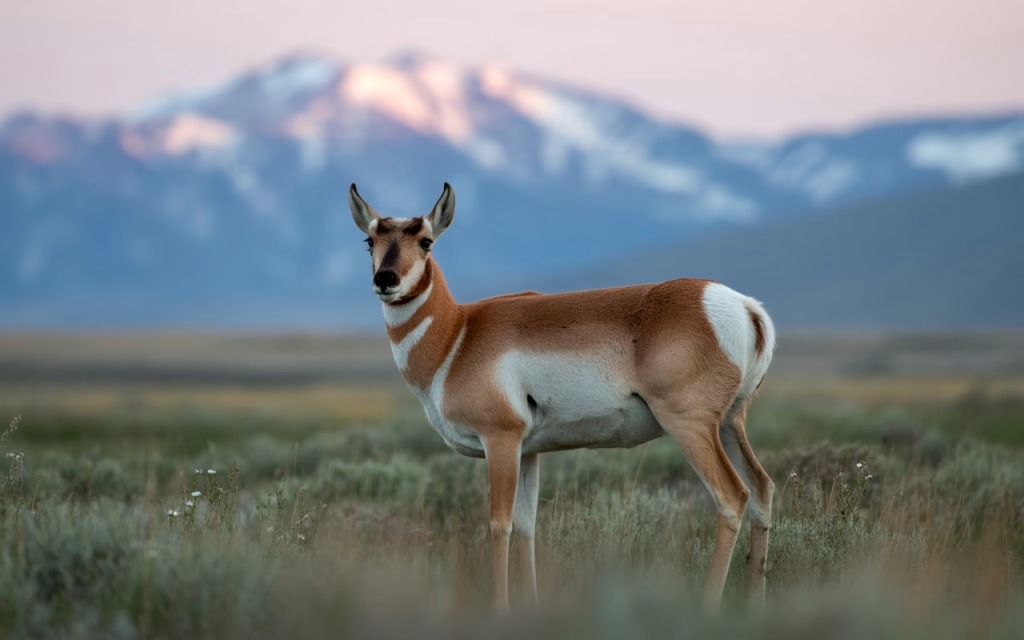
Montana’s vast prairies and rolling hills provide the perfect habitat for pronghorn antelope, North America’s fastest land mammal. These iconic western animals offer an exciting hunting opportunity that combines wide-open spaces, spot-and-stalk tactics, and the challenge of approaching naturally cautious prey.
Habitat and Distribution
Pronghorn antelope thrive in Montana’s eastern and central regions where open grasslands dominate the landscape. You’ll find them in greatest numbers east of the Continental Divide, particularly in the central and southeastern portions of the state. Counties like Garfield, Petroleum, Phillips, and Carter consistently produce good antelope hunting opportunities. These animals prefer wide-open terrain with rolling topography that allows them to spot predators from great distances.
Unlike deer and elk that seek thick cover, antelope rely on their exceptional eyesight and speed for protection. They typically inhabit areas with sagebrush, native grasses, and agricultural lands that provide both food sources and the visibility they prefer. Antelope are highly adaptable and can be found from low elevation prairies to high mountain basins, though they’re most concentrated in the prairie ecosystems.
Drawing Odds and Tag Information
Montana’s antelope hunting operates on a limited-entry, draw-only system. The application deadline typically falls in June, with results available by mid-July. As a non-resident, you’ll need to decide whether to apply for:
- General antelope tags: Higher drawing odds but less trophy potential
- District-specific tags: Lower drawing odds but potentially better hunting
For DIY hunters, regions with higher tag quotas like the central and eastern districts often provide the best combination of access and drawing odds. First-time applicants can expect 25-50% drawing odds in many general units, though this varies significantly by district and year.
For better odds, consider:
- Applying for doe/fawn tags, which often have higher success rates
- Looking at districts with more public land but slightly lower antelope densities
- Building preference points if Montana implements such a system
Best Regions for DIY Hunters
The Missouri Breaks region and the prairie lands of eastern Montana offer excellent DIY antelope hunting opportunities. Key areas include:
- Central Montana (Districts 500-700): Good mix of BLM and state land access with healthy antelope populations
- Southeast Montana (Districts 700-900): Higher antelope densities with abundant public lands
- Missouri River Breaks: Challenging terrain but good public access and quality animals
When selecting a region, prioritize areas with:
- Block Management Areas (BMAs) that provide access to private lands
- Large tracts of BLM or state trust lands
- Less pressure from other hunters
Effective Spot-and-Stalk Techniques
The classic approach for antelope hunting is spot-and-stalk, which perfectly suits their habitat:
- Glassing and Patience: Start early, find a high vantage point, and glass extensively. Quality optics are essential – a good spotting scope and 10x binoculars are minimum requirements.
- Range Estimation: Antelope inhabit areas where distances can be deceptive. Laser rangefinders are invaluable tools for accurate shot placement.
- Approach Strategy: Once you’ve spotted a target animal, plan your stalk using natural terrain features. Antelope have incredible eyesight but poor depth perception. Use draws, ravines, and rolling hills to stay hidden.
- Decoy Techniques: In open terrain, portable antelope decoys can be surprisingly effective during the rut (mid-September). They create curiosity that sometimes overcomes the antelope’s natural caution.
- Shot Placement: Antelope offer a small target. Their vitals are positioned slightly forward and low in the chest cavity. Practice shooting from field positions (prone, sitting, kneeling) before your hunt.
For DIY success, be prepared to cover significant ground. Antelope hunting often involves multiple stalks before finding the right opportunity. A typical day might include glassing dozens of animals and attempting several stalks. The key is persistence and using the terrain to your advantage.
Montana’s antelope season typically runs from mid-August through early November, with the peak rut occurring in mid-September. This rut period often provides the best opportunity for mature bucks as they become more territorial and less cautious while defending their harems.
5. Upland Game Birds

Montana offers an exceptional DIY upland game bird hunting experience that often gets overshadowed by big game opportunities. The state’s diverse terrain supports several bird species, making it a paradise for wing shooters looking for an affordable, accessible hunting adventure.
Diverse Upland Species
Ring-necked Pheasant: These colorful game birds thrive in Montana’s agricultural areas, particularly in the eastern and central regions. Their distinctive cackle and explosive flush make for exciting hunting.
Sharp-tailed Grouse: Native to Montana’s prairies and grasslands, these birds offer challenging wing shooting as they flush in unpredictable patterns and can fly at speeds up to 45 mph.
Ruffed Grouse: Found primarily in western Montana’s forested areas, ruffed grouse provide excellent hunting opportunities in aspen stands and mixed conifer forests.
Hungarian Partridge: These introduced birds favor agricultural edges and grasslands throughout central and eastern Montana, offering fast-flying covey flushes that test even experienced hunters.
Mountain Grouse (Blue, Spruce, and Ruffed): These forest dwellers populate Montana’s mountainous regions, providing challenging hunting in beautiful alpine settings.
Seasons and Limits
Montana’s upland bird seasons are generally generous, running from September through January for most species, with specific dates varying by bird type and region. Daily bag limits typically range from 3-8 birds depending on the species, with possession limits usually 2-3 times the daily limit.
Pheasant season usually opens in October and runs through December or early January, while grouse seasons typically begin in September. Always check the current Montana Fish, Wildlife & Parks regulations before planning your hunt, as seasons and limits can change annually.
DIY Hunting Advantages
Upland bird hunting represents perhaps the most accessible DIY hunting opportunity in Montana. Unlike big game hunts that might benefit from guide services, upland hunting is perfectly suited for self-guided adventures because:
- Minimal specialized equipment needed beyond a shotgun, vest, and comfortable boots
- No trophy fees or expensive tags (just a base hunting license and upland bird license)
- Abundant public access on Block Management Areas, WMAs, and national forest lands
- Perfect opportunity to combine with other hunting pursuits
Best Regions for DIY Success
Eastern Montana: The prairie regions offer excellent pheasant, sharp-tailed grouse, and Hungarian partridge hunting, particularly around agricultural areas with nearby cover.
Central Montana: The Missouri River breaks and surrounding areas provide diverse habitat supporting multiple upland species.
Western Montana: The forested mountains host abundant ruffed grouse and mountain grouse species in more challenging terrain.
For DIY hunters, the Block Management Program provides access to thousands of acres of private land, particularly valuable for pheasant hunting in eastern Montana’s agricultural regions.
Effective DIY Techniques
Walk-Up Hunting: The classic approach for upland birds, walking through likely habitat while zigzagging to cover more ground and flush birds within shotgun range.
Use Natural Features: Hunt habitat edges, especially where different cover types meet, as birds often congregate in these transitional areas.
Morning and Evening Focus: Concentrate efforts during feeding periods in early morning and late afternoon when birds are most active.
Weather Awareness: After storms or during weather changes, birds often move to protected areas and feeding sites.
Cover Management: When hunting with partners, position hunters to cover escape routes and likely flight paths.
For DIY hunters, upland bird hunting offers the perfect combination of accessibility, affordability, and exciting action. With minimal planning and basic equipment, you can experience some of Montana’s finest sporting traditions while putting delicious wild game on the table.
Essential Gear for Your Montana DIY Hunt: What to Pack and Prepare
Montana’s diverse terrain and variable weather conditions demand proper preparation for DIY hunters. The right equipment can make the difference between a successful hunt and a frustrating experience in the backcountry. Whether you’re pursuing elk in the mountains or antelope on the prairie, your gear needs to be carefully selected for the specific game species, season, and hunting location.
When planning a DIY hunt in Montana, your equipment considerations should extend beyond just your weapon of choice. You’ll need appropriate clothing for changing weather conditions, navigation tools for unfamiliar territory, field dressing equipment, and potentially camping gear for multi-day hunts. Public land hunting often requires additional considerations like lightweight, packable equipment that won’t weigh you down during long hikes away from vehicle access.
Let’s break down the essential gear by game species, along with seasonal considerations and comprehensive packing lists to ensure you’re fully prepared for your Montana DIY hunting adventure. Remember that investing in quality gear upfront can save you discomfort, frustration, and potentially dangerous situations in the field.
For elk hunting in mountainous terrain, focus on lightweight, durable gear that can handle elevation changes and temperature swings. Deer hunters should prioritize scent control and concealment. Black bear hunters need specialized field dressing equipment, while antelope hunters should invest in quality optics for spotting game at long distances. Upland bird hunters require entirely different setups focused on mobility and appropriate shotgun configurations.
Whatever your target species, proper preparation and the right equipment will maximize your chances of a successful and enjoyable DIY Montana hunting experience.
DIY Montana Hunting: A Complete Guide to Public Land Access
Montana offers hunters over 35 million acres of public land to explore, but knowing how to navigate these different access options is crucial for a successful DIY hunt. Whether you’re planning your first Montana hunting trip or looking to expand your hunting grounds, understanding the various public land systems can dramatically improve your chances of success.
National Forest Lands
The U.S. Forest Service manages approximately 17 million acres in Montana, making National Forests the most abundant public hunting resource in the state. These lands typically offer:
- Extensive road networks in some areas
- Remote backcountry opportunities
- Higher elevation hunting, particularly good for elk
- Free camping options (dispersed camping allowed in most areas)
- Generally less crowded than state lands, especially if you’re willing to hike
The Beaverhead-Deerlodge, Flathead, and Lewis and Clark National Forests are particularly renowned for their hunting opportunities. For elk hunters, the wilderness areas within these forests often provide the best chance at trophy bulls, though they require significant physical preparation and backcountry skills.
BLM Lands
The Bureau of Land Management oversees roughly 8 million acres in Montana, primarily in the central and eastern portions of the state. BLM lands typically feature:
- More open terrain compared to National Forests
- Excellent mule deer and antelope habitat
- Less elevation change than Forest Service lands
- Easier vehicle access in many areas
- Fewer trees and more sagebrush/grassland environments
BLM lands are often overlooked by hunters focused on the mountainous western regions, creating potential opportunities for those willing to scout these areas thoroughly.
State Trust Lands
Montana maintains approximately 5.2 million acres of State Trust Lands that are available for hunting with proper permissions. Important considerations include:
- Requires a State Land Recreational Use Permit ($10 for residents, $30 for non-residents)
- No overnight camping allowed
- Some areas may have grazing leases or other restrictions
- Often located in prime wildlife habitat
- May provide access to landlocked public lands
State lands are frequently situated in productive agricultural areas that attract wildlife, making them valuable hunting grounds despite their smaller overall acreage.
Block Management Areas
Montana’s Block Management Program represents one of the most hunter-friendly access initiatives in the country, opening up approximately 7 million acres of private land to public hunting. Key features include:
- Free to access with proper permission
- Permission systems vary (sign-in boxes, advance reservation, daily permits)
- Quality varies dramatically between properties
- Some properties limit hunter numbers
- Detailed information available through MT FWP
The Block Management Program guidebook becomes available in mid-August each year and should be considered essential reading for any DIY Montana hunter. The most desirable properties fill quickly, so planning ahead is crucial.
Wildlife Management Areas
Montana’s Wildlife Management Areas (WMAs) are specifically managed for wildlife habitat and hunting access. These areas:
- Often feature exceptional wildlife densities
- May have specific season dates or restrictions
- Can be extremely popular on opening days
- Provide reliable access to quality habitat
- Are strategically located in prime wildlife areas
Essential Mapping Tools for Montana Hunters
Successfully navigating Montana’s complex public land system requires proper tools:
- onX Hunt App – The gold standard for Montana hunters, developed in Missoula. Shows property boundaries, owner information, and public/private designations.
- GAIA GPS – Excellent topographic features and offline functionality for backcountry hunts.
- Montana FWP Hunt Planner – Free online resource showing Block Management Areas and regulations.
- US Forest Service Motor Vehicle Use Maps – Critical for understanding road access restrictions.
- Physical Maps – Always carry backup paper maps; electronics fail at the worst times.
When planning access points, remember that public roads crossing private land don’t necessarily grant hunting access to adjacent lands. Always verify property boundaries and respect private property.
With proper research and these mapping tools, DIY hunters can unlock Montana’s vast public lands and enjoy some of the finest hunting opportunities in North America. The key is starting your planning early, understanding the different systems, and being willing to put in the scouting work that successful public land hunting demands.
Planning Your DIY Montana Hunting Trip: A Complete Guide
Montana offers some of the most pristine wilderness and abundant game populations in the United States, making it a premier destination for DIY hunters. However, successfully planning a hunt in the Treasure State requires careful preparation, especially for out-of-state hunters. From understanding complex license application deadlines to managing logistics across vast hunting districts, proper planning is essential for a rewarding experience.
License Application Deadlines
Montana’s hunting license system operates on a structured timeline that requires advance planning:
- General Elk and Deer Licenses: Available for purchase starting March 1 each year
- Special Permit Applications: Deadline typically falls in early April (usually April 1)
- Surplus Licenses: Available on a first-come, first-served basis starting in August
- Preference Points: Montana uses a bonus point system for some species, with applications due by the same April deadline
- Nonresident Combination Licenses: Limited in number and often sell out quickly after March 1
Out-of-state hunters should mark their calendars for March 1, as this is when the application process begins for most species. Missing these deadlines can mean waiting another full year for your Montana hunting opportunity.
Essential Research Resources
Thorough research is critical for a successful DIY hunt in Montana:
- Montana Fish, Wildlife & Parks (FWP) Website: The official source for regulations, hunting district maps, and drawing statistics
- Hunt Planner Tool: FWP’s interactive mapping system showing public land boundaries, access points, and game management units
- Harvest Reports: Review previous years’ success rates by hunting district
- Block Management Program: A catalog of private lands available for public hunting
- OnX Hunt App: An invaluable tool showing property boundaries, public lands, and topographic features
- Regional Biologist Reports: Detailed information about specific game populations and habitat conditions
- Hunting Forums: Communities like Rokslide or Hunt Talk provide insider perspectives from experienced Montana hunters
Dedicate several months to studying these resources before finalizing your hunt plan. The most successful DIY hunters often begin their research a full year before their planned hunt.
Timing Considerations
Choosing the optimal timing for your Montana hunt significantly impacts success rates:
- Archery Season: Generally runs September through early October, coinciding with elk rut
- General Rifle Season: Typically spans five weeks from late October through November
- Weather Patterns: Early season offers milder conditions but potentially less animal movement
- Rut Timing: Elk rut peaks in mid-September, while deer rut typically occurs in mid-November
- Hunting Pressure: Opening weekend and weekends generally see higher hunter numbers
- Migration Patterns: Game movements change dramatically with early snowfall
- Season Overlap: Consider opportunities to hunt multiple species during the same trip
For first-time Montana hunters, the late October to early November window often provides the best balance of animal activity and manageable weather conditions before heavy snows arrive.
Logistics Planning for Out-of-State Hunters
Montana’s vast size and remote hunting areas create unique logistical challenges:
- Travel Arrangements: Book flights to major hubs (Bozeman, Missoula, Billings) 4-6 months in advance
- Vehicle Rental: Reserve 4WD vehicles early, as they’re in high demand during hunting season
- Accommodations: Options range from motels in small towns to remote cabins or camping
- Base Camp Strategy: Establish a central location within reasonable driving distance of multiple hunting areas
- Pack-In Considerations: For backcountry hunts, plan for specialized gear and possibly stock animals
- Game Processing: Research local processors or bring necessary equipment for field processing
- Meat Transportation: Understand airline policies or shipping options for harvested game
- Emergency Planning: Cell service is limited; consider satellite communication devices
Allow at least one day before and after your hunt for travel logistics, gear organization, and potential weather delays, especially during late-season hunts when snowstorms can affect travel plans.
Budgeting for a DIY Montana Hunt
A realistic budget helps avoid unexpected expenses:
- Licenses and Permits: Nonresident combination licenses range from $580-$1,050 depending on species
- Travel Costs: Include flights, rental vehicles, and fuel for extensive driving between hunting areas
- Accommodations: Budget $80-150/night for motels or consider camping to reduce costs
- Food and Supplies: Plan for both field rations and meals in town
- Maps and Technology: Digital mapping subscriptions and physical maps
- Specialized Gear: Cold-weather clothing, game bags, and area-specific equipment
- Processing Fees: Local processors charge $300-600 depending on the animal
- Shipping Costs: If flying home with meat, budget $200-400 for airline fees or shipping
- Contingency Fund: Add 15-20% for unexpected expenses like weather delays or equipment failures
A 7-day DIY elk hunt in Montana typically costs a nonresident hunter $3,000-5,000 all-inclusive, while deer or antelope hunts may run $2,000-3,500. Though substantial, these figures represent significant savings compared to guided hunts that often exceed $10,000.
With thorough planning across these key areas, your DIY Montana hunting adventure will be positioned for success, allowing you to focus on the experience rather than scrambling to address overlooked details.
Essential Preparation for a Successful DIY Montana Hunt
Montana’s vast wilderness offers incredible hunting opportunities, but proper preparation is the key to success, especially for first-time DIY hunters. Before you pack your gear and head into Big Sky Country, you need a solid game plan.
Physical conditioning should be your top priority. Montana’s terrain is challenging, with steep mountains, dense forests, and high elevations. Start training at least 3-4 months before your hunt with a combination of cardiovascular exercise, strength training, and hiking with a loaded pack. Remember, you’ll need to navigate difficult terrain and potentially pack out hundreds of pounds of meat, often miles from the nearest road.
Scouting is absolutely critical for DIY success. If possible, arrive several days before your hunt to scout your chosen areas. Look for game trails, feeding areas, water sources, and bedding areas. Digital scouting tools like onX Hunt can be invaluable for identifying public land boundaries, topographical features, and access points. Study satellite imagery to identify potential glassing points and game movement corridors.
When it comes to mistakes, newcomers often underestimate Montana’s size and overestimate their ability to cover ground. Rather than trying to explore vast areas, focus on thoroughly hunting smaller, promising zones. Another common error is inadequate gear for Montana’s notoriously unpredictable weather. Pack layers that can handle everything from summer heat to winter snow—sometimes all in the same day.
For resources, Montana Fish, Wildlife & Parks (FWP) offers detailed information on regulations, harvest statistics, and hunting districts. Their hunt planner tool can help you identify areas with higher success rates for your target species. Consider joining online forums like Rokslide or hunting-specific Facebook groups where experienced Montana hunters share advice. Local sporting goods stores can also provide valuable regional knowledge once you arrive.
Finally, develop a detailed plan but remain flexible. Wildlife patterns change with weather, hunting pressure, and food availability. The hunters who adapt to changing conditions are typically the ones who find success in Montana’s challenging but rewarding hunting grounds.
DIY Montana Hunting Final Thoughts
Montana offers an unparalleled DIY hunting experience that combines adventure, challenge, and the satisfaction of self-reliance. As you plan your Montana hunting expedition, several key considerations deserve attention.
First and foremost, preparation is your greatest ally. The hunters who find success in Montana’s diverse terrain are those who invest time in research, physical conditioning, and skill development. Understanding the habits and habitats of your target species before arrival will significantly increase your chances of success.
The ethics of DIY hunting extend beyond legal compliance. True sportsmen and sportswomen embrace fair chase principles, respecting both the animals they pursue and the land that sustains them. This means making clean, ethical shots, properly field dressing game, and leaving no trace of your presence in the wilderness. Remember that you represent the hunting community with every action you take in the field.
Your participation in Montana hunting makes a tangible contribution to conservation efforts. Through license fees, habitat stamps, and excise taxes on hunting equipment, DIY hunters directly fund wildlife management and habitat preservation. The North American Model of Wildlife Conservation thrives because of hunter participation, with nearly 80% of conservation funding coming from hunters and anglers. By hunting in Montana, you’re investing in the future of wildlife and wild places.
When planning your DIY hunt, consider these final tips:
- Build flexibility into your schedule. Weather, animal movement patterns, and unexpected challenges may require adjustments to your original plan.
- Connect with local resources. While maintaining your DIY approach, don’t hesitate to visit local sporting goods stores, speak with game wardens, or join online forums specific to Montana hunting.
- Practice patience and persistence. DIY hunting success rarely comes quickly or easily, but the rewards of perseverance are immeasurable.
- Document your experience. Whether through photographs, journal entries, or simply mental notes, capturing the details of your hunt will enhance your appreciation and inform future adventures.
A DIY Montana hunt represents hunting in its purest form—challenging, rewarding, and deeply connected to the land. Whether you’re pursuing bugling elk in the mountains, stalking mule deer across the prairies, or following pointing dogs through upland cover, the experience will likely become a benchmark against which you measure all future hunting adventures.
Frequently Asked Questions About Montana DIY Hunting
What hunting licenses do I need for a Montana DIY hunt?
To hunt in Montana as a non-resident, you’ll need a base hunting license plus species-specific tags. The base license costs $15 for non-residents, and then you’ll need to purchase permits for each species you plan to hunt. For popular species like elk, expect to pay around $900 for a non-resident tag. Residents pay significantly less, with elk tags around $20-30. Remember that many tags require application through the drawing system, with deadlines typically in March or April.
When are the hunting seasons in Montana?
Montana’s hunting seasons vary by species and weapon choice:
Archery elk and deer: Early September through mid-October
General rifle season: Late October through late November
Black bear: Spring (April-June) and fall (September-November) seasons
Antelope: Mid-October through mid-November
Upland birds: September through January (varies by species)
Always check the current Montana Fish, Wildlife & Parks regulations as dates can shift slightly each year.
How does the tag drawing system work in Montana?
Montana uses a preference point system for limited-entry hunts. Each unsuccessful application earns you one preference point, increasing your chances in future drawings. Some units require multiple points to have a realistic chance at drawing. Application deadlines are typically in March, with results announced in April. For better odds, consider applying for less popular hunting districts or “either-sex” tags which are sometimes easier to draw than bull-only tags.
Where can I hunt on public land in Montana?
Montana offers abundant public hunting opportunities across:
National Forests (Beaverhead-Deerlodge, Gallatin, Helena, Lewis & Clark, and more)
Bureau of Land Management (BLM) lands
State Wildlife Management Areas
Block Management Areas (private lands opened to public hunting)
The OnX Hunt app is invaluable for navigating public/private boundaries. Montana’s Block Management Program is particularly useful for DIY hunters, providing access to private lands that often hold excellent game populations.
How do I handle game retrieval on a DIY hunt?
Game retrieval in Montana’s backcountry can be challenging. For larger animals like elk:
Bring quality game bags and a good knife set
Consider packable game carts if hunting relatively flat terrain
Learn proper quartering techniques to divide the animal into manageable loads
Plan your hunt near accessible roads if possible
Consider hiring local packing services if hunting deep backcountry
Remember that Montana law requires hunters to retrieve and properly use all edible portions of harvested game.
What are my meat processing options after a successful hunt?
Montana offers several processing options:
DIY processing (requires proper equipment and cooling methods)
Commercial processors (found in most hunting communities, $300-600 for an elk)
Combination approach (field quarter yourself, then use a processor for final cutting)
Many processors offer specialty services like sausage making and jerky preparation. If traveling home with meat, bring quality coolers and consider having meat frozen solid before the journey. Some processors can also arrange shipping of processed meat directly to your home.
Do I need a guide for my first Montana hunt?
While not required, first-time hunters in Montana might benefit from hiring a guide for a day or two to learn the area and techniques. Alternatively, consider:
Joining online forums specific to Montana hunting
Contacting the local Fish, Wildlife & Parks office for information
Scouting extensively before your hunt using maps and digital tools
Planning your first hunt in more accessible areas with higher success rates
Many successful DIY hunters spend their first trip primarily scouting and learning, considering any harvest a bonus while building knowledge for future hunts.
How do I handle encounters with predators like grizzly bears?
In many parts of Montana, especially the western regions, grizzly bears are a legitimate concern. Always:
Carry bear spray and know how to use it
Make noise while hiking to avoid surprising bears
Properly store food and game meat away from your camp
Process game quickly and hang meat away from sleeping areas
Consider hunting with a partner for safety
Montana Fish, Wildlife & Parks provides excellent resources on hunting safely in bear country, including proper field dressing techniques to minimize attracting predators.
Sources